
Born in 1894 in London, England, Benjamin Graham immigrated to the United States with his family at a young age. He began his career on Wall Street in the 1910s, eventually becoming a partner at the investment firm Newburger, Henderson & Loeb. Graham’s experiences during the 1929 stock market crash and the subsequent Great Depression shaped his investment approach, which emphasized caution, discipline, and a focus on intrinsic value.
Benjamin Graham’s Investment Philosophy
Graham’s investment philosophy is built around several key principles:
- Margin of Safety: Graham emphasized the importance of buying stocks at a price significantly lower than their intrinsic value, providing a buffer against potential losses.
- Intrinsic Value: Graham believed that every stock has an intrinsic value, which can be estimated by analyzing a company’s financial statements, management team, and industry trends.
- Mr. Market: Graham introduced the concept of “Mr. Market,” a metaphor for the stock market’s tendency to fluctuate between optimism and pessimism. He encouraged investors to take advantage of Mr. Market’s mood swings to buy low and sell high.
- Diversification: Graham advocated for diversifying portfolios across different asset classes and industries to minimize risk.
- Long-Term Focus: Graham encouraged investors to adopt a long-term perspective, avoiding the temptation to try to time the market or make quick profits.
Key Concepts
- Net-Net Investing: Graham popularized the concept of net-net investing, which involves buying companies at a price lower than their net working capital (current assets minus current liabilities).
- Graham Number: The Graham Number is a formula for estimating a stock’s intrinsic value based on its earnings per share and book value.
- Defensive Investing: Graham advocated for a defensive approach to investing, focusing on preserving capital and minimizing losses rather than seeking high returns.
Lessons for Individual Investors
Benjamin Graham’s principles and strategies offer valuable lessons for individual investors:
- Be Patient: Avoid getting caught up in short-term market fluctuations and focus on your long-term financial goals.
- Conduct Thorough Research: Analyze a company’s financial statements, management team, and industry trends before making an investment decision.
- Diversify: Spread your investments across different asset classes and industries to minimize risk.
- Focus on Intrinsic Value: Prioritize a stock’s intrinsic value over its market price.
- Maintain a Margin of Safety: Ensure that you have a sufficient buffer against potential losses by buying stocks at a price lower than their intrinsic value.
Books by Benjamin Graham
- Security Analysis (1934) – Considered a seminal work in the field of value investing.
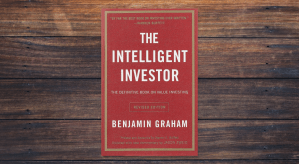
- The Intelligent Investor (1949) – A timeless classic that provides practical advice for individual investors.
Conclusion
Benjamin Graham’s contributions to the world of investing are immeasurable. His principles and strategies continue to inspire and educate investors around the globe. By embracing his value investing philosophy and adopting a long-term perspective, individual investors can improve their financial literacy and investment outcomes. As Graham himself once said, “Investing is most intelligent when it is most businesslike.”





 Winchell House
You must be logged in to post a comment.