Most recent money book reviews. See all ›
- Book Review: Richer, Wiser, Happier by William Green
 William Green spent 25 years interviewing the world’s best investors. Richer, Wiser, Happier distills their wisdom on money, risk, and living well.
 - 7 Best Books on the Psychology of Money
 The 7 best books on money psychology, ranked by how much they change your behavior — from Housel’s Psychology of Money to Kahneman — plus a one-page checklist turning each big idea into a rule.
 - Book Review: Misbehaving by Richard Thaler
 Misbehaving by Richard Thaler: the Nobel laureate’s memoir-manifesto of behavioral economics, from mental accounting to the endowment effect, and why the book is stronger on diagnosis than prescription.
 - Book Review: When Money Dies by Adam Fergusson
 When Money Dies by Adam Fergusson: Weimar Germany’s hyperinflation, when one dollar bought 4.2 trillion marks and a cinema ticket cost a lump of coal. What wiped out the cash-holding middle class.
 - Book Review: How to Decide by Annie Duke
 Annie Duke’s How to Decide treats decision-making as a learnable skill: stop judging choices by outcomes (‘resulting’), think in probabilities, and run pre-mortems. What it adds beyond Thinking in Bets.
 - Book Review: Quit by Annie Duke
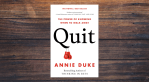 Annie Duke’s Quit argues that walking away is a skill, not a flaw: the sunk-cost trap, the grit trap, and setting kill criteria in advance. Why ‘winners never quit’ is expensive advice.
 - Book Review: The Elements of Investing by Burton Malkiel and Charles Ellis
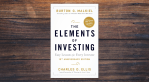 The Elements of Investing by Malkiel and Ellis: investing’s core in under 200 pages. Why your savings rate matters more than your returns, and the fee math both authors treat as law.
 - Book Review: Your Money and Your Brain by Jason Zweig
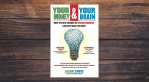 Jason Zweig’s Your Money and Your Brain: how your dopamine system and amygdala sabotage investing — and why slow, rule-based decisions beat fast emotional ones. The neuroscience of market mistakes.
 - Book Review: Stay the Course by John C. Bogle
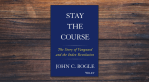 Stay the Course by John C. Bogle: Vanguard’s founder on the index revolution, from “Bogle’s Folly” in 1976 to the largest mutual fund in the world. His final book, published months before his death.
 - Book Review: The Index Card by Helaine Olen and Harold Pollack
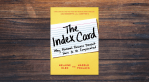 The Index Card by Olen and Pollack: the 4×6 card that went viral in 2013, arguing all of personal finance fits on one card. The rules: save 10%, never buy individual stocks, pay advisors fees not commissions.
 - Book Review: The Little Book of Behavioral Investing by James Montier
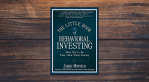 The Little Book of Behavioral Investing by James Montier: you are your own worst enemy. Overconfidence, the inside-view trap, and why more information improves confidence without improving results.
 - Book Review: The Happiness Files by Arthur C. Brooks
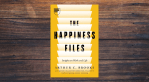 Arthur Brooks’s The Happiness Files: what happiness science actually says about money — diminishing returns, the comparison trap, and why the next dollar buys less joy than you expect.
 - Book Review: A Random Walk Down Wall Street by Burton Malkiel
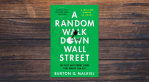 A Random Walk Down Wall Street by Burton Malkiel: five decades in print, from tulips to the dot-com bubble. The arithmetic that proves the average active investor must underperform the index.
 - Book Review: Build the Life You Want by Arthur C. Brooks and Oprah Winfrey
 Build the Life You Want by Arthur C. Brooks and Oprah Winfrey: four pillars of happiness (family, friendship, work, faith), why we’re wired to return to a hedonic baseline, and practices that build durable wellbeing.
 - Book Review: From Strength to Strength by Arthur C. Brooks
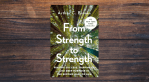 From Strength to Strength by Arthur C. Brooks: fluid intelligence peaks early, crystallized intelligence grows with age. How high achievers beat the striver’s curse and invest in relationships instead.
 - Book Review: The Law of Success by Napoleon Hill
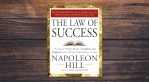 The Law of Success by Napoleon Hill: the 1928 course behind Think and Grow Rich, its fifteen principles of achievement, and the messy truth: the Carnegie origin story is unverifiable and Hill was investigated for fraud.
 - Book Review: Mindset: The New Psychology of Success by Carol S. Dweck
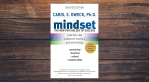 Carol Dweck’s Mindset: the fixed vs. growth mindset framework — and why ‘I’m bad at money’ is a belief you can change. What the pop version strips out.
 - Book Review: The Mask of Masculinity by Lewis Howes
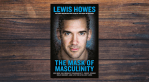 Lewis Howes’s The Mask of Masculinity names nine masks men hide behind — the material mask, spending for status, hits money hardest. What identity-driven spending costs.
 - Book Review: Moral Ambition by Rutger Bregman
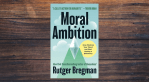 Rutger Bregman’s Moral Ambition: talented people squander careers on status and salary. How to redirect your ambition toward work that matters, via the counterfactual-impact test.
 - Book Review: Thinking in Bets by Annie Duke
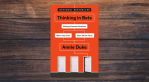 Annie Duke’s Thinking in Bets: stop judging decisions by their outcomes — the error she calls ‘resulting.’ Think in probabilities, accept that good bets sometimes lose.
 - Book Review: Humankind: A Hopeful History by Rutger Bregman
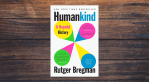 Rutger Bregman’s Humankind dismantles the ‘thin veneer of civilization’ story — revisiting the Stanford Prison Experiment and Milgram — and argues trust-based institutions outperform control-based ones.
 - Book Review: The Greatness Mindset by Lewis Howes
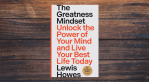 Lewis Howes’s The Greatness Mindset: crowded genre, little original research — but a useful frame: are your money decisions fear-based or mission-based? The honest verdict.
 - Book Review: The Only Living Trusts Book You’ll Ever Need by Garrett Monroe
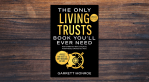 The Only Living Trusts Book You’ll Ever Need by Garrett Monroe: why a will still goes through probate, how a funded living trust avoids it, and the funding step most people get wrong.
 - Book Review: Utopia for Realists by Rutger Bregman
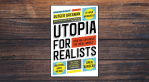 Utopia for Realists by Rutger Bregman: universal basic income, a 15-hour work week, and open borders. The Dutch historian’s viral Davos argument that poverty is a cash problem, not a character problem.
 - Book Review: The Wealth of Nations by Adam Smith
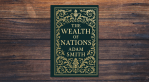 The Wealth of Nations by Adam Smith: the 1776 classic on the invisible hand, the division of labor, and why productive assets, not gold, are real wealth. Foundational, but not a personal finance guide.
 - Book Review: The Worldly Philosophers by Robert Heilbroner
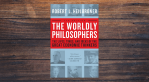 The Worldly Philosophers by Robert Heilbroner: the 1953 classic that teaches economics through the lives of Smith, Marx, Keynes, Malthus, and Ricardo. The story behind the systems that move your money.
 - Book Review: A Conflict of Visions by Thomas Sowell
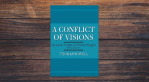 Thomas Sowell’s A Conflict of Visions: every political debate is one disagreement — the constrained vs. unconstrained view of human nature. How that lens changes your financial decisions.
 - Book Review: Basic Economics by Thomas Sowell
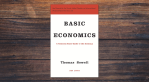 Thomas Sowell’s Basic Economics: five editions, zero graphs, zero equations — the plain-English intro to trade-offs, prices as signals, and why rent control backfires. What’s contested and what’s essential.
 - Book Review: 1929 by Andrew Ross Sorkin
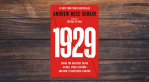 Andrew Ross Sorkin’s 1929 revisits the crash that launched the Great Depression: the speculation, the leverage, the psychology. Why diversification and margin of safety matter — lessons that still apply.
 - Book Review: A Piece of the Action by Joe Nocera
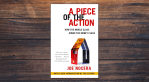 Joe Nocera’s A Piece of the Action traces how Americans were pulled into credit cards, mutual funds, and 401(k)s — and why systems shape money behavior more than discipline.
 - Book Review: Well Endowed by Vivian Tu
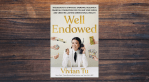 Well Endowed by Vivian Tu: the “Your Rich BFF” creator and former JPMorgan trader on intentional spending over extreme frugality, and the financial confidence to negotiate and avoid costly mistakes.
 - Book Review: The Anxious Investor by Scott Nations
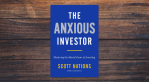 Scott Nations’s The Anxious Investor: anxiety isn’t the problem, your response to it is. Process over prediction — the rules that keep you invested when headlines scream panic.
 - Book Review: 100 Baggers by Christopher Mayer
 100 Baggers studies stocks that returned 100-to-1: the secret was holding a few exceptional businesses for decades. What the survivors teach, and the survivorship bias to discount.
 - Book Review: What I Learned About Investing from Darwin by Pulak Prasad
 Investing lessons from Darwin: survival beats brilliance, margin of safety is redundancy, and the patient outlast the clever. Prasad’s philosophy book, strengths and limits.
 - Book Review: Enough by John C. Bogle
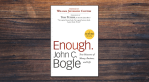 John C. Bogle’s “Enough” emphasizes financial sufficiency over accumulation, advocating for long-term investing, moral business practices, and a purpose-driven approach to money and life.
 - Book Review: Outlive by Peter Attia
 Peter Attia’s Outlive argues for preventive healthcare over reactive medicine — and makes the financial case that a longer healthspan lowers lifetime healthcare costs.
 - Book Review: Financial Literacy for Young Adults Simplified by Raman Keane
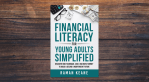 Raman Keane’s Financial Literacy for Young Adults Simplified is a low-stress first money book: budgeting, emergency funds, and index investing, written for anxious beginners.
 - Book Review: Same as Ever by Morgan Housel
 Morgan Housel’s “Same as Ever” emphasizes timeless human behaviors over market predictions, offering insights on emotions, long-term thinking, and risk for better financial outcomes.
 - Book Review: The Diary of a CEO by Steven Bartlett
 Steven Bartlett’s Diary of a CEO distills 33 laws of business and life from his podcast interviews: psychology over tactics, ownership over blame, compounding beyond money.
 - Book Review: Rich As F*ck by Amanda Frances
 Amanda Frances’s Rich As F*ck is a mindset book on wealth beliefs, self-worth, and pricing your work — motivational, but with no budgeting or investing instruction.
 - Book Review: Real Money by Jim Cramer
 Jim Cramer’s Real Money offers practical investing rules blending market anecdotes and psychological insights. It emphasizes discipline, risk management, and informed decision-making for individual investors.
 - Book Review: Principles of Microeconomics by Betsey Stevenson and Justin Wolfers
 Principles of Microeconomics by Betsey Stevenson and Justin Wolfers: a modern, data-driven take on incentives, trade-offs, and bounded rationality. A textbook first, but the personal-finance lessons are real.
 - Book Review: Principles of Economics by Betsey Stevenson and Justin Wolfers
 Principles of Economics by Betsey Stevenson and Justin Wolfers: a clear, data-driven foundation in trade-offs, incentives, and market behavior. Explains how economies work; not a step-by-step investing guide.
 - Book Review: The Road to Character by David Brooks
 David Brooks’s Road to Character contrasts resume virtues with eulogy virtues — humility and purpose over achievement culture, and what that mindset means for money.
 - Book Review: Bobos in Paradise by David Brooks
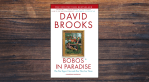 David Brooks’s Bobos in Paradise profiles the bourgeois bohemians — and shows how identity quietly drives spending, from premium minimalism to lifestyle creep.
 - Book Review: The ChatGPT Millionaire by Neil Dagger
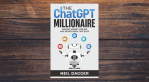 The ChatGPT Millionaire provides beginners with an accessible overview of leveraging AI for online income, emphasizing experimentation and quick execution, though lacking in-depth strategies.
 - Book Review: Digital Gold by Nathaniel Popper
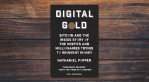 Nathaniel Popper’s Digital Gold tells Bitcoin’s early story through the personalities who built it — lessons on money and belief, not a how-to-invest guide.
 - Book Review: Set for Life by Scott Trench
 Scott Trench’s Set for Life: an all-out framework for early financial freedom — house hacking, a high savings rate, income growth, and disciplined index investing.
 - Book Review: The New Money Rules by Lillian Zhang
 Lillian Zhang’s New Money Rules is a Gen Z personal finance guide: budgeting as a skill, boring index investing, emergency savings, and beating lifestyle creep.
 - Book Review: The Wealthy Barber by David Chilton
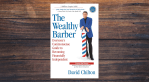 David Chilton’s Wealthy Barber teaches timeless money basics through a barber’s stories: pay yourself 10% first, live below your means, invest steadily.
 - Book Review: The Book of Wealth by Brian Kim
 Book review: The Book of Wealth by Brian Kim. The CPA’s 82-page blueprint for financial independence through budgeting, debt payoff, and index investing. Ideal for beginners; too basic if you’ve read the classics.
 - Book Review: The Volatility Shield by David McKnight
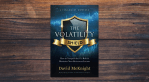 The Volatility Shield by David McKnight redefines retirement withdrawal rules, emphasizes flexibility, and addresses sequence-of-returns risk, making it an accessible guide for effective retirement income planning.
 - Book Review: Tax-Free Income for Life by David McKnight
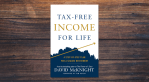 David McKnight’s Tax-Free Income for Life advocates proactive tax planning for retirement, highlighting tax risk, Roth conversions, and life insurance as strategies for tax efficiency.
 - Book Review: The Power of Zero by David McKnight
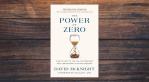 David McKnight’s Power of Zero argues for building a zero percent tax bracket in retirement — Roth conversions, tax diversification, and planning for higher future rates.
 - Book Review: Supercapitalism by Robert Reich
 Robert Reich’s Supercapitalism explains how shoppers and investors gained power while citizens lost it — and what that tension means for markets and democracy.
 - Book Review: How to Make Money in Any Market by Jim Cramer
 Jim Cramer’s How to Make Money in Any Market teaches retail investors research, strategy, and risk management — an active approach, not a passive-investing guide.
 - Book Review: All the Devils Are Here by Bethany McLean and Joe Nocera
 McLean and Nocera’s All the Devils Are Here is the definitive narrative of the 2008 crisis — incentives rewarded risk, complexity hid danger, and borrowers overreached.
 - Book Review: The Only Investment Guide You’ll Ever Need by Andrew Tobias
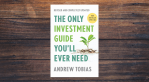 Andrew Tobias’s Only Investment Guide You’ll Ever Need simplifies money with humor and common sense — spend less than you earn, invest consistently, keep it simple.
 - Book Review: Winners Take All by Anand Giridharadas
 Anand Giridharadas’s Winners Take All exposes the Aspen Consensus — elites solving market-created problems with more markets, never touching what made them rich.
 - Book Review: Security Analysis by Benjamin Graham and David Dodd
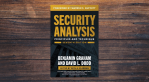 “Security Analysis, by Benjamin Graham and David Dodd, is a foundational text on value investing, emphasizing intrinsic value, margin of safety, disciplined research, and avoiding speculation.”
 - Book Review: Scarcity Brain by Michael Easter
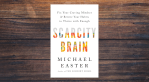 Scarcity Brain by Michael Easter: why our craving for more—food, money, likes—undermines happiness, and the three psychological loops that keep us stuck.
 - Book Review: The Art of Spending Money by Morgan Housel
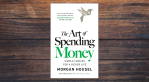 How should you spend money once you have it? Morgan Housel’s The Art of Spending Money: wealth buys freedom, control, and peace of mind — not status.
 - Book Review: Simple Money, Rich Life by Bob Lotich
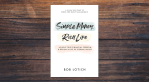 “Simple Money, Rich Life” by Bob Lotich blends financial strategies with faith principles, offering guidance on debt freedom, saving, and generosity for a purposeful life.
 - Book Review: Pathfinders by JL Collins
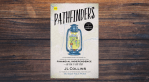 Pathfinders by JL Collins illustrates financial independence through real-life stories, emphasizing frugality, index fund investing, and the uniqueness of each individual’s journey toward wealth.
 - Book Review: How to Invest $50–$5,000 by Nancy Dunnan
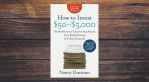 Nancy Dunnan’s How to Invest $50–$5,000 encourages small investments, offering techniques for beginners on growing modest sums while emphasizing patience, diversification, and risk minimization.
 - Book Review: The Accounting Game by Darrell Mullis and Judith Orloff
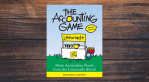 The Accounting Game simplifies accounting through a lemonade stand story, making financial concepts accessible for beginners and fostering financial literacy, despite its limitations for advanced learners.
 - Book Review: The Little Book of Main Street Money by Jonathan Clements
 Jonathan Clements’ The Little Book of Main Street Money balances practical financial guidance with insights into money psychology, ideal for beginners seeking straightforward wealth-building advice.
 - Book Review: From Here to Financial Happiness by Jonathan Clements
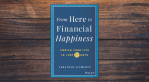 Jonathan Clements’ From Here to Financial Happiness offers a 77-day plan focusing on aligning finances with values, emphasizing simplicity, balance, and the importance of experiences over wealth.
 - Book Review: Accounting Made Simple by Mike Piper
 Mike Piper’s Accounting Made Simple offers an accessible introduction to accounting principles, enabling readers to understand financial statements and make informed investment decisions.
 - Book Review: You Are a Badass at Making Money by Jen Sincero
 Review: Jen Sincero’s You Are a Badass at Making Money trades budgets for belief — mindset over math. Who it’s for, its law-of-attraction weakness, and whether to buy it.
 - Book Review: Nudge by Richard Thaler
 Nudge by Thaler and Sunstein: auto-enrolling workers in 401(k)s beats opt-in every time. Our review of the 2008 behavioral-economics classic — and the manipulation debate.
 - Book Review: Add a Zero by Rose Han
 Review: ex-Wall Street trader Rose Han’s Add a Zero is a beginner’s roadmap to the first million — compounding, S&P 500 index funds, and mindset. Best for beginners, not experts.
 - Book Review: Money. Wealth. Life Insurance. by Jake Thompson
 Book review: Jake Thompson pitches whole life insurance as a tax-free personal bank for the wealthy — but critics say an S&P 500 index fund does it cheaper.
 - Book Review: On Work: Money, Meaning, Identity by Derek Thompson
 Review: Derek Thompson’s On Work collects Atlantic essays on workism — treating work as identity and moral purpose — plus automation’s toll on meaning.
 - Book Review: A Richer Retirement by William P. Bengen
 The man who invented the 4% rule wants you to break it: William Bengen’s A Richer Retirement argues flexible withdrawals let retirees safely spend more. Our review.
 - Book Review: Abundance by Ezra Klein and Derek Thompson
 Abundance by Ezra Klein and Derek Thompson: a case that prosperity is intentional, shaped by policy and institutions, not automatic. Big-picture economic optimism; light on day-to-day money steps.
 - Book Review: The Wealth Ladder by Nick Maggiulli
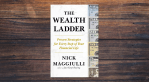 Review: Nick Maggiulli’s The Wealth Ladder argues money advice depends on your ‘wealth step’ — in credit card debt, skip tax optimization. Data-driven, anti-perfectionist, worth reading.
 - Book Review: The Second Mountain by David Brooks
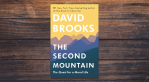 Review: David Brooks’s The Second Mountain — after the first mountain of career and wealth comes the valley, then the second mountain: commitment to family, vocation, faith, and community.
 - Book Review: Flash Crash by Liam Vaughan
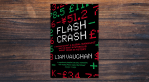 Flash Crash recounts the bizarre 2010 market crash caused by trader Navinder Singh Sarao, blending finance with investigative journalism and psychological insights into trading behavior.
 - Book Review: Saving Capitalism by Robert Reich
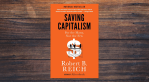 Robert Reich argues the market is not natural but designed — and recent rules were tilted to favor the wealthy. Saving Capitalism on how policy choices, not technology, drive inequality.
 - Book Review: The Lean Startup by Eric Ries
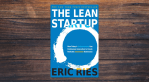 The Lean Startup by Eric Ries: launch a minimum viable product, measure real customer feedback, and pivot or persevere. The build-measure-learn loop that cut waste for startups everywhere.
 - Book Review: The Dip by Seth Godin
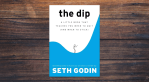 The Dip by Seth Godin (under 100 pages): quit the dead ends fast so you can push through the slump that separates winners from the rest. Strategic quitting, explained.
 - Book Review: The E-Myth Revisited by Michael E. Gerber
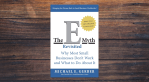 The E-Myth Revisited: most small businesses fail because founders work in the business as technicians, not on it as entrepreneurs. Gerber’s case for systems so it runs without you.
 - Book Review: The $100 Startup by Chris Guillebeau
 The $100 Startup by Chris Guillebeau: dozens of real examples of businesses built on less than $100 — start with skills you have, solve a real problem, take small fast steps.
 - Book Review: The Startup of You by Reid Hoffman
 LinkedIn co-founder Reid Hoffman’s The Startup of You: run your career like a startup with ABZ planning — Plan A, Plan B, and a Plan Z fallback — plus network and risk-taking.
 - Book Review: How to Make a Few Billion Dollars by Brad Jacobs
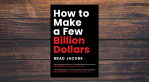 Brad Jacobs built multiple billion-dollar companies — United Rentals, XPO Logistics — starting from zero in industries he didn’t know. How to Make a Few Billion Dollars on mindset, consolidation, and systems.
 - Book Review: Buffett and Munger Unscripted by Alex Morris
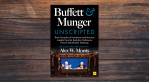 Alex Morris curates 30 years of unfiltered Buffett and Munger Q&A from Berkshire meetings: circle of competence, simplicity, and the case for long-term discipline.
 - Book Review: Bullshit Jobs by David Graeber
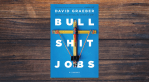 David Graeber’s Bullshit Jobs argues millions of well-paid white-collar jobs are pointless — and even the workers agree. A case for rethinking work’s real purpose.
 - Book Review: The Outsiders by William Thorndike
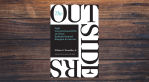 The Outsiders by William Thorndike: eight CEOs who beat the market by doing the unpopular thing with capital, from Henry Singleton’s buybacks to Katharine Graham’s bet. The capital allocator’s bible.
 - Book Review: When Genius Failed by Roger Lowenstein
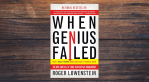 Nobel laureates ran LTCM’s math models into the ground in 1998, nearly breaking Wall Street. Lowenstein’s gripping lesson: leverage and overconfidence destroy.
 - Book Review: Buffett by Roger Lowenstein
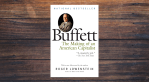 Lowenstein’s 1995 Buffett biography traces the boy from Omaha who bought See’s Candies and built Berkshire on patience, discipline, and rational thinking.
 - Book Review: Money for Couples by Ramit Sethi
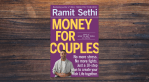 Ramit Sethi’s Money for Couples gives couples a 10-step plan to stop fighting about money — roles, shared systems, and defining your ‘Rich Life’ together.
 - Book Review: Where Are the Customers’ Yachts? by Fred Schwed
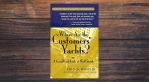 Fred Schwed’s 1940 satire Where Are the Customers’ Yachts? skewers Wall Street: brokers get rich while clients don’t. The lesson: psychology beats prediction.
 - Book Review: The Snowball by Alice Schroeder
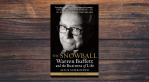 The Snowball, Schroeder’s 900-page authorized Buffett biography, shows how compounding, frugality, and emotional mastery — not stock picks — built the fortune.
 - Book Review: How Markets Fail by John Cassidy
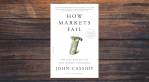 John Cassidy’s How Markets Fail traces how rational-market ideology caused the 2008 crash — speculation, herd behavior, and deregulation turning greed into systemic risk.
 - Book Review: Winning the Loser’s Game by Charles Ellis
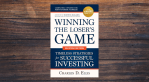 Charles Ellis’s Winning the Loser’s Game: beating the market is a loser’s game — winners keep costs low, buy index funds, and let patience compound.
 - Book Review: How to Think About Money by Jonathan Clements
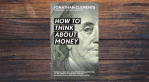 Jonathan Clements’s How to Think About Money: wealth isn’t a bank balance, it’s control of your time. Spend on experiences, index the rest, stay simple.
 - Book Review: A Wealth of Common Sense by Ben Carlson
 Ben Carlson’s A Wealth of Common Sense: ignore market noise, dollar-cost average into the S&P 500, and win through behavior — not stock picking.
 - Book Review: Backstage Wall Street by Josh Brown
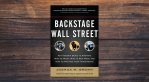 Josh Brown, the Reformed Broker, pulls back the curtain on Wall Street sales culture: advisors chasing quotas, complex products, and why skepticism pays.
 - Book Review: The Automatic Millionaire by David Bach
 David Bach’s Automatic Millionaire: pay yourself first with automatic transfers and let the Latte Factor turn a $5 daily habit into over $1,200 a year.
 Winchell House