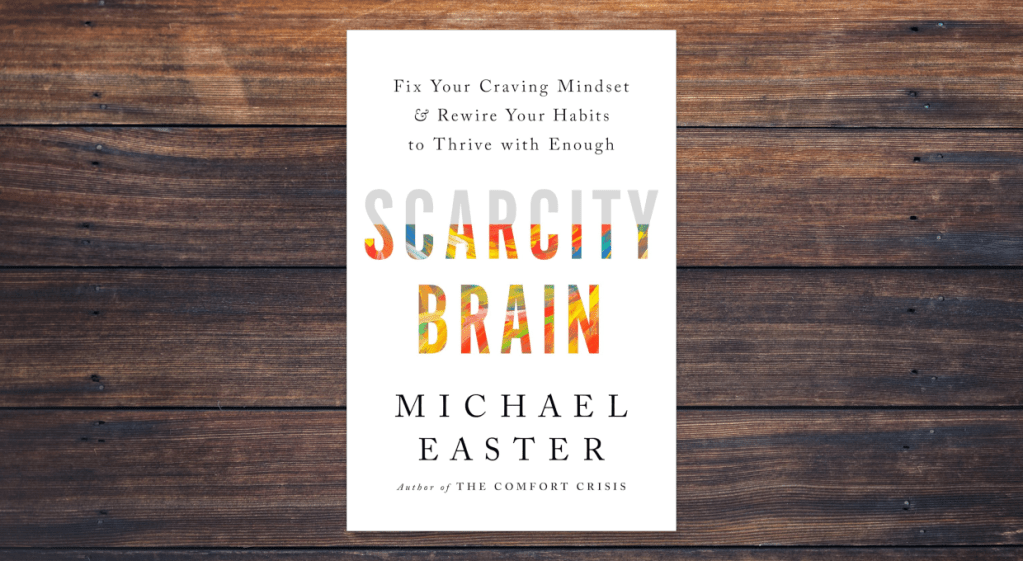
Michael Easter’s Scarcity Brain explores why modern humans constantly crave more—more food, more money, more social media, more everything—and how this endless cycle of wanting undermines happiness and well-being. Drawing from research in psychology, anthropology, and neuroscience, Easter explains how scarcity once helped humans survive but now traps us in compulsive loops of consumption and distraction.
Who Is Michael Easter?
Michael Easter is a journalist, author, and professor at the University of Nevada, Las Vegas. He’s best known for his bestselling book The Comfort Crisis, which examined how modern comfort makes us physically and mentally weaker. In Scarcity Brain, Easter extends this exploration, focusing on the psychological roots of modern dissatisfaction. He combines field reporting—from visits with scientists, monks, and gamblers—with personal stories that make complex ideas accessible.
Lessons from Scarcity Brain
A key idea in Scarcity Brain is that humans evolved in environments of scarcity, where hoarding resources and seeking novelty improved our odds of survival. In the modern world, that same instinct leads us to overconsume—food, media, or even “likes” online. Easter identifies three major loops that keep us stuck:
- The Reward Loop – Dopamine rewards us for seeking, not having. This is why we scroll endlessly or keep checking stock prices.
- The Comparison Loop – Social media and status competition constantly make us feel like we’re falling behind.
- The Stress Loop – Our brains are wired to detect threats, keeping us anxious even when life is safe and stable.
Easter argues that by becoming aware of these loops, we can “rewire” our habits toward balance. He offers practical strategies, such as setting limits on social media use, practicing gratitude, and engaging in challenging physical or creative pursuits to find fulfillment beyond consumption.
For readers interested in money and investing, Easter’s ideas have clear implications. The same scarcity mindset that drives compulsive scrolling can drive poor financial decisions—like overtrading, chasing short-term gains, or overspending to keep up with peers. Recognizing when you have “enough” can lead to a healthier relationship with both money and time.
Criticisms of the Book
While Scarcity Brain is engaging and well-researched, it’s not without flaws. Some readers may find Easter’s anecdotes repetitive or overly dramatic. Others may feel that the book spends more time diagnosing problems than offering concrete, actionable steps. The mix of neuroscience and storytelling sometimes veers into pop psychology territory, leaving certain claims less rigorously supported than they could be.
Still, Easter’s journalistic style makes the book accessible, and even skeptics will likely walk away more aware of how scarcity thinking shapes daily life.
Should You Buy It?
If you’re interested in behavioral psychology, self-improvement, or financial discipline, then yes. Scarcity Brain offers valuable insights into why we crave more and how to escape that loop. While it’s not a pure finance book, its lessons apply directly to spending, saving, and investing behaviors. Readers trying to live a simpler, more intentional life will find plenty to reflect on.
Final Thoughts
Scarcity Brain is a timely reminder that the path to satisfaction isn’t through accumulation but awareness. Easter challenges readers to redefine “enough” and take control of habits that quietly drain happiness and financial peace. The message aligns with the broader movement toward frugality, minimalism, and mindfulness—values that help people live better with less.
For anyone who feels trapped in a cycle of overconsumption, Scarcity Brain is a worthwhile read that might just help you step off the treadmill.











You must be logged in to post a comment.