
Value investing is a strategy rooted in patience, discipline, and the belief that markets can be irrational in the short term. At its core, value investing means buying stocks that appear to be undervalued by the market. These are companies that may not be flashy or trendy but have strong fundamentals and trade for less than what they’re truly worth.
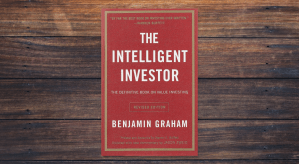
This long-term approach to investing was popularized by Benjamin Graham, often referred to as the father of value investing, and later adopted by Warren Buffett, who built his fortune by following its principles.
The Basics of Value Investing
The basic idea behind value investing is simple: if you can buy a dollar’s worth of assets for fifty cents, you’re making a good deal. But identifying those opportunities requires some digging. Value investors analyze a company’s financial statements, study its management team, assess its competitive position, and estimate its future earnings.
This strategy focuses on finding companies with:
- Low price-to-earnings (P/E) ratios
- Low price-to-book (P/B) ratios
- Strong cash flows
- Stable profit margins
- Healthy balance sheets
By sticking with companies that have solid fundamentals but are currently overlooked or undervalued, investors aim to buy low and sell high over the long run.
Why Value Investing Works
Markets aren’t always rational. Investors can get caught up in the hype of fast-growing companies or panic during downturns. These emotional swings create opportunities for disciplined investors.
A company’s stock might drop because of a short-term problem, negative headlines, or simply because it’s in an unexciting industry. But if the company’s actual business remains strong, that lower stock price could be a chance to buy in at a discount.
Value investing is based on the belief that the market eventually corrects itself. Over time, the price of a good company’s stock will rise to reflect its true value. That’s when value investors are rewarded for their patience.
Growth Investing vs. Value Investing
It helps to contrast value investing with growth investing, another popular strategy. Growth investors look for companies expected to grow faster than the market—think of tech startups or high-flying brands. These stocks often have high P/E ratios and don’t always turn a profit right away.
Value investors, on the other hand, are less concerned with big future promises and more focused on current facts. They prefer companies that are profitable today but may be underappreciated or temporarily out of favor.
Both approaches can work, but they suit different types of investors. Value investing tends to appeal to those who are more risk-averse and focused on protecting their money while still seeking long-term growth.
Common Pitfalls to Avoid
Not every cheap stock is a good deal. A stock might be inexpensive because the company is truly in trouble. These are often called “value traps.” The key is doing your homework and only investing in companies with sound fundamentals.
Another risk is impatience. Value investing takes time. It’s not about quick wins—it’s about waiting for the market to recognize a company’s true worth. That can take months or even years.
Tools to Help You Get Started
If you’re just beginning your investing journey, you don’t need to become a financial analyst overnight. Many beginner-friendly books on money—such as The Intelligent Investor by Benjamin Graham or One Up on Wall Street by Peter Lynch—explain value investing in plain language.
Using budgeting apps can help you free up money to invest. By tracking your spending and living frugally, you’ll have more to contribute to your portfolio.
Consider pairing value investing with other conservative financial habits: a high-yield savings account for your emergency fund, short-term treasury bills for safe returns, and regular investments in an S&P 500 index fund to build long-term wealth.

Do You Need a Financial Advisor?
A financial advisor can help you build a value-oriented portfolio if you’re not sure where to start. They can also help you avoid common behavioral mistakes, like panic selling or chasing hot stocks. But many value investors manage their portfolios themselves after doing a bit of learning.
If you’re disciplined, patient, and willing to keep learning, value investing is a strategy that can work for you without needing professional help.
A Worked Example: The Dollar for Fifty Cents
Margin of safety sounds abstract until you run the numbers. Suppose you study a business and conclude it is worth $100 a share: steady earnings, little debt, a durable position in its industry. Today it trades at $60. That $40 gap, about 40 percent below your estimate of its worth, is the margin of safety. It absorbs your mistakes. If the business turns out to be worth only $80 a share instead of $100, you still bought at a discount and can earn a fine return.
Now flip it. A trendy company you estimate is worth $100 a share trades at $140. There is no margin of safety. Your estimate has to be perfect and the future has to cooperate just to break even. Value investors only play the first game: pay $60 for something worth $100, and let the gap between price and value do the heavy lifting.
The Track Record Behind the Patience
Warren Buffett is the best-known proof that value investing can work over a lifetime. From 1965 through 2025, Berkshire Hathaway’s per-share market value compounded at roughly 20 percent a year, against roughly 10 percent for the S&P 500 with dividends included. Over six decades, that gap turned a few percentage points of annual edge into one of the great wealth-building records in history.
But notice what patience actually cost. In 1999, near the peak of the dot-com boom, Berkshire’s shares trailed the index by more than 40 percentage points for the year. Value looked broken; growth looked like the future. The investors who sold then missed the snapback. This is why impatience is listed above as one of the main pitfalls: the reward for value investing arrives in lumps, separated by long stretches of looking wrong.
Final Thoughts
Value investing isn’t about finding the next big thing. It’s about understanding what a company is really worth and buying it when it’s on sale. It rewards those who do their homework, stay calm when others are fearful, and think in decades instead of days.
Whether you’re new to money management or a seasoned investor looking to sharpen your approach, value investing offers a time-tested path to building wealth—without the hype.











You must be logged in to post a comment.