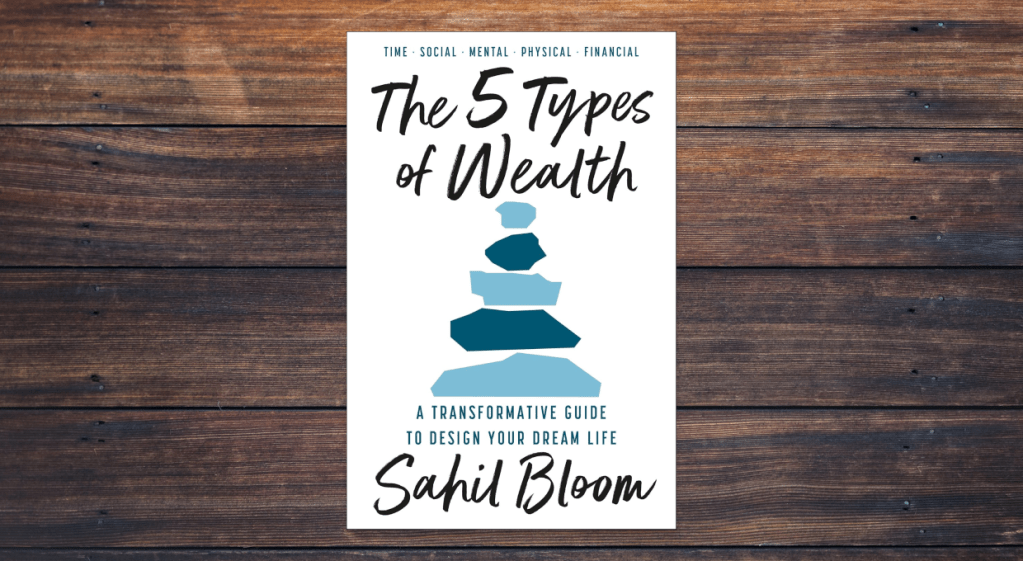
The 5 Types of Wealth: A Transformative Guide to Design Your Dream Life by Sahil Bloom explores the idea that true wealth extends beyond just money. Bloom breaks wealth into five distinct categories: financial, social, physical, intellectual, and time wealth. He argues that achieving balance among these types is the key to a fulfilling and successful life.
For readers interested in financial independence and smart investing, Bloom’s book provides an insightful perspective on how to build not just monetary wealth but also a well-rounded life.
Who is Sahil Bloom?

Sahil Bloom is an investor, entrepreneur, and writer known for making complex financial concepts accessible. With a background in private equity and a large online following, Bloom shares lessons on personal finance, self-improvement, and investing.
The 5 Types of Wealth expands on themes from his popular newsletter and social media content, offering a structured approach to designing a life of true wealth.
Buy The 5 Types of Wealth on Amazon
Lessons from The 5 Types of Wealth
The book goes beyond financial wealth, it still offers valuable insights for investors looking to grow their portfolios. Some key takeaways include:
- The Power of Compounding – Bloom emphasizes the importance of long-term investing.
- Avoiding Lifestyle Creep – As income increases, many people fall into the trap of spending more instead of investing the excess. Bloom advocates for mindful spending and maintaining a frugal lifestyle.
- Diversifying Investments – The 5 Types of Wealth highlights the importance of balancing high-yield investments, such as index funds, with safer options like short-term treasury bills and high-yield savings accounts.
- The Value of Time Wealth – One of Bloom’s biggest lessons is that money should be a tool to buy back time. By focusing on passive income and financial independence, investors can prioritize their freedom over excessive work.
Criticisms of the Book
While The 5 Types of Wealth offers a compelling framework, it is not without its criticisms:
- Lack of Depth on Investing Strategies – The book covers broad financial concepts but doesn’t dive deeply into specific investment strategies or asset allocation.
- More Philosophical than Practical – Some readers may find The 5 Types of Wealth too theoretical and would prefer more actionable steps to achieve financial independence.
- Geared Toward High Earners – While the lessons apply to everyone, some of Bloom’s examples seem most relevant to those already earning above-average incomes.
The Five Types, Briefly
Bloom’s five — time, social, mental, physical, and financial wealth — work best as a diagnostic. Time wealth is control over your calendar. Social wealth is the depth of your relationships. Mental wealth is purpose and the absence of chronic anxiety about money. Physical wealth is health, the one form that makes all the others usable. Financial wealth is the only one measured in dollars, and Bloom’s point is that optimizing for it alone is how people end up rich and miserable.
The practical move is to score yourself honestly in each category once a year. Most people over-invest in the financial column and starve the other four — especially time, which is the only wealth you can’t earn back. Pick up The 5 Types of Wealth if you want the full framework; the self-audit alone is worth the price.
What This Book Gets Right About Money
The investing advice here won’t surprise anyone who reads finance blogs: buy index funds, avoid lifestyle creep, think long-term. The book’s real contribution is framing — treating money as fuel for the other four types of wealth rather than the destination. That’s a genuinely useful reframe for high earners who’ve won the money game and feel oddly empty, and it’s a healthier starting point for beginners than pure net-worth scorekeeping.
Final Thoughts
The 5 Types of Wealth is a refreshing take on wealth-building that challenges the traditional view of success as purely financial. While some may wish for more detailed investment strategies, Bloom’s book provides valuable insights into how money fits into a broader picture of well-being.
The key takeaway is that financial independence should serve as a means to a richer, more fulfilling life… not just an end goal.











You must be logged in to post a comment.