
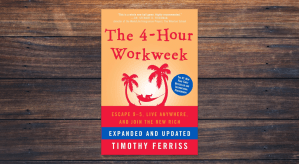
Tim Ferriss is a best-selling author, entrepreneur, investor, and self-experimenter best known for his book The 4-Hour Workweek: Escape 9-5, Live Anywhere, and Join the New Rich. This book, originally published in 2007, became a financial independence classic, inspiring countless readers to rethink their approach to work, wealth, and lifestyle design.
Ferriss and The 4-Hour Workweek
The 4-Hour Workweek is a guide to achieving financial independence by prioritizing time efficiency, automation, and passive income streams. Ferriss introduces concepts such as “lifestyle design,” which encourages people to structure their lives around meaningful experiences rather than long hours at a traditional job. The book covers:
- Eliminating unnecessary tasks through the 80/20 rule (focusing on the 20% of work that produces 80% of results)
- Automating income through online businesses and outsourcing
- Mini-retirements instead of traditional retirement planning
- Building passive income streams to replace earned income
The book was a game-changer for those seeking financial freedom, and its principles align with many of the strategies advocated by us—such as living frugally, maximizing investments, and taking control of personal finances.
Ferriss on Financial Independence
Ferriss’ ideas have had a lasting impact on the financial independence community. His book helped popularize the concept of location-independent income, which became a foundational idea for digital nomads and remote workers. His advocacy for optimizing work and eliminating inefficiencies has influenced many seeking early retirement, debt reduction, and personal wealth growth.
In addition to The 4-Hour Workweek, Ferriss has written other books focusing on rapid skill acquisition, health optimization, and self-improvement, including The 4-Hour Body and The 4-Hour Chef. He also hosts The Tim Ferriss Show, a podcast featuring interviews with high achievers in business, finance, sports, and science.
Is The 4-Hour Workweek Realistic?
While The 4-Hour Workweek has inspired many, not all of its ideas are easy to implement. Achieving passive income and financial independence takes significant upfront effort, and not every job can be automated or outsourced. However, the book’s principles—such as prioritizing high-value tasks, minimizing unnecessary expenses, and investing in income-generating assets—remain valuable for anyone seeking financial independence.
Lessons from Ferriss for Your Journey
We emphasize financial responsibility, frugal living, and smart investing—principles that align with Ferriss’ core teachings. Here are a few key takeaways from his philosophy that can help you on your financial journey:
- Eliminate wasteful spending: Focus on essential expenses and cut unnecessary costs.
- Invest in the S&P 500: Build a long-term investment portfolio for financial security.
- Develop passive income streams: Consider ways to earn money beyond a traditional paycheck.
- Take control of your time: Use budgeting apps and automation to manage your finances efficiently.
Tim Ferriss’ work continues to be a source of inspiration for those looking to break free from traditional financial constraints and design a life on their own terms. Whether you’re just starting your financial journey or looking to refine your approach, his insights offer a unique perspective on wealth and independence.



 Winchell House
You must be logged in to post a comment.