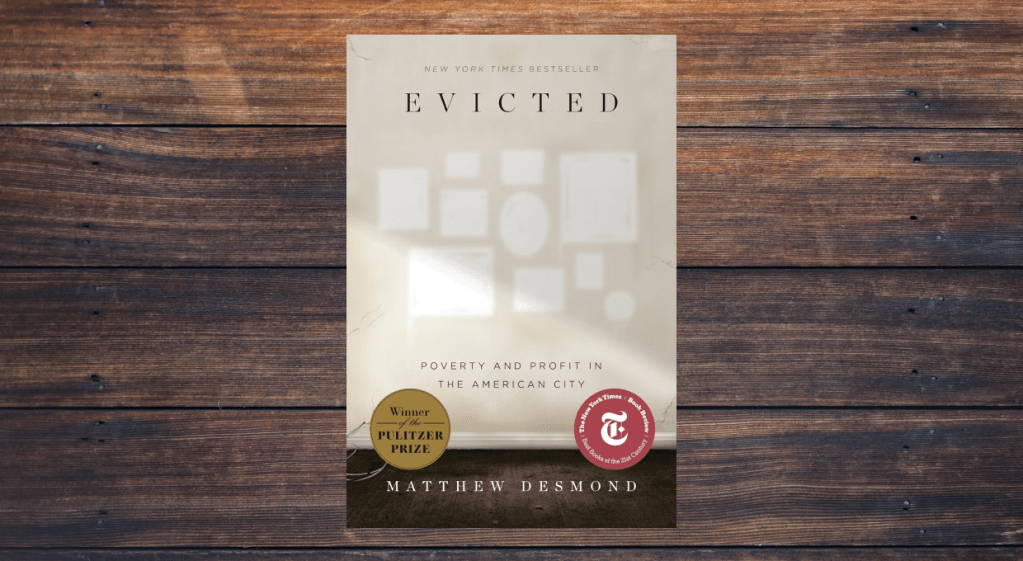
If you’re beginning your financial journey and want a deeper understanding of the structural challenges that affect housing and poverty in America, Evicted: Poverty and Profit in the American City by Matthew Desmond is a must-read. This Pulitzer Prize-winning book sheds light on how eviction and housing instability are not just symptoms of poverty, but active drivers of it.
Who is Matthew Desmond?

Matthew Desmond is a sociologist and professor at Princeton University. He is best known for his research on poverty, housing, and public policy in the United States. Desmond is also the founder of the Eviction Lab, which maintains the first nationwide database of evictions. His work is rooted in both academic rigor and real-world observation—he lived among low-income renters in Milwaukee while researching Evicted, giving the book a grounded, human feel that’s rare in policy-driven writing.

Key Lessons from Evicted
Housing is the foundation of financial stability
One of the most powerful lessons in Evicted is that without stable housing, it’s nearly impossible for families to climb out of poverty. When rent consumes 50% or more of a person’s income, any small setback—like a medical bill or car repair—can spiral into financial disaster.
The cost of poverty is high
Desmond reveals how expensive it is to be poor. Tenants in low-income housing often pay more per square foot than middle-class renters, simply because they lack access to better options. Add in late fees, utility shutoffs, and the cost of moving after an eviction, and the total financial burden becomes overwhelming.
Evictions are not rare—they’re systemic
Many Americans assume evictions happen only in extreme cases, but Evicted shows they are shockingly common in low-income communities. These forced moves often lead to job loss, school disruption, and mental health issues, creating a cycle that’s hard to break.
Budgeting alone isn’t always enough
Evicted emphasizes the importance of using budgeting apps to manage spending, eliminate credit card debt, and build up a nest egg in the S&P 500.
Desmond’s work reminds us that budgeting tools can only go so far in a system where the odds are stacked against certain groups. True financial independence also requires systemic change—like affordable housing policy and legal protections for renters.
Criticisms of the Book
While Evicted is widely praised, it’s not without criticism. Some readers argue that the book focuses more on storytelling than offering concrete solutions. Others note that Desmond doesn’t deeply explore issues like addiction or personal financial responsibility, which can also play a role in eviction cases. However, these criticisms miss the book’s main goal: to humanize the people behind the statistics and challenge readers to think differently about poverty.
Should You Buy This Book?
Yes—especially if you’re serious about building financial literacy and understanding the broader context of economic inequality in America. Evicted doesn’t teach you how to budget or invest directly, but it expands your empathy and offers important insight into why financial independence can feel so out of reach for so many.
Whether you’re considering working with a financial advisor, paying down student loans, or saving for your first home, understanding the real cost of housing instability can reshape how you approach your financial goals.
Final Thoughts
Evicted is not just a sociology book—it’s a wake-up call. We talk a lot about frugality, smart investing, and building wealth through tools like high-yield savings accounts and the S&P 500. But Matthew Desmond’s work reminds us that the journey to financial freedom doesn’t happen in a vacuum. For many Americans, especially renters, the path is riddled with systemic barriers.
Reading Evicted might not boost your portfolio, but it will deepen your understanding of the world we live in—and perhaps inspire you to advocate for a more just financial system. For anyone looking to start their personal finance journey with a broader perspective, this book is well worth your time.





 Winchell House
You must be logged in to post a comment.