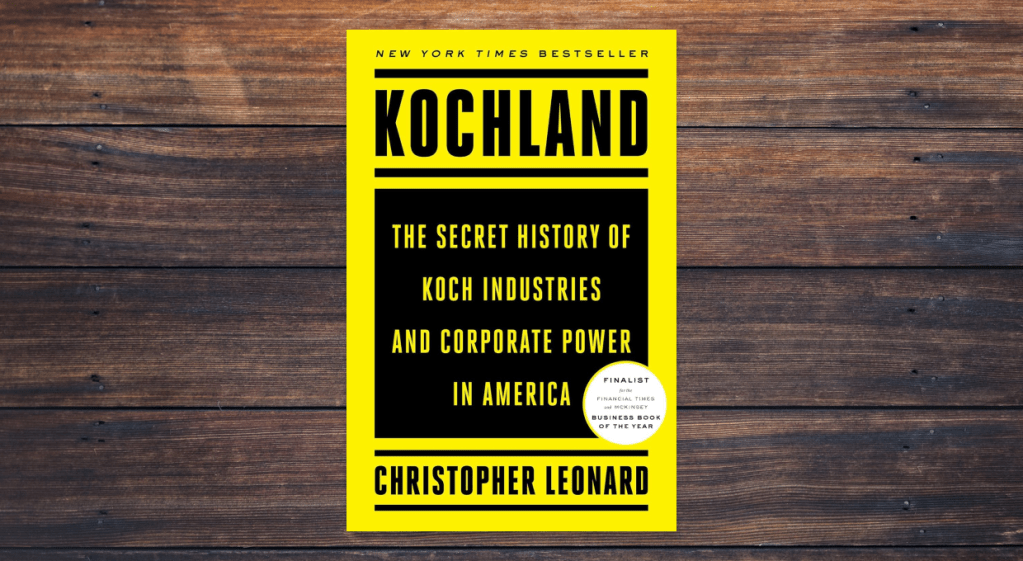
One book that sheds light on how power, wealth, and influence shape markets and industries is Kochland: The Secret History of Koch Industries and Corporate Power in America by Christopher Leonard.
This isn’t a traditional personal finance book. It won’t walk you through how to build a budget or reduce your credit card debt. But it will challenge the way you think about capitalism, long-term investing, and the role of corporations in shaping the economy.
For readers who are building their own nest egg and making intentional decisions about their money, Kochland offers deep insight into the broader system we all invest and operate within.
Who Is Christopher Leonard?
Christopher Leonard is an investigative journalist with a background in covering agribusiness and energy companies. His reporting has appeared in The Wall Street Journal, The Washington Post, and Fortune. With Kochland, Leonard turns his lens toward Koch Industries, one of the largest privately owned companies in America.
Leonard spent over seven years researching this book, piecing together interviews, internal documents, and public records. The result is a deep dive into the philosophy and tactics of Charles Koch, who transformed his family business into a sprawling empire of oil, chemicals, paper products, and financial services.
Key Lessons from Kochland
Long-Term Thinking Pays Off
One of the biggest takeaways from Kochland is the power of thinking long-term. Koch Industries made many of its most profitable decisions by avoiding short-term trends and investing in infrastructure, strategy, and people with decades in mind.
Understanding Risk and Reward
Koch Industries uses a risk management strategy called “Market-Based Management” (MBM), which emphasizes decentralized decision-making and accountability. This approach can be applied to personal finance too. When you manage your budget or diversify your investments, you’re using similar principles: measure risk, act strategically, and learn from results.
Corporate Power Is Often Invisible
Kochland shows how corporations, especially privately held ones, can influence everything from government policy to the price of consumer goods. While that can be frustrating, it also reinforces why individuals need to be financially literate. Understanding where your money is going and how industries operate can empower smarter decisions about where to bank, invest, and spend.
Privacy Has Power
Koch Industries’ choice to remain private has shielded it from public scrutiny for decades. For personal investors, there’s a reminder here: sometimes the best moves are the quiet ones. You don’t have to broadcast your financial goals or investing wins. Keep your focus, stay consistent, and let your results speak for themselves.
Criticisms of the Book
Kochland is detailed… sometimes too detailed. At over 700 pages, it can feel overwhelming for readers looking for a quick overview of business strategy or economic trends. Some critics have argued that the book leans heavily into critique and doesn’t always present a balanced perspective on Koch Industries’ contributions to innovation or efficiency.
Additionally, the book occasionally veers into dense territory, especially when covering energy policy and commodity markets. Readers without a background in business or economics might find themselves skimming through sections that feel more technical than narrative-driven.
Should You Read Kochland?
If you’re a personal finance enthusiast who wants to deepen your understanding of corporate America, Kochland is worth your time. It’s not a how-to manual, but it can provide powerful context for why markets behave the way they do and how big companies shape the environment you invest in.
However, if you’re currently focused on more practical goals like building a monthly budget, getting out of credit card debt, or choosing the right financial advisor, you might want to start with something a bit more tactical.
Final Thoughts
Kochland is a rare look inside a company that intentionally avoids the spotlight. It reveals the hidden gears of American capitalism, for better and worse. For readers of Winchell House working toward financial independence and building wealth through deliberate choices, this book is a compelling read that pairs well with your long-term investment mindset.
It’s not essential reading for everyone, but for those curious about the deeper mechanics of wealth and power, Kochland is a fascinating addition to your financial education library.









 Winchell House
You must be logged in to post a comment.