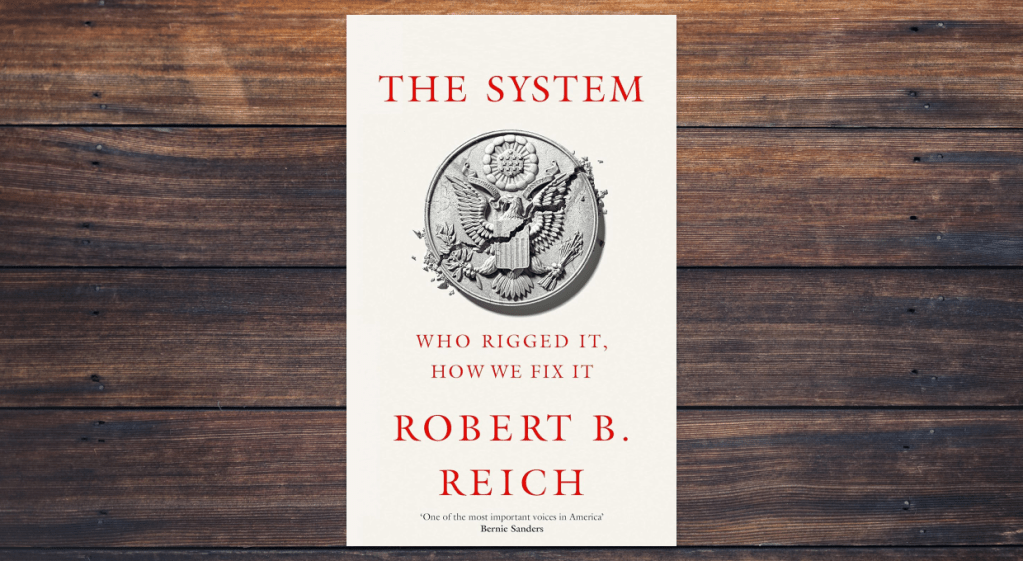
It’s essential to understand not just how to manage your money, but the system in which you’re doing it. The System: Who Rigged It, How We Fix It by Robert Reich is a provocative look at the economic and political forces that have shaped today’s financial landscape. While it may not teach you how to budget or reduce credit card debt directly, it offers important context for why the economy feels increasingly tilted against the average person.
Who Is Robert Reich?
Robert Reich is a former U.S. Secretary of Labor, a professor of public policy, and a longtime advocate for economic fairness. He’s written multiple bestsellers and is known for making complex financial and political topics more accessible to everyday readers.
His decades of experience inside and outside the government give him a rare vantage point on how power works in America and how it affects your paycheck, your savings, and your future.
Key Takeaways from The System
Here are a few lessons from The System that stand out:
Power and Wealth Are Concentrated at the Top
Reich argues that America’s economic and political systems have been captured by a small elite class (or the “oligarchy”). These are powerful individuals and corporations who use lobbying, campaign donations, and influence to bend the rules in their favor.
This idea is especially relevant for people working hard to build wealth through a frugal lifestyle and smart investing. It explains why it can feel like no matter how much you budget or save, you’re still running uphill.
Markets Aren’t “Free”, They’re Designed
One of the most striking insights from The System is that there’s no such thing as a truly free market. Every market has rules, and those rules are shaped by people with power. Understanding this can help you think more critically about financial advice and policy decisions, especially those around taxes, healthcare, and housing.
The System Can Be Fixed But It Requires Civic Engagement
The System is not all doom and gloom. Reich believes reform is possible, but it depends on people staying informed, voting, and pushing back against corporate control. It’s a reminder that being financially independent doesn’t mean being disconnected from the world. It means having the freedom to engage with it more fully.
Criticisms of the Book
While The System offers a compelling narrative, it’s not without its critics. Some readers feel the book leans too heavily into political ideology and doesn’t offer enough actionable solutions. Others argue that it oversimplifies complex issues, painting a “good vs. bad” picture that leaves little room for nuance.
If you’re looking for a step-by-step guide to managing your money, The System won’t offer that. But if you’re trying to understand why economic inequality persists even as the stock market rises, it’s well worth your time.
Should You Buy This Book?
If you’re someone who’s already budgeting carefully, paying off credit card debt, and investing in the S&P 500, this book can provide context for the larger forces at play. It’s especially valuable for readers who want to understand how the financial system impacts everyday Americans and what can be done to make it fairer.
On the other hand, if you’re just getting started and looking for basic financial advice (like how to use a high-yield savings account, choose a financial advisor, or build a budget) you might want to pair this with something more practical.
Final Thoughts
The System: Who Rigged It, How We Fix It is not your typical personal finance book. It doesn’t give you investment tips or tell you how to increase your credit score. What it does is challenge you to think about the broader environment in which you’re trying to build wealth.
We believe financial independence isn’t just about personal responsibility, it’s also about understanding the systems we live in. Robert Reich’s The System is a powerful tool for anyone who wants to do both.











You must be logged in to post a comment.