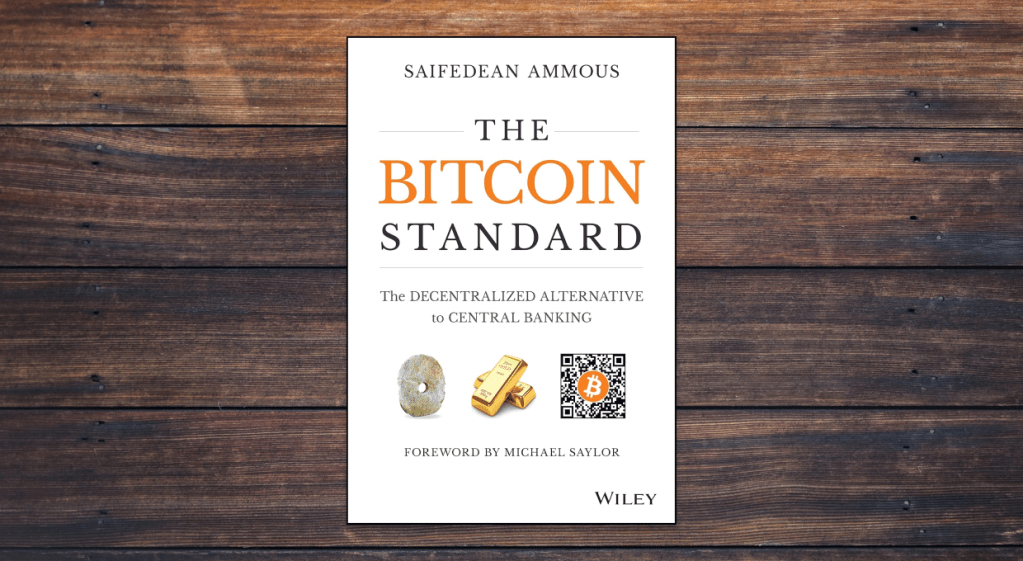
Understanding how money works is central to personal finance. Whether you’re saving for retirement, trying to get out of debt, or just looking to build better money habits, your financial journey will be shaped by your views on value, currency, and long-term thinking. One book that has gained popularity among readers interested in the future of money is The Bitcoin Standard: The Decentralized Alternative to Central Banking by Saifedean Ammous.
This review explores what The Bitcoin Standard offers, who the author is, key lessons, common criticisms, and whether or not it’s worth adding to your personal finance bookshelf.
Who is Saifedean Ammous?
Saifedean Ammous is a Lebanese-American economist who earned his PhD from Columbia University. A former academic, Ammous is now best known for his work as a vocal advocate for Bitcoin and for challenging the modern monetary system. His writing blends economics, history, and philosophy, and he approaches Bitcoin from a foundational, principles-first perspective rather than a purely technical one.
His background in Austrian economics heavily influences the book’s tone and arguments, making The Bitcoin Standard a unique entry in the growing list of books on money and cryptocurrency.

Lessons from The Bitcoin Standard
The Bitcoin Standard is not just about Bitcoin. In fact, much of the book focuses on the history of money (how societies moved from barter systems to gold, and eventually to fiat currencies). Ammous argues that sound money money that cannot be easily inflated or manipulated is essential for economic stability, personal responsibility, and long-term thinking.
Here are a few key lessons readers can take away:
The importance of sound money
Ammous makes the case that when money is “hard” (meaning it holds its value over time), it encourages saving, productivity, and innovation. When money is “easy” (like fiat currencies that can be printed at will), it distorts prices, discourages saving, and leads to economic bubbles.
Bitcoin as digital gold
The Bitcoin Standard explains why Bitcoin’s fixed supply of 21 million coins makes it an ideal candidate for being the modern equivalent of gold. Unlike fiat currencies, Bitcoin cannot be inflated or manipulated by central banks, which is a key reason why Ammous believes it represents a more stable alternative for long-term value storage.
Central banking’s unintended consequences
Ammous criticizes central banking for contributing to boom-bust cycles, inflation, and financial instability. He argues that the power to print money creates moral hazard and unsustainable economic behavior at both the individual and national levels.
Time preference and personal responsibility
One of the book’s most interesting ideas is that sound money reduces people’s “time preference” (or desire for immediate gratification) and encourages long-term planning. In this way, The Bitcoin Standard connects economic theory with personal finance in a way that can help readers rethink their own habits around saving, investing, and spending.
Criticisms of the Book
While The Bitcoin Standard has attracted a large audience, it’s not without controversy. Some common criticisms include:
- Tone and style: Ammous can be dismissive of opposing views and occasionally veers into condescending language, which might turn off some readers.
- One-sided arguments: The book strongly favors Austrian economics and often ignores or minimizes counterarguments from other economic schools of thought.
- Overreach: Some critics argue that the book draws sweeping conclusions from selective historical examples, making it more of an opinion piece than a rigorous academic analysis.
Still, even critics often admit the book is thought-provoking and does a good job framing Bitcoin in the broader context of monetary history.
Should You Buy It?
If you’re looking for books on money that challenge your thinking and go beyond the basics of budgeting or investing, The Bitcoin Standard is worth considering. It’s especially valuable for readers who are curious about cryptocurrency, skeptical of central banking, or interested in economic history.
That said, it’s not a traditional personal finance book. You won’t find tips on how to build a budget, choose a financial advisor, or open a high-yield savings account.
Instead, you’ll find a deep exploration of how the structure of money affects behavior and why Bitcoin might matter for the future of personal wealth.
Final Thoughts
The Bitcoin Standard doesn’t need to convince you to invest in Bitcoin to be a worthwhile read. It offers a powerful reminder that the type of money we use shapes how we think, save, and plan. Whether or not you agree with all of Ammous’s conclusions, the book is a helpful tool for expanding your financial knowledge and sharpening your perspective on how economies, and people, operate.
For readers interested in financial independence, long-term investing, and economic history, this book is a strong addition to a growing library of resources that help you understand not just how to manage money, but why money works the way it does.









 Winchell House
You must be logged in to post a comment.