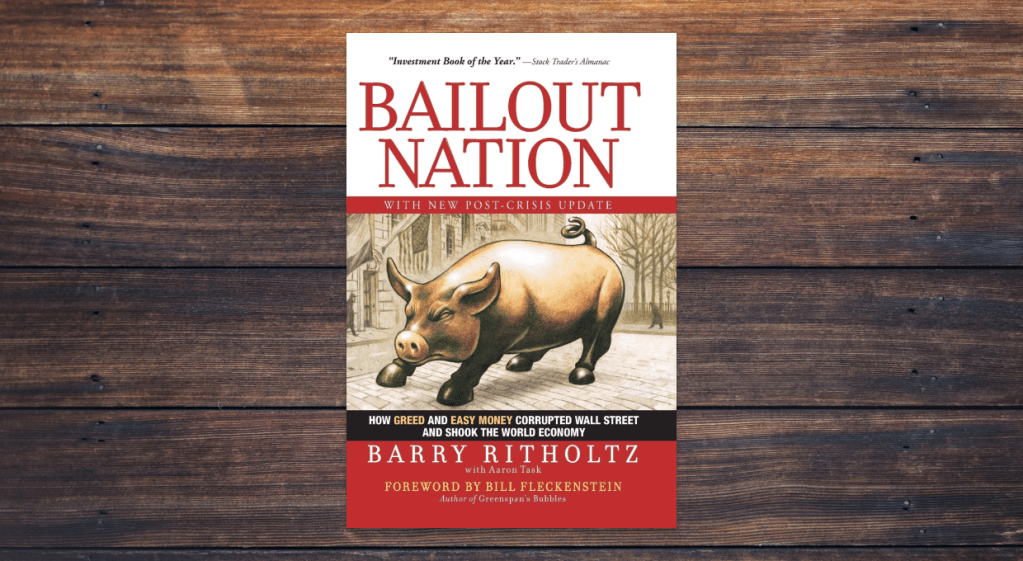
In Bailout Nation: How Greed and Easy Money Corrupted Wall Street and Shook the World Economy, Barry Ritholtz offers a bold and unfiltered look at the roots of the 2008 financial crisis. Unlike dry economic texts, this book blends sharp commentary with accessible explanations to reveal how the U.S. went from a country that once let businesses fail to one that rescues them, no matter the cost.
For readers looking to better understand how Wall Street, government policy, and individual behavior collide to create economic chaos, Bailout Nation is a timely and eye-opening read.
Who Is Barry Ritholtz?

Barry Ritholtz is a widely respected financial analyst, author, and blogger. He’s the founder of Ritholtz Wealth Management and hosts the popular podcast The Big Picture. With decades of experience in investment strategy and market analysis, Ritholtz brings both credibility and clarity to complex financial topics. He writes with the passion of someone who has witnessed the financial system from the inside and isn’t afraid to call out its flaws.
Key Lessons From Bailout Nation
Moral Hazard Is Real and Dangerous
Ritholtz explains how bailing out banks and corporations has created a dangerous cycle of moral hazard, where reckless behavior is rewarded instead of punished. When companies know they’ll be rescued, they take bigger risks with your money.
The Federal Reserve’s Role Is Critical
Bailout Nation dives into how easy money policies, low interest rates, and lack of oversight helped inflate bubbles. Understanding the Fed’s role is essential for anyone looking to learn how monetary policy affects everyday financial life.
Accountability Is Missing in Action
Ritholtz doesn’t shy away from naming names. He highlights how CEOs, regulators, and politicians often avoid consequences for decisions that damage the economy. It’s a sobering lesson in the power of influence and the lack of financial justice.
History Repeats Unless You Learn From It
Bailout Nation offers a historical timeline showing how attitudes toward bailouts have shifted over time. From the Chrysler rescue in 1979 to the massive bailouts of 2008, readers learn how today’s economic environment was shaped by decades of precedent.
Criticisms of the Book
While Bailout Nation is packed with insight, it’s not without flaws. Some readers may find the tone a bit heavy-handed or overtly political. Ritholtz is clearly angry, and for good reason, but that tone might not resonate with readers looking for a more neutral or academic voice.
Additionally, Bailout Nation focuses heavily on the crisis of 2008, which may feel dated to readers more interested in current financial strategies or lessons from more recent events like the COVID-19 market shocks.
Should You Buy This Book?
If you’re someone trying to build your financial literacy, especially around the causes of economic downturns and how Wall Street really operates, Bailout Nation is worth your time. It’s especially helpful for those who want to understand how government policy, corporate greed, and investor psychology intersect.
That said, if you’re looking for a hands-on guide to budgeting, saving, or investing in the S&P 500, this isn’t that kind of book. It’s more about the “why” of financial crises than the “how” of personal finance.
Final Thoughts
Bailout Nation is a powerful critique of America’s financial system, written by someone who knows it well. For readers interested in how government bailouts shape the economy and how greed often goes unchecked, this book offers a thought-provoking perspective.
It’s not a traditional personal finance guide, but it complements one. Understanding the big picture can help you make smarter choices with your money. And for that reason alone, it’s a worthy addition to your financial reading list.
Looking to deepen your understanding of how money works? Bailout Nation might just change the way you think about financial security, risk, and who really pays the price when things go wrong.









 Winchell House
You must be logged in to post a comment.