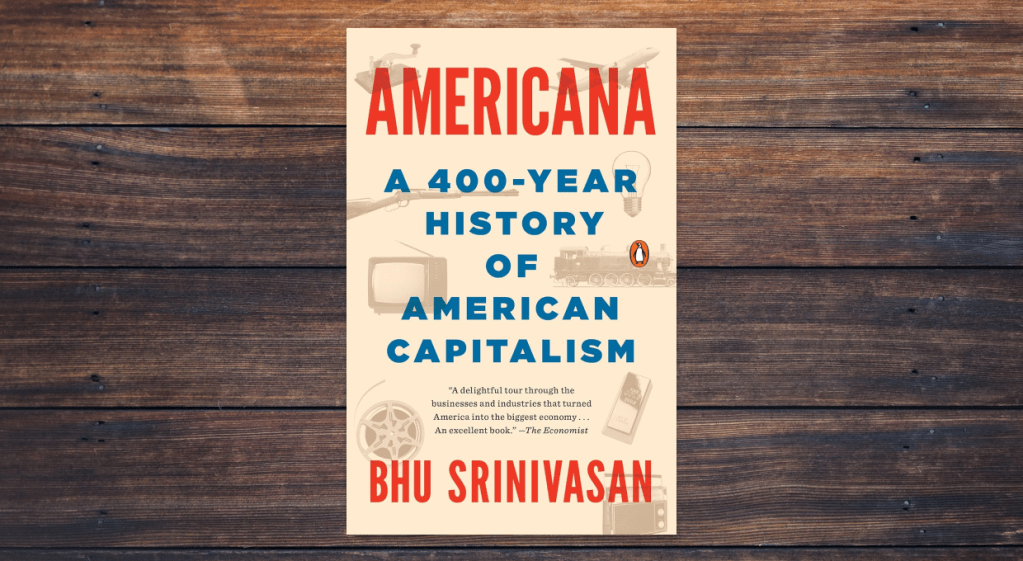
If you’re interested in understanding how American capitalism came to be (and how it continues to shape the economy and culture of the United States) Americana: A 400-Year History of American Capitalism offers a sweeping, engaging look at the forces that have driven wealth creation in America. Part history lesson, part economic exploration, Bhu Srinivasan’s book invites readers to follow the money across four centuries, from colonial tobacco plantations to Silicon Valley start-ups.
Who is Bhu Srinivasan?
Bhu Srinivasan is an entrepreneur and journalist with a deep interest in how innovation, commerce, and capital intersect. Born in India and raised in the United States, he brings a global lens and a fresh perspective to America’s economic narrative. While he is not a traditional historian, his experience in the startup world gives him insight into the mindsets of those who have built (and disrupted) industries over time.
What Readers Can Learn from Americana
Srinivasan’s central thesis is that the story of America is in many ways the story of capitalism. He covers major economic turning points: the rise of railroads, the oil boom, Wall Street’s early influence, the entertainment industry, the internet age, and more.
Each chapter focuses on a specific era or industry, showing how ambition, innovation, and market forces shaped American society.
Here are a few lessons readers can take away:
- Capitalism is always evolving: From fur traders in the 1600s to venture capitalists in Silicon Valley, Srinivasan shows how each generation finds new ways to create and capture value.
- Innovation drives wealth: Many of America’s wealthiest individuals became rich by transforming entire industries. Whether it was Henry Ford’s assembly line or Steve Jobs’ iPhone, innovation remains a powerful wealth engine.
- Government and business are intertwined: From early land grants to railroad subsidies to today’s tax breaks for corporations, the government has played a key role in shaping market outcomes.
- Failure is part of the process: Many big ideas failed before they succeeded… or paved the way for something better. Srinivasan makes it clear that risk is a necessary part of capitalism.
Criticisms of the Book
While Americana is widely praised for its readability and ambition, some critics argue that it lacks depth in certain areas. Because the book spans such a wide timeline, it sometimes feels like a greatest-hits tour of American capitalism rather than a deeply analytical study. Professional historians may take issue with the lack of academic sourcing and the relatively light treatment of complex social and economic forces, especially around issues like slavery, inequality, and labor rights.
Another common critique is that the book leans more toward celebrating capitalism than critiquing it. While Srinivasan does acknowledge downsides, his tone is generally optimistic and focused on opportunity, which may not resonate with readers looking for a more critical take.
Should You Buy It?
If you’re looking for an accessible, high-level overview of how the American economy came to be, Americana is a worthwhile read. It’s especially valuable for people just starting to learn about money, business, and the broader economic system they’re participating in. Readers who enjoy learning through storytelling will appreciate the narrative approach.
Americana isn’t a how-to guide or a traditional personal finance manual, but it can deepen your understanding of the system your money lives in. That alone can help you make more informed decisions about where to invest, how to think about risk, and what it means to build wealth in America.
Final Thoughts
Americana is a great addition to any bookshelf for readers curious about the origins and evolution of American capitalism. It serves as both a historical survey and a reminder of the role capitalism plays in shaping everyday life. While it may not dig into the fine print of economic policy or personal finance strategy, it lays the groundwork for understanding how money moves and why.
If you’re serious about understanding the broader context of your financial decisions, Americana might be the next book to add to your reading list.











You must be logged in to post a comment.