
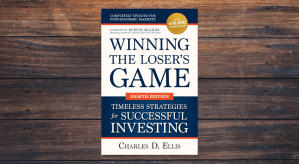
Winning the Loser’s Game: Timeless Strategies for Successful Investing by Charles D. Ellis is one of the most respected books in the world of personal finance and investing. First published in 1985 and updated several times since, the book continues to influence how both individual investors and professionals think about building wealth. While it’s not flashy or filled with hot stock tips, its core message is clear: the best way to win in investing is not to try to beat the market, but to play a different game altogether.
Who is Charles Ellis?
Charles D. Ellis is a well-known investment consultant and educator with decades of experience advising institutional investors. He founded Greenwich Associates, a leading strategy consulting firm for financial services, and has served on the boards of Vanguard and Yale’s investment committee. His deep experience in the world of finance gives him a unique perspective—one that blends rigorous analysis with practical wisdom. Ellis is a strong advocate for low-cost, passive investing and has been one of the most consistent voices urging investors to avoid the traps of market timing and stock picking.
Lessons from Winning the Loser’s Game
One of the most important takeaways from Ellis’s book is that investing is not about outsmarting the market. In fact, Ellis argues that trying to beat the market is a “loser’s game.” This is because most investors, including professionals, underperform the market after costs, taxes, and fees are factored in. Instead, Ellis urges readers to focus on things they can control: saving consistently, keeping costs low, and staying invested over the long term.
Here are some of the key lessons from the book:
- Stop trying to beat the market: The more you trade and speculate, the more likely you are to lose money. The real winners are those who invest steadily and avoid emotional decisions.
- Use low-cost index funds: Ellis is a strong advocate for investing in the S&P 500 and other broad-market index funds. These funds offer diversification, low fees, and strong long-term performance.
- Stay the course: Discipline and patience are essential. Trying to time the market or chase performance almost always ends badly.
- Understand your own behavior: Investors are often their own worst enemies. Fear, greed, and overconfidence can destroy a good investment plan. Being aware of your own psychology is key to long-term success.
- Focus on asset allocation: Your mix of stocks, bonds, and cash matters far more than individual stock selection.
These ideas are directly aligned with the core principles of financial independence: living below your means, investing wisely, and ignoring market noise.
Criticisms of the Book
While Winning the Loser’s Game is widely praised, it’s not without its criticisms. Some readers may find the book repetitive or overly cautious. Those looking for detailed technical strategies, charts, or complex financial models will not find them here. The writing style is more academic than conversational, which may be a barrier for readers new to finance.
Others may argue that Ellis puts too much faith in market efficiency and underestimates the potential for some active strategies to succeed, especially in niche or less-followed markets. However, these criticisms are generally outweighed by the strength of the book’s core message and its long-term relevance.
Why This Book?
For anyone serious about building long-term wealth, Winning the Loser’s Game offers a clear, evidence-based roadmap. It strips away the myths and hype that dominate financial media and replaces them with timeless principles rooted in behavioral science and market history. The book reinforces the importance of living frugally, avoiding high fees, and trusting in the power of compounding returns.
It also makes a strong case for learning—not just about markets, but about yourself. Understanding your own biases and emotions is just as important as knowing how to allocate your portfolio.
Final Thoughts
Winning the Loser’s Game is a powerful reminder that investing doesn’t have to be complicated. In fact, the simpler your strategy, the more likely you are to succeed. Ellis’s message is a refreshing counterpoint to the noise of hot stock picks and market predictions. For readers of all experience levels—whether you’re new to personal finance or reevaluating your investment approach—this book is worth your time.
It’s not just a guide to investing. It’s a lesson in humility, patience, and discipline—all qualities that lead to success not only with money, but in life.




 Winchell House
You must be logged in to post a comment.