
John Cassidy is a respected journalist and author known for his insightful writing on economics, finance, and politics. Many American readers interested in learning how money works have encountered his work in prominent publications like The New Yorker and The New York Review of Books. Cassidy’s approach to writing about complex financial systems is clear, human, and grounded in facts, making his work a reliable resource for people trying to better understand how markets function and how our psychology interacts with money.
Background and Career
John Cassidy was born in England and studied at Oxford University before earning a master’s degree in journalism from Columbia University. His professional career spans decades and includes reporting on economics, science, and global affairs. His writing is both accessible and deeply informed, often weaving history and policy into his narratives.
He is best known for his work as a staff writer at The New Yorker, where he has contributed since the mid-1990s. Cassidy specializes in covering economic policy, the Federal Reserve, financial markets, and corporate behavior. His ability to explain difficult economic concepts without oversimplifying them has earned him a loyal readership.
Notable Books by John Cassidy
Cassidy has written two major books that continue to be widely read by those trying to make sense of the financial system and their own financial behaviors.
Dot.con: The Greatest Story Ever Sold
Dot.con analyzes the dot-com bubble of the late 1990s and early 2000s. Cassidy walks readers through the rise and fall of internet startups that were grossly overvalued by investors. He explores how speculative behavior, media hype, and weak regulatory oversight led to a massive market crash. It’s an excellent book for anyone wanting to understand how bubbles form in the stock market and how to avoid getting caught in the next one.
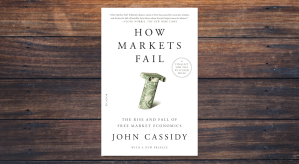
How Markets Fail: The Logic of Economic Calamities
Published in the aftermath of the 2008 financial crisis, How Markets Fail, explores the flaws in free-market ideology. Cassidy critiques the belief that markets are always rational and self-correcting. He blends economic theory with real-world examples to show how markets can—and often do—fail when left unchecked. The book is particularly useful for readers who want to understand systemic risk, moral hazard, and why regulation matters in a capitalist economy.
Why His Work Matters for Personal Finance
Although Cassidy does not write personal finance guides or budgeting books, his work offers crucial context for anyone interested in financial decision-making. Understanding the bigger economic picture can help individuals make smarter choices with their money, especially when investing in the stock market or deciding whether to trust certain financial advisors or institutions.
Cassidy’s writing serves as a reminder that markets are driven by human behavior, not just numbers and algorithms. That’s why learning about behavioral finance, cognitive biases, and market psychology can be just as important as knowing how to open a high-yield savings account or which budgeting app to use.
Connecting Cassidy’s Work to Your Financial Journey
If you’re just starting out on your financial journey—or even if you’re well into it—reading books on money and economics can help reinforce good habits.
Cassidy’s work is a good complement to more tactical personal finance books like The Millionaire Next Door or Your Money or Your Life. While those books focus on saving, budgeting, and investing in index funds like the S&P 500, Cassidy’s writing gives readers a macro view of how economic policy, financial bubbles, and public behavior influence markets over time.
Understanding this context can make you a more informed investor and help you avoid costly mistakes. It also helps you become more skeptical of financial fads, overhyped assets, or advisors who promise unrealistic returns.
Final Thoughts
John Cassidy is not a financial advisor, but his work belongs on the reading list of anyone serious about learning how money works. His books and essays provide a clear and factual analysis of the economic forces that shape our financial lives. If you’re using a budgeting app, building an emergency fund in a high-yield savings account, or steadily investing in a low-cost S&P 500 index fund, understanding the economic backdrop can help reinforce your strategy.
By reading authors like Cassidy, you’ll gain a broader understanding of the financial system—and develop the confidence to make better decisions with your money.









 Winchell House
You must be logged in to post a comment.