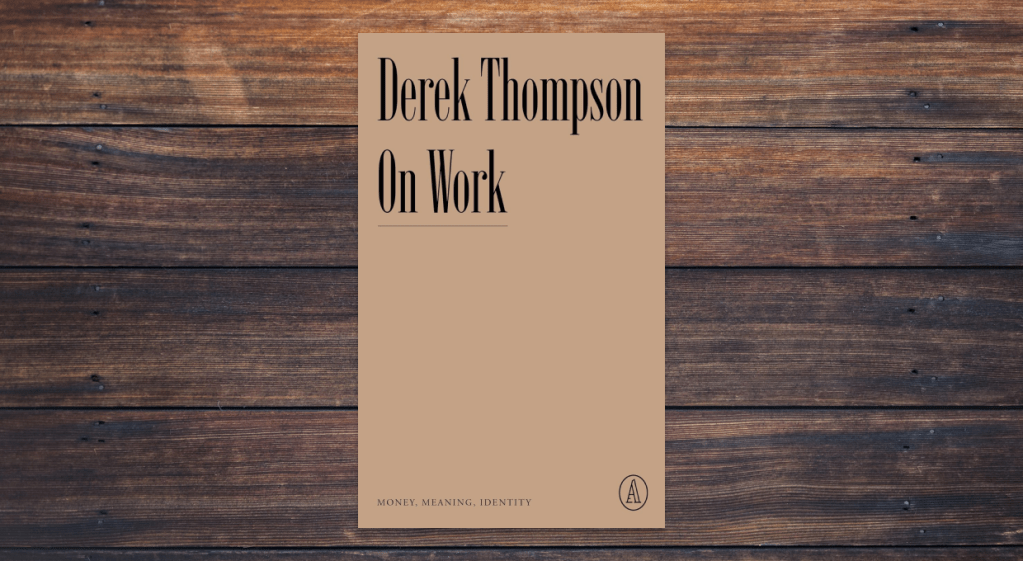
On Work: Money, Meaning, Identity is a concise anthology—part of the Atlantic Editions series—collecting Derek Thompson’s most compelling essays from The Atlantic. Spanning topics from “workism” to automation, the book explores the evolving meaning of labor in modern life.
Who is Derek Thompson?
Derek Thompson (born May 18, 1986) is an American journalist and podcaster. He served as a staff writer at The Atlantic from 2009 until June 2025, when he launched his independent newsletter on Substack. He’s authored two other notable books—Hit Makers and Abundance (co-written with Ezra Klein)—and hosts popular podcasts such as Plain English and Crazy/Genius.

Lessons for the Reader
Workism as Identity
A defining idea in the anthology is workism—the framing of work as a source of identity and moral purpose. Thompson’s writing brings out how this ideology reshapes expectations and burdens in contemporary life.
Automated Future of Work
Essays included in the book address automation and the shifting landscape of labor, prompting deeper consideration of security, purpose, and societal structure.
Historical and Psychological Context
Thompson situates modern work narratives within broader social history, including insights into changing norms, community values, and the psychological toll of always “optimizing” yourself.
Should You Buy It?
Yes, if you:
- Want a sharp, digestible introduction to modern commentary on work and its psychological dimensions.
- Prefer tight, well-crafted essays rather than a long-form book.
- Appreciate Thompson’s accessible style and thought-provoking framing.
Maybe skip it if you:
- Have already read most of his work and are seeking entirely new analysis or extended exploration.
- Expect a comprehensive, unified argument or deep theoretical framework.
Final Thoughts
On Work: Money, Meaning, Identity offers a compelling, accessible entry into the cultural conversation around work, purpose, and how modern society frames labor. For readers building financial literacy—and reflecting on how identity intersects with income, savings, and long-term goals—it’s a useful mirror to what many unconsciously believe about work.
If you value clarity, concision, and thought-prodding essays, this anthology is worth your time. For deep readers already familiar with Thompson’s journalism, it may serve best as a refresher or inspirational prompt rather than a revelation.




 Winchell House
You must be logged in to post a comment.