
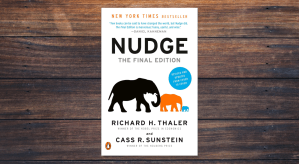
Sometimes the smallest push can lead to the biggest change. Nudge: Improving Decisions About Health, Wealth, and Happiness by Richard Thaler and Cass Sunstein explores how subtle adjustments in the way choices are presented can help people make better decisions. First published in 2008, the book became a landmark in behavioral economics and continues to influence policymakers, businesses, and everyday individuals who want to understand the psychology behind decision-making.
Who is Richard Thaler?
Richard Thaler is a Nobel Prize-winning economist and professor at the University of Chicago Booth School of Business. He is widely regarded as one of the pioneers of behavioral economics, a field that blends psychology with economics to better understand why people often make irrational choices. Thaler’s work has challenged the idea that humans are always rational decision-makers, showing instead that we are influenced by habits, biases, and the way options are framed.
Lessons Readers Can Take Away
One of the central lessons in Nudge is the concept of “choice architecture.” The way options are presented—whether in finance, health, or retirement planning—can dramatically influence the choices people make. For example, automatically enrolling employees in a 401(k) plan rather than requiring them to opt in has been shown to increase participation rates significantly.
Readers also learn about the idea of “libertarian paternalism,” which balances freedom of choice with gentle guidance. Thaler and Sunstein argue that nudges should steer people toward decisions that improve their long-term well-being without restricting their ability to choose otherwise.
For everyday money management, the book highlights practical nudges such as setting up automatic savings, using budgeting apps to track spending, or framing investment decisions in a way that reduces emotional bias. These insights align closely with the principles of frugality, investing in the S&P 500, and keeping financial habits simple and sustainable.
Criticisms of the Book
While Nudge is widely praised, it is not without criticisms. Some argue that the book overestimates the effectiveness of nudges, pointing out that many behavioral interventions fade over time as people adjust. Others suggest that nudging can be a form of manipulation, raising ethical concerns about who gets to decide what is in people’s best interests. Critics also note that nudges alone cannot solve larger structural issues in society, such as inequality or lack of access to affordable healthcare.
Should Readers Buy It?
Readers interested in personal finance, psychology, or public policy will find Nudge engaging and thought-provoking. While it is not a step-by-step guide to budgeting or investing, it provides a framework for understanding why we make certain financial decisions and how small changes in behavior can lead to better outcomes. For those building a stronger relationship with money—whether through saving more, investing consistently, or reducing lifestyle creep—the book offers practical ideas that can be applied immediately.
Final Thoughts
Nudge remains one of the most influential books on decision-making and behavioral economics. It challenges readers to recognize the unseen forces that shape their daily choices and offers strategies for taking control of them. While some may debate the limits of nudging, the book’s core message—that small shifts in behavior can lead to significant improvements—is both powerful and practical. For anyone on the path toward financial independence, Nudge is well worth adding to your reading list.









 Winchell House
You must be logged in to post a comment.