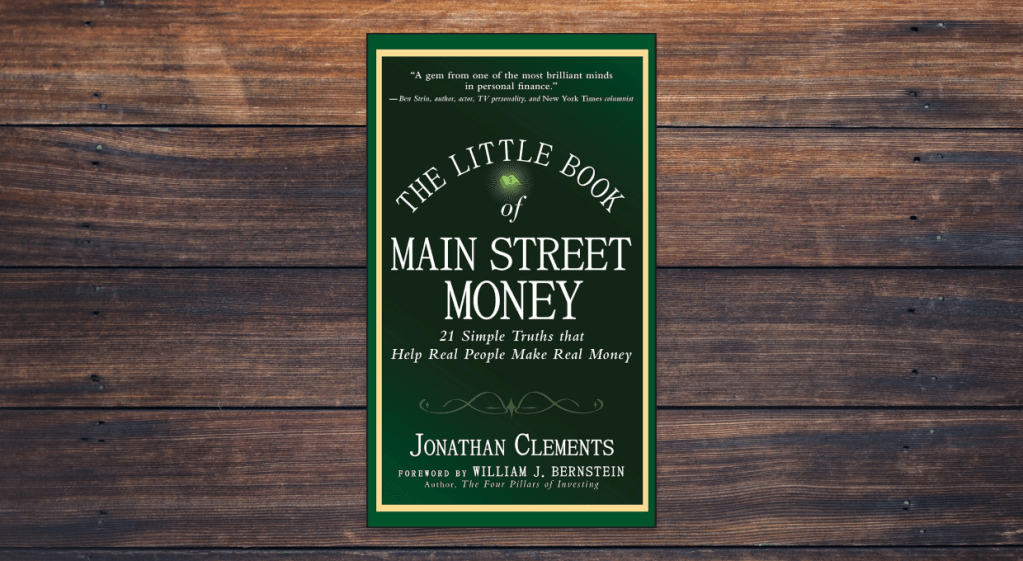
Money books often fall into two categories: overly technical manuals filled with jargon, or motivational bestsellers that lack substance. Jonathan Clements’ The Little Book of Main Street Money strikes a balance between the two. Written in plain language, the book offers readers a practical guide to managing personal finances, while also exploring the psychology behind how people relate to money.
Who is Jonathan Clements?
Jonathan Clements is a veteran financial journalist best known for his long tenure at The Wall Street Journal, where he wrote hundreds of columns on personal finance and investing. Over the years, he developed a reputation for cutting through Wall Street hype and helping everyday Americans understand how to build wealth without unnecessary complexity. His voice has always been grounded in realism, making him a trusted guide for readers who want financial advice that actually works in practice.

Lessons from the Book
The book distills decades of financial wisdom into 21 key truths, each presented as a standalone lesson. Some of the most valuable insights include:
- Simplicity wins in investing: Clements argues that most people are better off sticking with broad-market index funds, such as the S&P 500, rather than chasing stock-picking or expensive financial advisors.
- Lifestyle creep is the enemy of wealth: As income grows, so does the temptation to spend more. The book reminds readers to avoid unnecessary lifestyle upgrades that prevent long-term wealth building.
- Money is more than numbers: Clements highlights how emotions, habits, and personal psychology play a central role in financial success. Understanding your own relationship with money is as important as learning about investments.
- Small, consistent choices matter: Building wealth doesn’t require winning the lottery or taking huge risks. It comes from saving steadily, investing wisely, and staying patient over decades.
Criticisms of the Book
While the book has many strengths, there are a few areas where readers may find it lacking:
- Brevity over depth: The book is intentionally concise, but this can leave some readers wanting more detailed explanations or actionable strategies.
- Less relevant for advanced investors: Those with significant investing experience or a strong financial background may find the lessons too basic.
- Not a step-by-step plan: Instead of providing a structured path, the book offers general principles. Readers seeking a detailed budgeting system or investment blueprint may be disappointed.
Should You Buy It?
For anyone beginning their financial journey or looking for a clear refresher, The Little Book of Main Street Money is an excellent choice. Its approachable style makes it ideal for readers who feel overwhelmed by financial jargon but still want to make smarter money decisions. However, if you’re already well-versed in personal finance and investing, the material may feel like review rather than new guidance.
Final Thoughts
Jonathan Clements’ work stands out because it blends financial wisdom with human psychology. The Little Book of Main Street Money is not just about how to grow a portfolio, but also about how to live with money in a way that supports a balanced, fulfilling life. For readers who value straightforward advice and want to build lasting wealth without overcomplicating the process, this book is a worthwhile addition to their financial library.









 Winchell House
You must be logged in to post a comment.