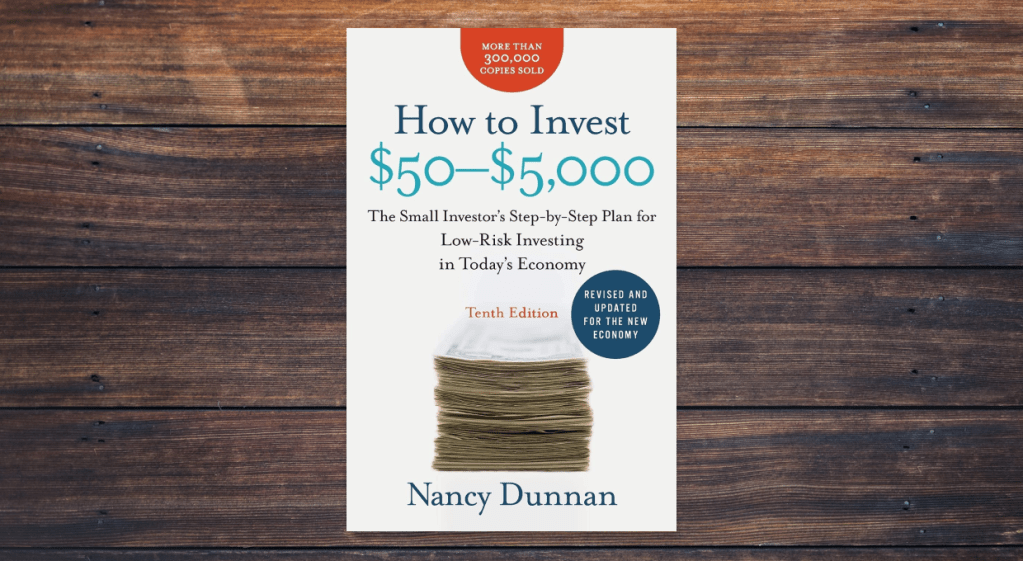
Many people assume that investing requires large amounts of money to get started. Nancy Dunnan’s book How to Invest $50–$5,000 challenges that belief by showing readers that even modest sums can grow when invested wisely. The book, now in its 10th edition, has been updated over the years to reflect changes in the economy and financial markets, making it a longstanding resource for small investors.
Who was Nancy Dunnan?
Nancy Dunnan was a financial journalist and investment advisor who specialized in making money topics accessible to everyday readers. She wrote several personal finance books aimed at demystifying investing, budgeting, and saving for those who might feel overwhelmed by Wall Street jargon. Dunnan’s approachable style earned her a following among beginners who wanted straightforward guidance without complicated theories.
Lessons from the Book
One of the book’s central messages is that you don’t need a large sum of money to begin investing. Readers are guided through step-by-step strategies for putting small amounts of cash to work, with a focus on minimizing risk. Some of the lessons include:
- Start small: Even $50 can be invested in savings accounts, money market funds, or other low-risk vehicles.
- Scale up as you save: The book shows how to gradually move from conservative holdings into higher-return investments as your account grows.
- Diversification matters: By spreading investments across stocks, bonds, and cash equivalents, readers can reduce risk while still seeking growth.
- Long-term thinking: Building wealth is about patience and consistency rather than quick wins.
These principles are especially useful for readers new to personal finance, who may not realize how much progress can be made with small, regular contributions.
Criticisms of the Book
While How to Invest $50–$5,000 has been a trusted resource for decades, there are limitations worth noting. Some of the investment vehicles discussed may feel dated in today’s economy, as online brokerages and commission-free trading have dramatically changed the investing landscape. Additionally, certain sections focus heavily on conservative investments that may not keep up with inflation over the long term. Advanced investors may find the strategies too basic, and some readers might prefer more modern guides that cover index funds, exchange-traded funds (ETFs), and robo-advisors.
Should You Buy It?
If you are completely new to investing and looking for a simple, approachable introduction, Nancy Dunnan’s book still offers value. It is especially helpful for readers who want reassurance that small amounts of money can be invested effectively. However, if you are already familiar with low-cost index funds, online brokerages, and modern retirement planning strategies, you may find the book’s advice too limited or outdated.
Final Thoughts
How to Invest $50–$5,000 is a solid starting point for beginners who want to take their first steps into the world of investing without being overwhelmed. While the book shows its age in some areas, its central message remains timeless: you don’t need a lot of money to begin building wealth. For readers interested in straightforward financial guidance, it can be a worthwhile addition to their money bookshelf.



 Winchell House
You must be logged in to post a comment.