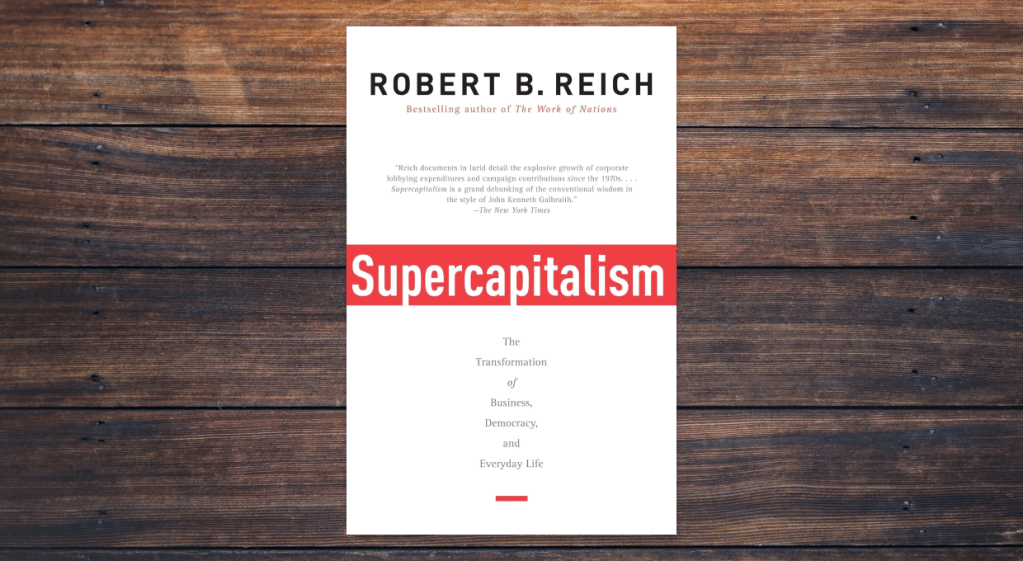
Supercapitalism is a provocative look at how the American economy evolved from the mid-20th century to today, and how those changes have shaped politics, corporate power, and the daily financial choices of regular people. The book aims to explain why consumers and investors have grown more powerful at the same time that citizens have become less influential, creating tension between what we want as shoppers and what we value as members of a democratic society.
Who is Robert Reich?
Robert Reich served as Secretary of Labor in the Clinton administration, taught public policy at UC Berkeley, and built a career as one of the most visible economic commentators in the United States. His work often focuses on inequality, the structure of modern capitalism, and how policy shapes individual economic outcomes. He is known for writing in a way that is accessible to the general public, making complex economic ideas understandable without sacrificing substance.
Lessons Readers Can Take Away
Reich argues that postwar capitalism operated in a more constrained environment. Companies were less competitive, returns were moderate, and wages tended to rise with productivity. As globalization and technology scaled up competition, consumers began demanding lower prices and investors demanded higher returns. Companies responded accordingly, becoming more aggressive in cost-cutting, lobbying, and supply chain restructuring.
Several lessons stand out for readers who want to better understand how the economy influences personal financial decisions.
First, the incentives embedded in the market are powerful. Consumers consistently choose lower prices, faster shipping, and better products, even when those choices conflict with broader social values. Understanding this helps clarify why strong regulation and clear rules matter.
Second, the book highlights how shareholders have gained influence. Anyone investing in the S&P 500 benefits from this shift, but it also comes with a responsibility to understand how corporations behave on your behalf.
Third, Reich reinforces the importance of being an informed participant in both the market and the political system. Reading books on money, following economic trends, and recognizing how policy affects investment outcomes can help individuals make grounded decisions.
Criticisms of the Book
The book is widely discussed, but it draws criticism on several fronts.
Some argue that Reich overstates the clarity of a golden-age mid-century economy. The period he praises also included limited competition, discrimination, and barriers to entry that kept many Americans from participating fully.
Others note that while the book does a strong job describing how capitalism changed, it offers fewer detailed solutions. Readers looking for a policy blueprint may feel the argument ends too early.
Another critique is that Reich’s framing of consumers versus citizens can feel too neat. In reality, people balance values, price sensitivity, and long-term goals in complex ways. Frugal living, long-term investing, and careful budgeting work within the modern economy without requiring a retreat to mid-century models.
Should You Buy It?
If you want to deepen your understanding of how modern capitalism developed and how it shapes your financial life, yes. The book is not a personal finance manual, but it provides valuable context for anyone who invests in broad market index funds, evaluates corporate behavior, or wants to understand why certain economic trends seem persistent.
It may not satisfy readers looking for step-by-step financial advice or a clear set of policy prescriptions, but it will challenge how you think about markets, regulation, and your role as both a consumer and an investor.
Final Thoughts
Supercapitalism is a thoughtful, accessible read that helps explain why the economic landscape looks the way it does today. For readers who want to sharpen their understanding of corporate power, public policy, and market incentives, it offers a clear narrative worth exploring. It encourages reflection on how individual choices intersect with larger economic structures, making it a relevant addition to any reading list focused on learning about money and long-term financial decision making.









 Winchell House
You must be logged in to post a comment.