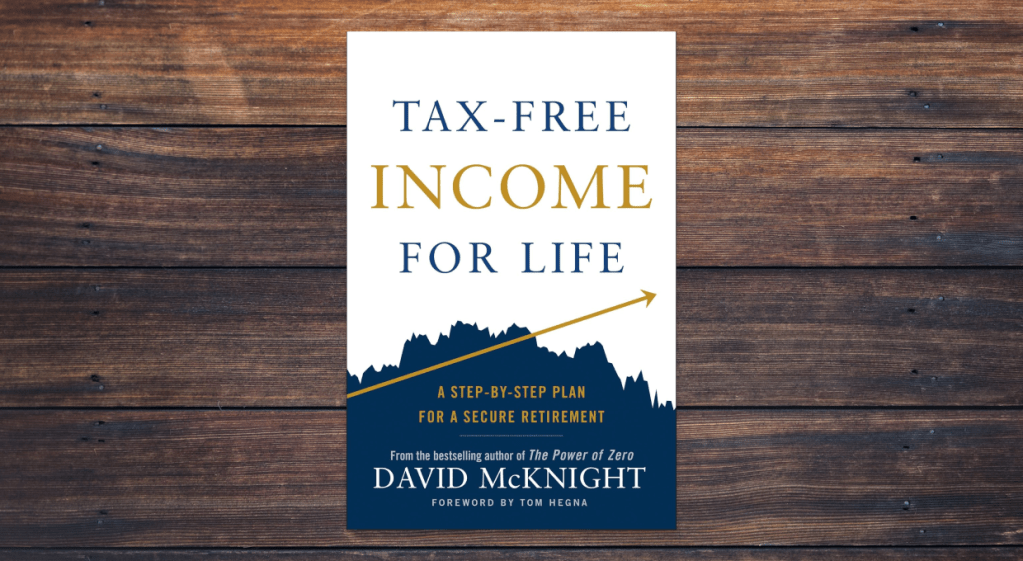
Tax-Free Income for Life by David McKnight is a retirement planning book that argues many Americans are unprepared for future tax increases and should shift toward tax-free retirement strategies. The book blends personal finance guidance with policy commentary and offers readers a structured plan intended to reduce long-term tax risk. It has become popular among people searching for ways to protect their retirement income, especially those looking for clear explanations of Roth conversions, life insurance policies, and tax planning.
Who is David McKnight
David McKnight is a financial advisor and author best known for The Power of Zero, a book that helped popularize the idea of building a zero percent tax bracket in retirement. His writing focuses on long-term tax risk, the national debt, and the importance of preparing for potentially higher future tax rates. McKnight has built a career around simplifying complex financial topics and delivering them in a way that resonates with retirees and near-retirees who want predictable, stable income streams.
Lessons Readers Can Take Away
McKnight’s central message is that tax planning is not optional. He believes future tax rates will likely be higher due to structural budget pressures on the federal government. Some of the main lessons include:
Understanding tax risk
The book argues that many investors underestimate how much taxes can erode retirement income. McKnight encourages readers to evaluate how much of their wealth sits in tax-deferred accounts and to model how rising rates might impact withdrawals.
Considering Roth conversions
One of the most actionable ideas is the strategic use of Roth IRA conversions. McKnight outlines a multi-year approach to converting traditional IRA or 401(k) funds into Roth accounts while staying in lower tax brackets. This appeals to readers who want long-term tax efficiency and more control over future income.
Leveraging the life insurance retirement plan
The book highlights the potential role of properly structured permanent life insurance as a tax-free income source. This concept appeals to readers seeking stable, predictable cash value accumulation, but it requires careful planning, realistic expectations, and the right policy structure.
Creating a balanced retirement income plan
McKnight suggests combining Roth accounts, Social Security timing strategies, and life insurance cash value to build predictable income that remains resilient in different tax environments. The book encourages readers to think beyond simple market returns and consider how taxes interact with overall retirement planning.
Criticisms of the Book
While the book is informative, there are several criticisms worth noting:
Heavy emphasis on life insurance
The book frequently highlights the benefits of permanent life insurance, which may feel overly promotional to some readers. Life insurance can be useful in certain situations, but it is complex, expensive, and not the right fit for most people building wealth through straightforward methods like investing in broad index funds.
Predicting future tax policy
McKnight makes strong claims about future tax increases. While these concerns are grounded in long-term budget data, no one knows exactly how tax policy will evolve. Readers should treat these projections as scenarios to consider, not certainties.
Not enough focus on low-cost investing
The strategies in the book focus heavily on tax structure rather than investment simplicity. Many readers would benefit from a stronger emphasis on frugality, broad diversification, and low-fee investing, which are proven ways to build financial security.
Should Readers Buy It
Readers who want a deeper understanding of tax planning, Roth conversions, and the long-term implications of tax-deferred accounts will likely find the book useful. It provides a clear narrative, simple explanations, and a structured way to think about retirement tax exposure.
However, readers should approach the insurance-driven sections with caution and seek objective advice before making changes involving permanent life insurance. For most people, consistent investing in low-cost index funds, keeping expenses low, and building a strong savings habit remain the foundation of financial independence.
Final Thoughts
Tax-Free Income for Life is a readable, accessible book on retirement tax strategy. It delivers valuable insights into how taxes shape long-term financial outcomes and encourages readers to take tax planning seriously rather than treating it as an afterthought. While some recommendations are more complex and product-focused than necessary, the overall message is practical: understand how taxes affect your retirement plan and take steps early to protect your future income.
For readers who want to learn more about retirement planning, tax-efficient investing, and smarter long-term decision-making, this book can be a helpful addition to their personal finance library.


 Winchell House
You must be logged in to post a comment.