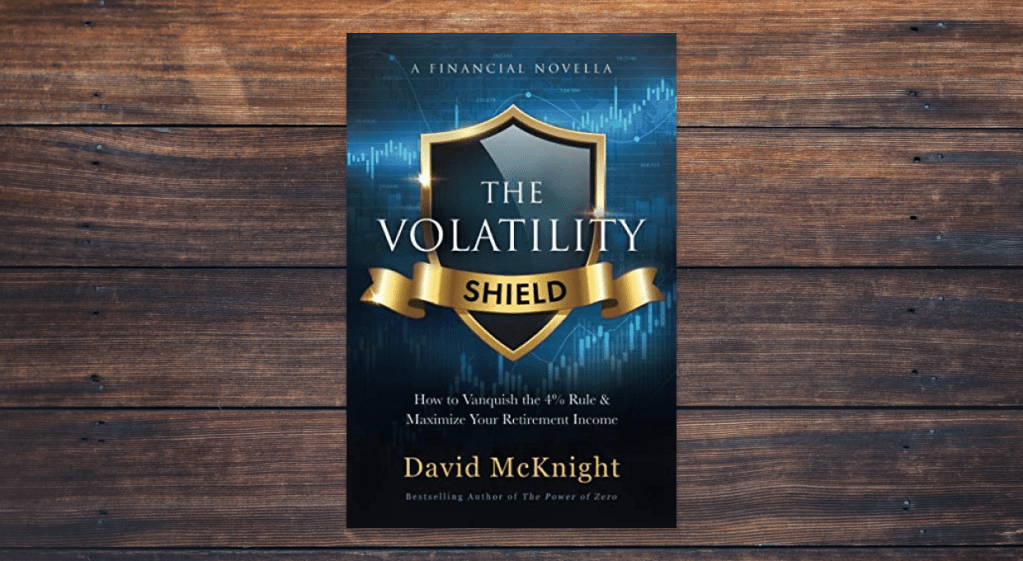
The search for reliable retirement income strategies has intensified as market cycles grow more frequent and investors question whether the traditional 4 percent rule still fits modern realities. The Volatility Shield enters that debate with a clear mission: rethink withdrawal rules, reduce risk in retirement, and show readers how to create a more dependable income stream. The book sits squarely in the broader conversation around retirement planning, budgeting, long-term investing, and learning how to manage money with intention.
Who is David McKnight?
David McKnight is best known for his tax-focused retirement planning frameworks, especially his earlier book The Power of Zero. His work emphasizes lowering lifetime tax exposure, understanding required minimum distributions, and recognizing how tax policy shapes long-term financial outcomes. McKnight writes for a mainstream audience and focuses on practical strategies rather than academic theory, which has made his books accessible to readers who want clear direction without wading into technical jargon.
Lessons Readers Can Take Away
One of the central ideas in The Volatility Shield is that sequence-of-returns risk can undermine even a well-funded nest egg. McKnight highlights the real problem faced by retirees who experience poor market returns early in retirement and then withdraw at fixed percentages. Even strong average long-term market performance cannot compensate for bad timing.
The book argues for a more flexible approach to withdrawals. Instead of relying on the 4 percent rule, McKnight encourages readers to pair spending with market conditions: reduce withdrawals during downturns and harvest gains during strong years. This concept is not new, but McKnight packages it in a simple framework that resonates with readers who want something more dynamic than a static rule.
He also suggests building a buffer of safe assets such as short-term bonds or cash-equivalent reserves to act as a “volatility shield.” The purpose is to cover living expenses during down markets so the investor avoids selling stock positions at depressed prices. For readers who already understand the value of high-yield savings accounts, treasury bills, and thoughtful budgeting, this fits naturally into a broader strategy of staying flexible and reducing unnecessary risk.
Another lesson is the importance of aligning retirement spending with personal psychology. McKnight emphasizes that many retirement failures stem not just from market performance, but from emotional responses to volatility. Readers are encouraged to adopt a systems-based mindset rather than rely on gut reactions.
Criticisms of the Book
The book sometimes overstates the weaknesses of the 4 percent rule without acknowledging that many retirees already adapt their withdrawals in practice. Critics argue that the 4 percent rule was never meant to be a rigid prescription, but a guideline based on historical data intended to provide a margin of safety.
Another criticism is that some of McKnight’s solutions have been presented in various retirement planning books for years. The volatility-based withdrawal concept is well known among financial advisors and academics, even if the packaging here is unique. Readers expecting groundbreaking research may find the ideas familiar.
There is also a tendency to oversimplify the role of safer assets. While a buffer can help, maintaining overly large cash reserves can drag on long-term returns. Investors still need clear budgeting habits, a disciplined investment philosophy, and a commitment to low-cost index funds to make the approach work consistently.
Should You Buy It
Readers who enjoy books on money that are practical, easy to understand, and focused on retirement planning will likely find value in this one. Those who want a clear explanation of sequence-of-returns risk and how it affects retirement income will appreciate the framing.
If you are already well read in retirement strategy, the book may feel repetitive. It is not a step-by-step manual and does not provide detailed asset allocation models or probability-based simulations the way some academic retirement research does. Readers looking for more rigorous analysis might prefer alternatives.
Still, if your goal is to understand why rigid withdrawal rules can be dangerous and how a more flexible system can help stabilize retirement income, it is a worthwhile read.
Final Thoughts
The Volatility Shield offers a straightforward look at one of the biggest risks in retirement: the timing of market returns and its impact on withdrawal strategies. McKnight provides a clear explanation of why retirees benefit from flexibility, careful budgeting, and a safety buffer of stable assets. While not every idea is entirely new, the book succeeds as an accessible primer for anyone learning the fundamentals of retirement income planning.
For readers building a long-term financial plan centered around frugality, broad-market index investing, and deliberate spending management, the book reinforces important principles that can support a resilient retirement strategy.



 Winchell House
You must be logged in to post a comment.