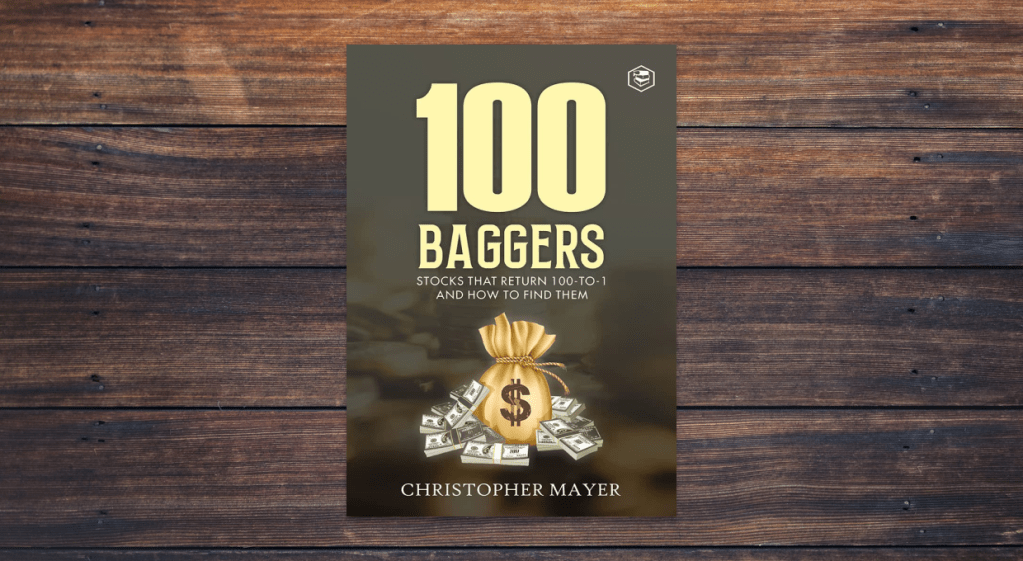
Finding a stock that returns 100 times your original investment sounds like fantasy. Yet history shows it happens more often than most investors realize. In 100 Baggers: Stocks That Return 100-To-1 and How to Find Them, Christopher Mayer studies decades of market data to understand how these extraordinary investments emerge and what individual investors can learn from them. The book is part market history, part behavioral finance, and part investing philosophy.
This is not a step by step guide to picking the next hot stock. Instead, it is a framework for thinking long term, avoiding common mistakes, and positioning yourself to benefit from compounding.
Who is Christopher Mayer?
Christopher Mayer is a professional investor, financial writer, and newsletter editor with decades of experience studying public markets. He has written for major financial publications and is known for his deep historical research and long term perspective on investing.
Mayer approaches investing with a blend of data analysis and psychology. Rather than focusing on short term price movements or macro forecasts, he emphasizes business quality, incentives, and time. That perspective shapes every argument in 100 Baggers.
Key Lessons From 100 Baggers
One of the central findings of the book is that the biggest investment returns tend to come from holding a small number of exceptional businesses for a very long time. Many 100 Baggers began as ordinary companies, not obvious winners. What set them apart was durable growth, high returns on capital, and management teams that reinvested profits wisely.
Another major lesson is the importance of avoiding premature selling. Mayer shows that many investors correctly identify great businesses but exit too early due to volatility, fear, or valuation concerns. Taxes, trading costs, and lost compounding all work against frequent trading.
The book also highlights the role of psychology. Investors are often uncomfortable holding concentrated positions, sticking with unpopular stocks, or ignoring short term noise. Mayer argues that temperament matters as much as intelligence. Patience, discipline, and the ability to tolerate discomfort are recurring themes.
Finally, 100 Baggers reinforces the power of compounding. Even modest annual returns can lead to life changing outcomes when sustained over decades. This aligns closely with the idea that time in the market matters more than timing the market.
Criticisms of the Book
One common criticism is survivorship bias. The book focuses on the winners, which can make extraordinary outcomes feel more achievable than they truly are. For every 100 bagger, there are many companies that stagnated or failed entirely.
Another limitation is practical applicability. While the lessons are valuable, identifying future 100 baggers in advance is extremely difficult. Most readers will not have the time, temperament, or risk tolerance to build a concentrated portfolio of individual stocks.
Some readers may also find the book less actionable than expected. Mayer intentionally avoids giving stock tips or rigid rules. Investors looking for a checklist or formula may come away disappointed.
Should You Buy It?
If you are interested in learning how great investments actually play out over time, 100 Baggers is worth reading. It is especially valuable for readers who want to understand long term investing, business fundamentals, and investor behavior.
However, it should not replace a diversified strategy for most people. For readers who prefer simplicity, low costs, and broad diversification, investing in the S&P 500 remains a highly effective approach. The book works best as a supplement to that strategy, not a replacement.
Final Thoughts
100 Baggers is ultimately a book about patience, discipline, and respecting the math of compounding. It challenges the urge to trade frequently, chase trends, or overestimate your ability to predict the future.
For readers learning about money, investing, and financial psychology, this book offers valuable perspective. You may never own a true 100 bagger, but understanding how they happen can make you a better, calmer, and more rational investor over the long run.











You must be logged in to post a comment.