
Michael Burry is one of the most intriguing and prominent figures in modern finance, best known for being one of the first investors to predict and profit from the 2008 U.S. subprime mortgage crisis. His story highlights the importance of contrarian thinking and rigorous fundamental analysis—principles that resonate deeply with the Warren Buffett-style of investing that many readers are interested in.
From Doctor to Deep Value Investor
Burry’s background is unconventional for a Wall Street icon. Born in 1971, he was trained as a physician, earning his M.D. from Vanderbilt University School of Medicine and beginning a residency in neurology at Stanford. However, during his medical training, he developed a passion for value investing. He started a hedge fund, Scion Capital, in 2000, using his personal savings and family loans.
Burry’s investment approach is rooted in the philosophy of Benjamin Graham and David Dodd’s seminal work, Security Analysis. He adheres to the concept of a “margin of safety,” seeking out companies whose stock prices are trading significantly below their intrinsic value. He is known for a painstaking, detail-oriented approach, often reading every page of a company’s financial documents.
The “Big Short” Explained
Burry’s defining moment came in the mid-2000s. While the general market consensus celebrated an unstoppable housing boom, Burry’s independent research revealed systemic flaws in the mortgage-backed securities market. He predicted that the rising interest rates on adjustable-rate subprime mortgages would lead to mass defaults starting around 2007.
To act on this conviction, he took a bold and complex position: he purchased credit default swaps (CDS) on specific tranches of subprime mortgage bonds. Essentially, he was betting against—or “shorting”—the housing market. This was a lonely and stressful bet; his clients grew furious, questioning his judgment as he paid millions in premiums while the market initially continued to rise. He was forced to restrict withdrawals from his fund to maintain the position, leading to an investor revolt.
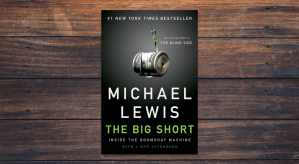
When the housing market finally collapsed in 2007-2008, Burry’s thesis proved correct. His fund made over $700 million in profit for his remaining investors, in addition to a personal profit of $100 million. This extraordinary story was immortalized in Michael Lewis’s book, The Big Short: Inside the Doomsday Machine, and the subsequent Oscar-winning film The Big Short, where Christian Bale portrayed him.
The Encore: GameStop, the $1.6 Billion Puts, and the Final Letter
Burry’s post-2008 career was as eventful as the Big Short. In 2019, years before the meme-stock mania, his fund Scion bought into GameStop as a deep-value play, and he wrote the board urging share buybacks. He sold in late 2020, before the January 2021 short squeeze sent the stock vertical. In August 2023, Scion’s 13F disclosed roughly $1.6 billion in notional put options against the S&P 500 and Nasdaq 100; the next quarter’s filing showed the puts were gone.
The final chapter came in October 2025, when Burry wrote investors that he would liquidate the funds and return capital by year’s end, saying his estimation of value in securities was no longer in sync with the markets. Scion’s SEC registration was terminated on November 10, 2025. Its last 13F showed about $1.38 billion, nearly 80 percent of it in put options against Palantir ($912 million notional) and Nvidia ($187 million notional), though Burry noted on X that 13F notional figures overstated his true exposure by roughly a hundredfold.
The Honest Footnote: Early Is Expensive
Burry’s later career is also a cautionary tale, and an honest profile should say so. Several of his high-profile bearish bets after 2008 were early enough to function as wrong: the 2023 index puts were opened into a raging bull market and closed within a quarter. His GameStop exit was disciplined value investing, and it still meant watching from the sidelines as the stock did the once-in-a-generation thing.
The lesson cuts both ways. The Big Short worked because he could hold the position for years while paying premiums. When the structure does not allow that, being right on the analysis and early on the timing produces the same account statement as being wrong. Conviction is only an edge if you can afford to wait for it.
Burry’s Lessons for Learning About Money
Burry’s career offers valuable lessons for anyone on a financial journey:
- Do Your Own Research (D.Y.O.R.): Burry’s success was based on his willingness to do the tedious, independent work that Wall Street professionals ignored. His example underscores the importance of financial literacy and not relying blindly on ratings agencies or the popular sentiment.
- The Power of Psychology: His experience, as chronicled in The Big Short, is a powerful case study in the role of psychology in finance. The pressure he faced from investors highlights the difficulty of holding a contrarian position, even when the data supports it. This reinforces the value of books on money like The Psychology of Money, which explore the emotional side of financial decision-making.
- The Value of Patience: Burry held his position for years despite immense internal and external pressure, demonstrating that realizing value can take significant time. This aligns with a long-term strategy of investing in the S&P 500.
While Burry is a unique and often unpredictable investor known for concentrated bets—a strategy quite different from the diversified, frugal, and index-focused approach recommended for most readers—his core dedication to value and his refusal to follow the herd offers an inspirational model for independent thinking in the world of money.











You must be logged in to post a comment.