
Pulak Prasad is an investor, entrepreneur, and author best known for his long-term, fundamentals-driven approach to investing. He is the founder of Nalanda Capital, an investment firm based in India that manages money with a concentrated, patient philosophy inspired by value investing and evolutionary thinking. Prasad is widely recognized for blending ideas from biology, psychology, and business to explain how durable companies survive and compound wealth over time.
Unlike many market commentators who focus on short-term price movements, Prasad emphasizes understanding how businesses actually work. His writing and investing style appeal to readers interested in learning how to think independently, avoid common behavioral mistakes, and build wealth steadily rather than chasing fast returns.
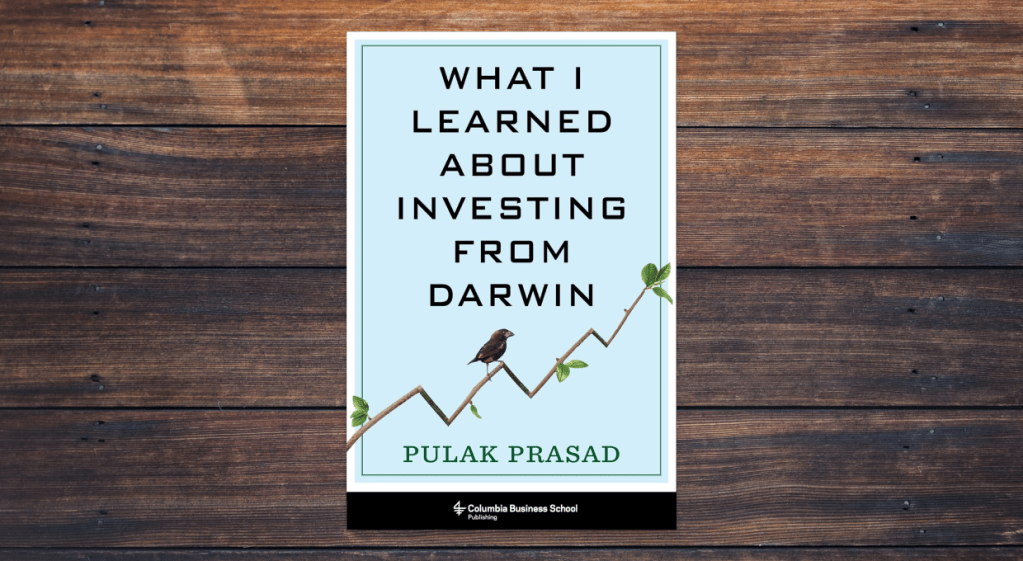
What Is What I Learned About Investing from Darwin?
What I Learned About Investing from Darwin is Pulak Prasad’s exploration of investing through the lens of Charles Darwin’s theory of evolution. The book argues that successful investing is less about predicting the future and more about identifying businesses that can survive, adapt, and thrive over long periods of time.
Rather than presenting stock tips, the book focuses on mental models. Prasad draws parallels between natural selection and capitalism, showing how competitive forces eliminate weak companies while allowing strong, adaptable ones to compound value. This makes the book especially useful for readers who want to deepen their understanding of how markets work, not just how to trade them.
Core Investing Lessons From Darwin
One of the central ideas in the book is that survival matters more than brilliance. In investing, avoiding permanent loss of capital is more important than chasing the highest possible return. Just as species that survive long enough can evolve and flourish, investors who stay in the game can benefit from compounding.
Prasad emphasizes the importance of strong business moats. Companies with durable competitive advantages are better positioned to withstand economic downturns, technological shifts, and competitive pressure. This aligns closely with long-term S&P 500 investing, where resilient businesses tend to outperform over decades.
Another key lesson is the role of environment. A great business operating in a poor industry may struggle, while an average business in a favorable industry can succeed. Understanding industry structure, incentives, and long-term demand is critical for making sound investment decisions.
The Role of Psychology in Investing
A major theme of the book is investor behavior. Prasad explains how fear, greed, overconfidence, and impatience often cause people to make poor financial decisions. These psychological pitfalls are responsible for many underperforming portfolios, even when investors have access to good information.
By focusing on process rather than outcomes, Prasad encourages investors to detach from short-term market noise. This approach complements the use of automatic investing, diversified index funds, and simple budgeting apps that reduce the need for emotional decision-making.
How This Book Fits Into a Long-Term Money Strategy
What I Learned About Investing from Darwin fits well alongside other books on money that stress patience, frugality, and consistency. The book reinforces why many investors benefit from keeping costs low, avoiding frequent trading, and letting high-quality assets compound over time.
For readers who prefer a hands-off approach, the lessons still apply. Investing excess savings into the S&P 500, maintaining a high-yield savings account for short-term needs, and using treasury bills for capital preservation all reflect the same principle of survival first, growth second.
Those who work with a financial advisor can also benefit from this book, as it provides a framework for asking better questions and evaluating long-term strategies rather than focusing on quarterly performance.
Who Should Read This Book?
This book is ideal for readers who want to move beyond basic budgeting and learn how great investors think. It is especially valuable for those interested in behavioral finance, business fundamentals, and long-term wealth building.
Readers who enjoy thoughtful, concept-driven books on money will find this work both practical and intellectually engaging. It is not a step-by-step guide, but rather a guide to thinking clearly about investing in an uncertain world.
Why Pulak Prasad’s Perspective Matters
Pulak Prasad stands out because he combines real-world investing experience with a multidisciplinary mindset. By borrowing ideas from evolution and applying them to capital markets, he offers a framework that remains relevant across market cycles.
For anyone focused on financial independence, disciplined investing, and lifelong learning, What I Learned About Investing from Darwin provides a valuable perspective on how wealth is built slowly, rationally, and sustainably over time.




 Winchell House
You must be logged in to post a comment.