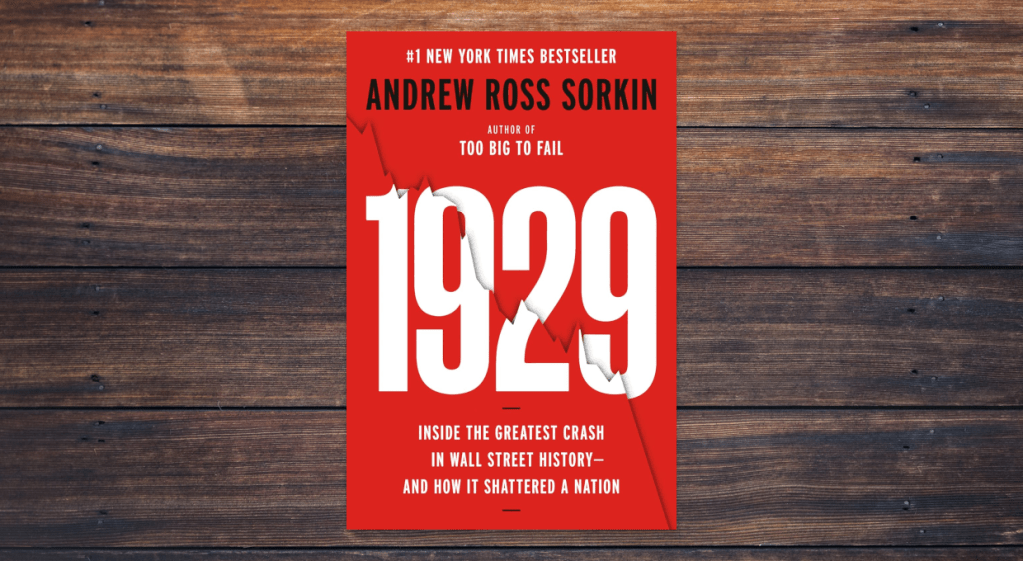
The stock market crash of 1929 remains one of the most important financial events in American history. It reshaped how people think about risk, speculation, and the role of government in markets. In 1929, Andrew Ross Sorkin revisits the year that triggered the Great Depression, telling the story through the people, institutions, and decisions that led to the collapse. The result is a readable and instructive finance book that connects past mistakes to modern investing behavior.
Who Is Andrew Ross Sorkin?
Andrew Ross Sorkin is a financial journalist best known for his reporting on Wall Street and corporate power. He is a longtime columnist for The New York Times and the founder of DealBook, a daily financial news service widely read by investors, executives, and financial advisors. Sorkin has also written several bestselling books on financial crises and corporate decision making, including Too Big to Fail. His background gives him credibility with both professional investors and everyday readers who want to better understand how money and markets work.
What Is 1929 About?
1929 examines the speculative boom of the 1920s and the sudden collapse that followed. Sorkin focuses on the psychology of investors, the widespread use of leverage, and the lack of effective regulation during the period. He shows how ordinary Americans, wealthy financiers, and powerful institutions all participated in a market that felt unstoppable until it abruptly was not.
Rather than presenting the crash as a single moment, the book explains how a series of small decisions, incentives, and blind spots combined into a systemic failure. This approach makes the book feel relevant to anyone trying to understand modern market cycles.
Key Lessons From The Book
One of the clearest lessons from 1929 is the danger of speculation driven by optimism rather than fundamentals. Investors in the 1920s believed prices could only go up, a mindset that shows up repeatedly in later bubbles.
Another lesson is the importance of diversification and margin of safety. Many investors in 1929 were heavily concentrated in stocks and borrowed money to increase returns. When prices fell, losses were catastrophic. For modern readers, this reinforces the value of long term investing, broad exposure such as an S&P 500 fund, and avoiding excessive leverage.
The book also highlights how investor psychology influences markets. Fear and greed are not new, and understanding these forces can help individuals make calmer, more rational decisions with their own money.
Criticisms of the Book
Some readers may find that 1929 focuses heavily on prominent figures and institutions, leaving less room for detailed analysis of everyday households. Others may wish the book spent more time explicitly connecting the events of 1929 to actionable investing strategies today.
In addition, readers looking for a technical or academic treatment of the Great Depression may find the narrative style lighter than expected. This is a book designed to be accessible rather than exhaustive.
Should You Buy It?
For readers interested in learning about money, investing history, and financial psychology, 1929 is a worthwhile addition to a personal finance library. It is especially useful for investors who want context around why long term discipline, diversification, and cautious risk taking matter so much.
Those looking for step by step budgeting advice or tactical investment strategies may want to pair this book with more practical guides. Still, understanding history is an important part of becoming a better investor.
Final Thoughts
1929 by Andrew Ross Sorkin is a reminder that markets are shaped as much by human behavior as by numbers. The mistakes that led to the crash nearly a century ago continue to appear in different forms today. For readers committed to learning about money, avoiding lifestyle creep, and building wealth patiently through sensible investing, this book offers perspective that is both sobering and valuable.



 Winchell House
You must be logged in to post a comment.