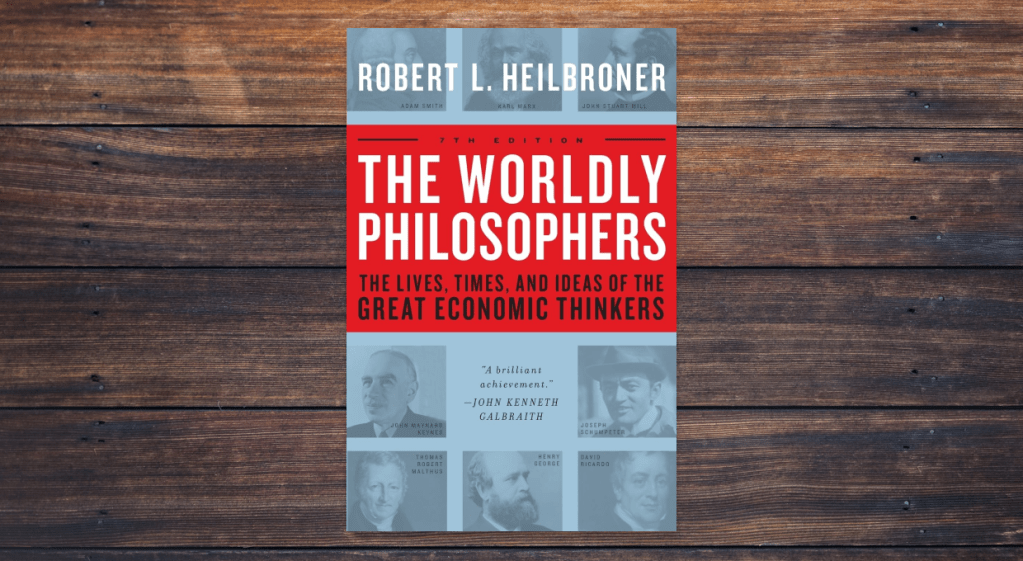
The Worldly Philosophers is one of the most widely read books on money and economics ever written. First published in 1953, it has introduced millions of readers to the foundational ideas behind capitalism, markets, and financial systems.
For anyone searching for books on money that go beyond budgeting tips and into how the system actually works, this book offers a compelling starting point. It reads more like a story than a textbook, making complex ideas accessible without sacrificing depth.
Who is Robert Heilbroner?
Robert Heilbroner was an American economist, historian, and writer known for his ability to explain economic ideas in plain language. Unlike many academic economists, he focused less on equations and more on the people behind the theories.
Heilbroner taught at the New School for Social Research and became one of the most influential public intellectuals in economics during the 20th century. His writing style blends storytelling with analysis, which is a major reason The Worldly Philosophers remains relevant decades later.
What the Book Covers
The book walks through the lives and ideas of some of history’s most important economic thinkers, including:
Rather than presenting dry theory, Heilbroner frames each economist as a product of their time, showing how their ideas were shaped by real-world problems like industrialization, poverty, and financial instability.
This approach helps readers understand not just what these thinkers believed, but why their ideas still influence modern investing, financial planning, and public policy.
Key Lessons Readers Can Take Away
Economics Is About Human Behavior
One of the biggest takeaways is that economics is not just about numbers. It is about psychology, incentives, and decision-making. This aligns closely with modern personal finance principles, where behavior often matters more than knowledge.
Understanding this can improve how someone approaches budgeting, saving, and investing. Even the best financial advisor cannot fix poor habits.
Markets Are Not Perfect
The book makes it clear that markets, while powerful, are not flawless. Economic systems evolve, and each generation faces new challenges.
For readers focused on investing in the S&P 500, this is an important reminder. Long-term investing works not because markets are perfect, but because they adapt and grow over time despite setbacks.
Wealth Creation Has Tradeoffs
Industrial growth created enormous wealth but also inequality and instability. This tension still exists today.
Recognizing this helps readers better understand topics like inflation, wages, and housing costs, all of which directly impact personal finance decisions.
Big Ideas Shape Everyday Money Decisions
The theories discussed in the book influence everything from interest rates to job markets. That means even someone focused on budgeting apps or saving in a high-yield savings account is indirectly affected by these ideas.
Learning the foundations makes it easier to interpret financial news and make more informed decisions.
Criticisms of the Book
Oversimplification
To make the material accessible, Heilbroner simplifies complex theories. Some economists argue this leads to incomplete or slightly distorted interpretations of certain ideas.
For serious students of economics, this means the book should be a starting point, not the final word.
Outdated Sections
Although updated editions exist, parts of the book feel dated. Economic thinking has evolved, especially with the rise of behavioral economics and modern financial systems.
Readers looking for cutting-edge financial strategies will not find them here.
Limited Diversity of Perspectives
The book focuses heavily on Western economists, particularly European thinkers. This leaves out other important perspectives that shape global economics today.
Should You Buy This Book?
For most readers, the answer is yes.
If you are interested in:
- Learning how money works at a deeper level
- Understanding the origins of modern investing and capitalism
- Expanding beyond basic budgeting and personal finance tips
then The Worldly Philosophers is a worthwhile addition to your reading list.
However, if you are looking for step-by-step financial advice, such as how to pick stocks or optimize a portfolio, this is not the right book.
Final Thoughts
The Worldly Philosophers stands out because it connects ideas to real life. It shows that money is not just about saving, spending, or investing, but about the systems and beliefs that shape the entire economy.
For readers building a strong financial foundation, this book complements practical tools like budgeting apps and high-yield savings accounts by adding something deeper: understanding.
That combination of knowledge and behavior is what ultimately leads to long-term financial success.




 Winchell House
You must be logged in to post a comment.