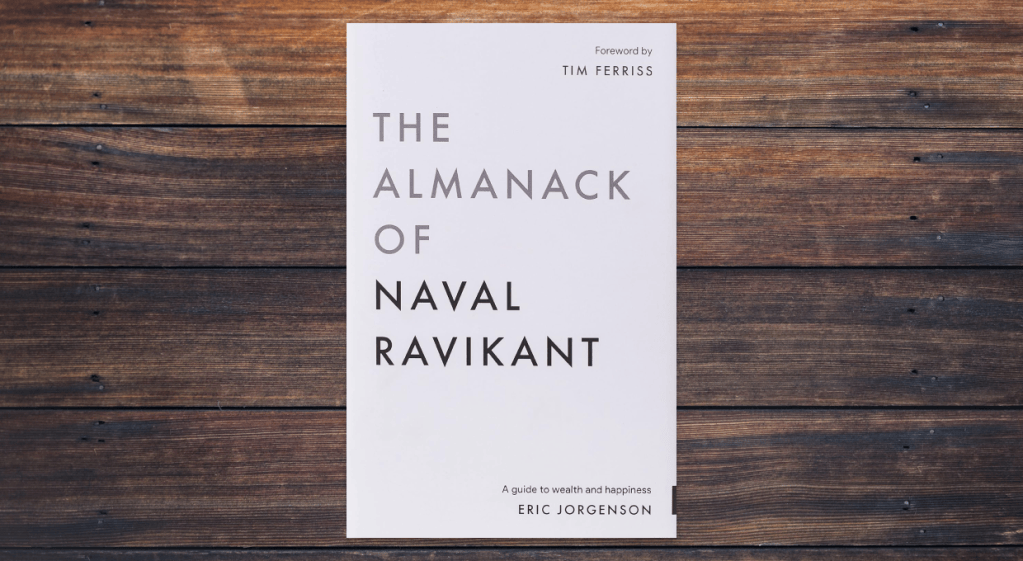
Naval Ravikant is the rare startup philosopher people quote without having read: a few viral tweets about wealth and happiness, half-remembered. Eric Jorgenson fixed that by collecting Naval’s best thinking into The Almanack of Naval Ravikant, a book that’s free online and worth every minute.
What the book is
It’s not a memoir or a manifesto. It’s a curated collection of Naval’s tweets, essays, and podcast transcripts, organized by Jorgenson into two parts: Wealth and Happiness. The wealth section covers leverage, specific knowledge, and building assets that earn while you sleep. The happiness section is quieter: desire as a contract to be unhappy, the skill of being present, choosing what to want carefully.
Who is Eric Jorgenson?
Eric Jorgenson is a writer and product strategist who compiled Naval Ravikant’s tweets, essays, and podcast transcripts into The Almanack of Naval Ravikant. He’s not a famous investor himself; he’s a curator who recognized the value in Naval’s thinking and organized it into a coherent, free book. The Almanack is his best-known work.
The ideas that stick
Naval’s core wealth thesis: you won’t get rich renting out your time; you get rich by owning equity and using leverage (code, media, and capital). Specific knowledge (what you know that can’t be trained) is the moat. On happiness: “happiness is a choice and a skill you develop.” The book’s most useful trick is showing these aren’t separate pursuits. The same clear thinking that builds wealth also builds a good life, if you aim it right.
Specific knowledge: your career moat
Naval’s most useful career concept is specific knowledge: the stuff you know that can’t be taught in a classroom or replaced by a manual. It’s the intersection of your genuine curiosity, your unique experience, and what the market will pay for. You can’t copy someone else’s specific knowledge, which is why it’s a moat. The practical takeaway: stop chasing hot skills and double down on what fascinates you. Compounding applies to knowledge too. Ten years of genuine interest in a niche beats ten months of grinding through a bootcamp for a skill you don’t care about.
Leverage for people who aren’t founders
Naval’s leverage framework (code, media, capital) sounds founder-centric, but it maps cleanly onto personal finance. Capital leverage is the one available to everyone: every dollar you invest in a broad index fund is a tiny piece of thousands of businesses working while you sleep. That’s leverage. Media leverage is writing, teaching, or building an audience around what you know. You don’t need to start a company to use these. The frugal version is simple: earn, save the difference, invest it automatically, and let other people’s labor (via the stock market) compound for you.
The happiness section is the real differentiator
Most money books stop at wealth. The Almanack of Naval Ravikant keeps going, and the happiness section is why the book endures. Naval’s core claim, that desire is a contract to be unhappy until you get what you want, is a genuinely useful mental filter. It doesn’t mean wanting nothing. It means choosing your wants carefully instead of absorbing them from advertising and social media. Paired with the wealth advice, the message is coherent: build enough to be free, then stop optimizing for more and start optimizing for presence. That’s a healthier endpoint than most finance books offer.
What are some criticisms of the book?
What it’s not
It’s repetitive by design. Naval returns to the same few ideas from different angles, and Jorgenson preserves that. If you want a step-by-step plan, this isn’t it. It’s a book of principles, not tactics. And Naval’s framework assumes a baseline of privilege (skills, internet, optionality) that not everyone has.
Should readers buy the book or not?
Who should read it
Anyone building something (a business, a career, a life) who wants better mental models for both money and meaning. It’s short, it’s free, and it rewards re-reading.
Where to get it
Buy The Almanack of Naval Ravikant on Amazon (or read it free at the author’s site).
Get it, because it’s free. The question isn’t whether to buy but whether to spend the time reading. Yes, if you want mental models for building wealth and designing a happier life. It’s short, dense with insight, and rewards re-reading. If you prefer physical books, the paperback is worth the $15 for a desk reference you’ll return to and you’ll be supporting Winchell House with your purchase.
Final thoughts
The Almanack of Naval Ravikant endures because it pairs wealth-building with happiness as a skill. Most money books stop at the first; Naval insists the second matters more. For a frugal investor, the message is clarifying: build enough to be free, then optimize for presence, not more.









 Winchell House
You must be logged in to post a comment.