
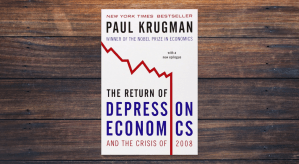
Understanding how financial systems break and how they can be repaired is critical for anyone who wants to make better money decisions, avoid panic during downturns, and build long-term wealth. The Return of Depression Economics and the Crisis of 2008 by Paul Krugman is a fast-paced, accessible book that helps readers do just that. Originally written in 1999 and updated after the 2008 global financial crisis, this book walks through the history of past economic meltdowns and how they relate to more recent events.
Who is Paul Krugman?
Paul Krugman is a Nobel Prize–winning economist, longtime columnist for The New York Times, and professor emeritus at Princeton. He’s known for making complex economic topics understandable to everyday readers. Krugman has been a vocal critic of both deregulation and austerity measures and is one of the most prominent voices in modern Keynesian economics. Whether you agree with his political leanings or not, his ability to distill big economic ideas into clear, readable lessons makes his work worth exploring.
Key Lessons From the Book
Markets Don’t Always Fix Themselves
One of the main themes of The Return of Depression Economics is that unregulated markets can fail… and fail catastrophically. Krugman illustrates this through crises like the 1997 Asian financial collapse, Japan’s long recession, and the 2008 housing market crash in the United States. These aren’t just abstract economic events; they’re cautionary tales about overconfidence, speculation, and lack of oversight.
Government Intervention Can Work
Krugman argues that strong, decisive action from central banks and governments can help prevent full-blown depressions. In the 2008 crisis, for example, bailouts and stimulus packages were deeply unpopular but likely prevented a complete economic collapse. Whether you’re in favor of such interventions or not, The Return of Depression Economics provides helpful insight into how and why those decisions were made.
Psychology Matters in Economics
Another important takeaway is the role of fear and herd behavior in economic crashes. Krugman explains how panic can set off self-fulfilling spirals, where everyone tries to withdraw their money or sell their assets at the same time, deepening the downturn. This psychological element mirrors a core belief at Winchell House: that understanding your own mindset is critical to making better financial choices.
The Global Economy Is More Fragile Than You Think
The Return of Depression Economics also explains how interconnected today’s economies are. What happens in Thailand or Iceland can send ripples across the world. For people trying to grow their wealth in a global market, that’s a good reminder to diversify and stay humble about what we can predict.
Criticisms of the Book
Some readers may find Krugman’s political tone off-putting. He doesn’t hide his views and often criticizes conservative economists and politicians. That can make parts of The Return of Depression Economics feel more like a polemic than a balanced assessment. Others argue that Krugman oversimplifies complex situations or leans too heavily on government solutions.
Additionally, since The Return of Depression Economics was last updated in 2009, it doesn’t cover more recent developments like crypto markets, meme stocks, or the COVID-19 economic fallout. So while the book is excellent for understanding the roots of financial crises, it’s not a comprehensive guide to today’s economy.
Should You Buy This Book?
Yes—especially if you’re looking to better understand how large-scale financial systems fail and what can be done to fix them. The Return of Depression Economics is a solid entry point for anyone new to economics and a valuable reminder for seasoned investors that markets aren’t bulletproof. It doesn’t offer personal finance tips or budgeting advice, but it can deepen your financial literacy in a way that complements more tactical books.
Final Thoughts
The Return of Depression Economics and the Crisis of 2008 is a compelling, quick read that helps demystify some of the scariest moments in recent financial history. While not everyone will agree with Paul Krugman’s politics, the core message is one worth hearing: economic crashes are not rare events, and understanding them is key to protecting your money.
If you’re building your financial education and want a better grasp of the forces that shape recessions, this book deserves a place on your shelf.









 Winchell House
You must be logged in to post a comment.