
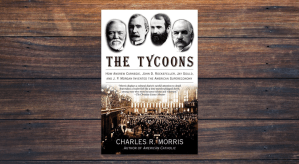
If you’re looking for a book that blends the drama of American history with lessons in money, power, and ambition, The Tycoons: How Andrew Carnegie, John D. Rockefeller, Jay Gould, and J. P. Morgan Invented the American Supereconomy by Charles R. Morris is a compelling read.
This book dives into the lives and legacies of four of the most influential businessmen in U.S. history and how they reshaped the country’s financial landscape during the Gilded Age. For readers who want to better understand the roots of modern capitalism and the psychology behind building wealth, this book offers plenty of insight.
Who Is Charles R. Morris?
Charles R. Morris was an American lawyer, banker, and author known for his work on finance, economics, and American history. He had a unique ability to take complex financial ideas and make them accessible to a general audience. His background in both law and business gave him the right perspective to analyze the evolution of American capitalism and the personalities that shaped it. Morris passed away in 2021, but his books remain relevant, especially for readers interested in the intersection of economics, politics, and power.
Key Lessons from The Tycoons
The Power of Vision and Control
Each tycoon had a unique approach to business, but they all shared a long-term vision and an obsession with control. Rockefeller built a near-monopoly on oil by obsessively cutting costs and improving efficiency. Carnegie revolutionized steel through vertical integration. Morgan stabilized the banking system by exerting influence over markets and companies. Their actions shaped the future of industry and finance in the U.S.
Risk and Timing Matter
These industrialists took enormous financial risks, often during times of uncertainty. Jay Gould, for example, made bold moves in the railroad industry that drew both admiration and criticism. Morris shows how strategic risk-taking, combined with timing and an understanding of the economic climate, can lead to outsized success.
Capitalism Is a Double-Edged Sword
Morris doesn’t shy away from showing the darker side of these tycoons. Monopolistic practices, labor exploitation, and political manipulation were all part of the game. While they created immense economic growth, they also contributed to rising inequality and labor unrest. This context can help modern readers think more critically about today’s billionaires and the systems that support them.
Historical Patterns Repeat Themselves
For anyone who wants to learn about money and markets, The Tycoons is a reminder that many of today’s financial debates (regulation, corporate power, wealth inequality) are unfortunately not new. Understanding the past can help us make smarter decisions in the present, whether it’s how we invest or how we view the role of government in the economy.
Criticisms of the Book
Some readers may find the narrative dense in places, especially if they’re not already familiar with 19th-century American history or financial terms. Morris occasionally jumps between figures and time periods, which can make The Tycoons feel a bit fragmented. Additionally, those looking for a step-by-step guide to building wealth or budgeting will not find that here, this is a historical and analytical work, not a how-to manual.
Should You Buy This Book?
If you’re someone who is serious about learning how money works, not just on a personal level but at the level of markets, systems, and power, The Tycoons is worth your time. It’s particularly valuable for readers who are interested in books about money, learning how to think like a financial advisor, or understanding the roots of modern capitalism. For those just starting their financial journey, this book might be a stretch, but it could still spark curiosity and provide historical context for how the financial world evolved.
Final Thoughts
The Tycoons offers more than just biography; it’s a deep look at how ambition, innovation, and ruthless strategy built the foundation of the American economy we live in today. While it’s not a beginner’s guide to personal finance, it adds depth to any financial education. If you’re building your bookshelf with the goal of better understanding money, power, and long-term investing strategy, this is a strong addition.









 Winchell House
You must be logged in to post a comment.