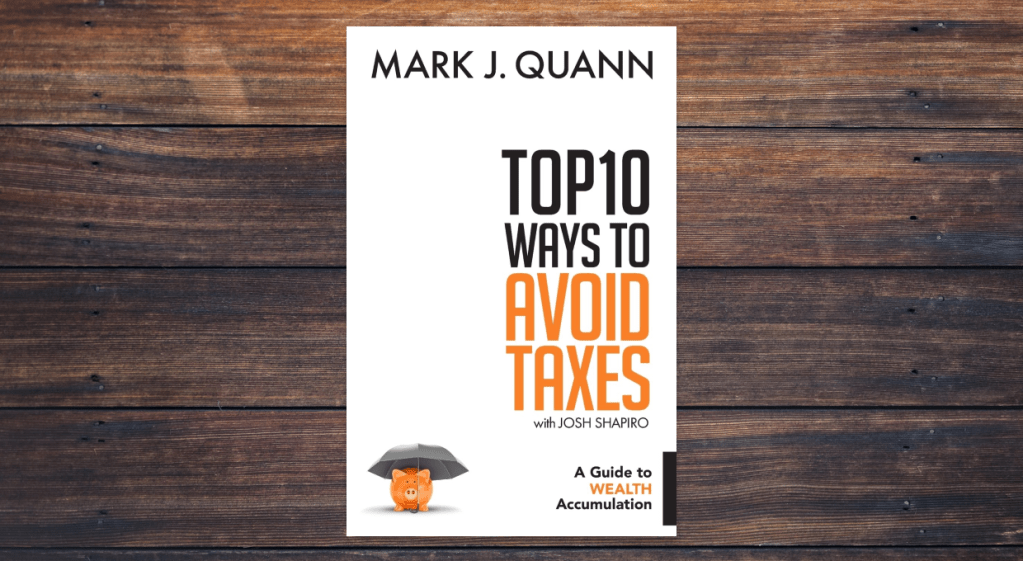
There’s no denying that taxes can take a big bite out of your earnings. For anyone trying to build wealth and keep more of what they earn, Mark Quann’s Top 10 Ways to Avoid Taxes: A Guide to Wealth Accumulation promises a deep dive into strategies the wealthy use to reduce their tax burdens—legally. With a title designed to turn heads and spark curiosity, the book has become a popular recommendation in online discussions around financial planning, passive income, and tax-efficient investing.
But is it worth your time and money?
Who Is Mark Quann?

Mark Quann is a financial educator and entrepreneur who has worked in insurance and wealth planning for over two decades. He’s the founder of The Financial Literacy Organization for Women and Girls and a frequent speaker on topics like tax strategy, retirement planning, and business ownership. Quann’s background leans heavily on life insurance and private wealth strategies, often drawing from real-world client experiences.
His writing is informal and direct, often tailored to those just beginning to think seriously about money, taxes, and building long-term financial independence.
Key Lessons from Top 10 Ways to Avoid Taxes
While Top 10 Ways to Avoid Taxes doesn’t necessarily break new ground in the world of tax strategy, it does do a good job at highlighting commonly overlooked areas where Americans can legally reduce their taxable income. Here are some of the main takeaways:
- Start a business: Quann is a strong advocate for business ownership, emphasizing that entrepreneurs have more control over deductions and expenses. Even a small side business opens up opportunities for tax planning.
- Use life insurance as a tax shelter: A large portion of Top 10 Ways to Avoid Taxes focuses on the benefits of indexed universal life (IUL) insurance, which Quann argues can offer tax-free income in retirement if structured properly.
- Invest for tax efficiency: He discusses the power of long-term capital gains, Roth IRAs, and tax-deferred vehicles like annuities to manage when and how taxes are paid.
- Pay yourself first: This mindset shift is about directing a portion of income into savings and investments before spending on anything else—a foundational principle in personal finance books.
- Get financially educated: Quann encourages readers to take learning into their own hands, recommending books on money, finance, and psychology to better understand their habits and biases.
Criticisms of the Book
Despite its strengths, Top 10 Ways to Avoid Taxes is not without its drawbacks:
- Heavy promotion of life insurance: Some readers may feel Top 10 Ways to Avoid Taxes pushes IUL policies too hard without fully explaining the risks or costs. While life insurance can be part of a tax strategy, it’s not the right tool for everyone.
- Repetitive content: Many concepts are repeated throughout Top 10 Ways to Avoid Taxes, which can make it feel padded. Those already familiar with basic tax concepts might not find much new here.
- Lack of detailed implementation: While Top 10 Ways to Avoid Taxes offers a broad overview of tax-reduction strategies, it doesn’t go deep into the specifics of how to execute these strategies, often advising readers to “consult a financial advisor” without offering guidance on choosing the right one.
Should You Buy It?
If you’re just beginning your financial journey and want a motivational push toward learning how taxes work and how to reduce them, Top 10 Ways to Avoid Taxes is a decent place to start. It’s written in plain language, avoids jargon, and might encourage readers to explore tax-saving opportunities they’ve never considered.
However, for those already familiar with basic personal finance principles (like investing in index funds, using a budgeting app, or optimizing for tax-deferred growth) Top 10 Ways to Avoid Taxes may feel light on actionable insights. Its strong emphasis on life insurance may also be a turnoff for readers looking for a more balanced approach.
Final Thoughts
Top 10 Ways to Avoid Taxes taps into something every aspiring wealth builder wants: to keep more of what they earn. While the book offers a solid motivational foundation and some useful entry-level advice, it leans too heavily on specific tools like life insurance that may not be ideal for everyone. Readers looking to deepen their knowledge of financial strategy would be wise to pair this with more comprehensive titles.
For those curious about legal tax strategies or wanting a push to start their financial education, it’s a worthwhile read, but go in with your eyes open and be prepared to do more research after turning the last page.









 Winchell House
You must be logged in to post a comment.