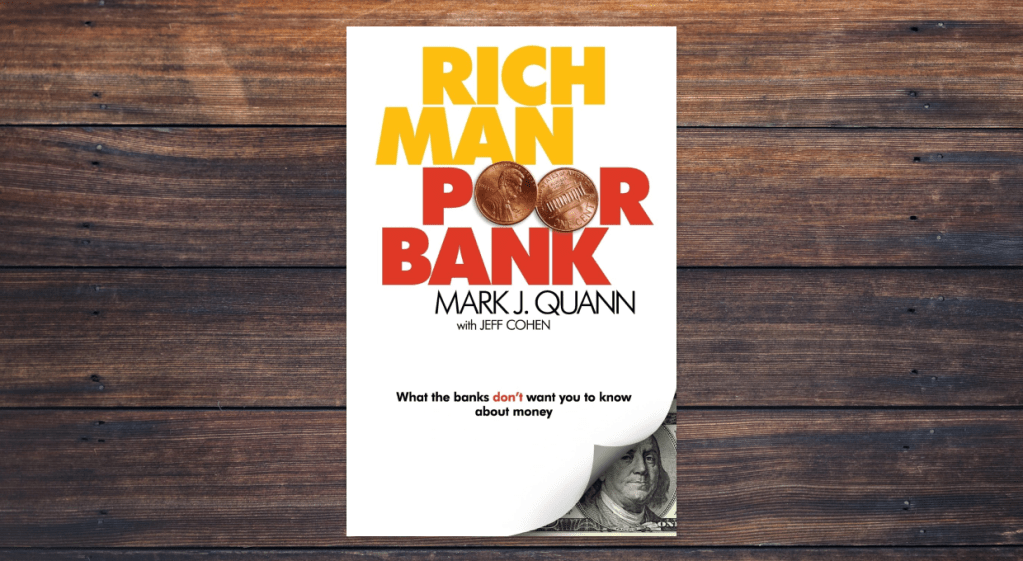
Understanding how money works (and how banks profit from your lack of understanding) is central to building real wealth. In Rich Man Poor Bank: What the banks DON’T want you to know about money, author and financial educator Mark Quann sets out to expose what he sees as the financial industry’s biggest secrets. This book is a critique of traditional banking systems and a call to rethink how we save, invest, and prepare for retirement.
For readers on a journey toward financial independence, Rich Man Poor Bank offers a provocative perspective on why mainstream financial advice may not serve your best interests.
Who is Mark Quann?

Mark Quann is a financial advisor and educator with a background in insurance and investment strategies. He’s the founder of the Quannetwork, an organization that offers financial literacy courses and one-on-one coaching. Quann’s career has focused on helping individuals build wealth using tools outside the conventional wisdom promoted by banks and Wall Street firms.
His writing blends financial education with real-world strategies, often encouraging readers to question the motives behind traditional financial institutions.

Key Lessons from Rich Man Poor Bank
The central message of Rich Man Poor Bank is this: banks and financial institutions are designed to profit off the average consumer’s ignorance. According to Quann, people are taught to save money in low-yield bank accounts, invest in 401(k)s without understanding the fees, and buy term life insurance instead of building wealth through permanent policies.
Here are some of the standout lessons from the book:
Banks Make Money When You Don’t Understand How They Work
Quann explains how banks use your deposits to make loans at much higher interest rates, effectively profiting from your savings while giving you a tiny return. This lesson is a wake-up call for readers to explore high-yield savings accounts, short-term treasury bills, and alternative investing options.
The Importance of Financial Education
Rich Man Poor Bank emphasizes self-education through reading books on money, working with a trustworthy financial advisor, and staying skeptical of advice that primarily benefits the institution offering it.
Permanent Life Insurance as a Wealth Tool
A large portion of Rich Man Poor Bank is dedicated to explaining how whole life insurance and similar products can be used to build tax-advantaged wealth. Quann argues that these products are misunderstood and underutilized by the middle class.
Take Control of Your Own Retirement
Rather than relying on employer-sponsored retirement plans, Rich Man Poor Bank urges readers to take personal responsibility for their financial futures, focusing on control, liquidity, and tax advantages.
Criticisms of the Book
While Rich Man Poor Bank provides an engaging and sometimes eye-opening perspective, there are areas where readers should approach with caution:
- Heavy Bias Toward Insurance-Based Strategies: Much of the book promotes permanent life insurance as a wealth-building tool. While these strategies can be effective for some, they may not be the best fit for everyone, especially those early in their financial journey.
- Lack of Comprehensive Investing Advice: Rich Man Poor Bank downplays traditional investing in the stock market, including long-term index fund strategies like investing in the S&P 500, which many experts recommend as a simple and effective way to grow wealth over time.
- Sales-Driven Tone: Some readers may feel that the book reads more like a pitch for Quann’s services or a specific financial product rather than an objective guide to financial literacy.
Should You Buy Rich Man Poor Bank?
Yes. If you’re looking for a fresh, alternative view on how financial systems work and want to explore ideas beyond what your local bank or employer recommends. Rich Man Poor Bank is especially useful for readers who feel they haven’t gotten satisfying answers from traditional financial advisors or want to challenge the status quo.
However, if you’re just beginning your financial education, this might not be the best first book. A foundational understanding of budgeting, saving, and compound interest can make Quann’s arguments easier to evaluate critically.
Final Thoughts
Rich Man Poor Bank by Mark Quann challenges readers to think differently about how money works. It encourages skepticism of big institutions and promotes personal empowerment through financial education. While not without its flaws, the book succeeds in starting an important conversation about financial independence and who really benefits from the advice we’ve been taught to follow.
If you’ve already got your high-yield savings account, budget set up, and are investing regularly in the S&P 500, Rich Man Poor Bank may offer an interesting perspective on how to diversify your approach and protect your wealth from hidden fees and institutional traps.
For readers who want to think outside the box (and are open to unconventional strategies) Rich Man Poor Bank is worth a read.






 Winchell House
You must be logged in to post a comment.