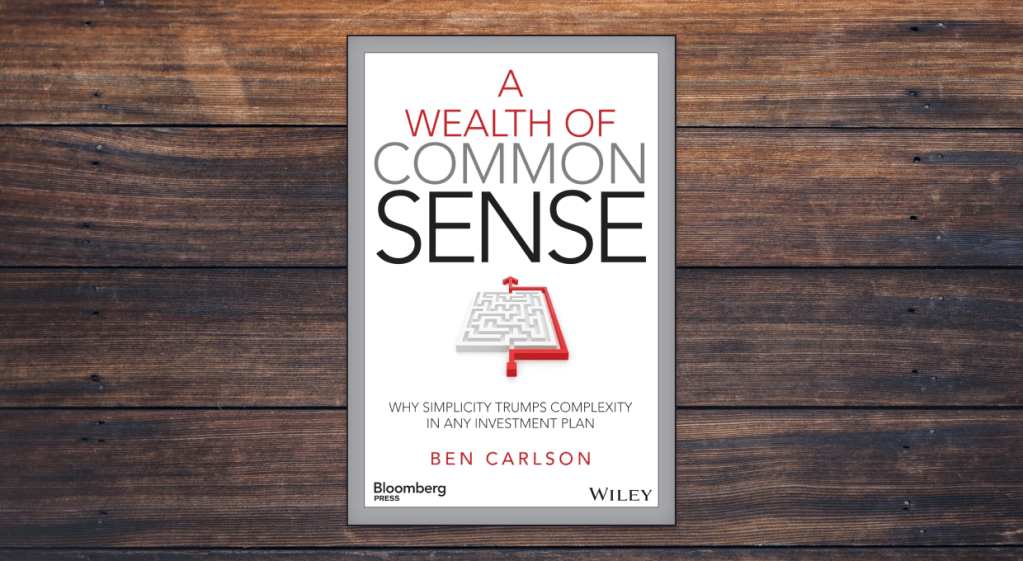
If you’re looking for a clear, no-nonsense guide to long-term investing and personal finance, A Wealth of Common Sense by Ben Carlson might be the book you need.
It’s approachable, concise, and refreshingly honest about what really matters when building wealth. Whether you’re just starting your financial journey or you’re deep into planning for retirement, Carlson delivers practical advice that cuts through the noise.
Who is Ben Carlson?
Ben Carlson is a Chartered Financial Analyst and the Director of Institutional Asset Management at Ritholtz Wealth Management. He’s also the voice behind the widely read blog that’s also named “A Wealth of Common Sense,” where he breaks down complex financial concepts for everyday readers.
With a background in portfolio management and years of experience advising institutional clients, Carlson brings credibility and real-world insight to his writing. His work is especially respected for its simplicity and evidence-based approach to investing.
Lessons From the Book
One of the central themes of A Wealth of Common Sense is that managing your money doesn’t have to be complicated. Carlson argues that most people would do far better if they ignored market noise, avoided emotional decisions, and stuck to a long-term plan. Here are a few key takeaways:
Simplicity beats complexity
You don’t need a Ph.D. in economics to invest successfully. Carlson shows that sticking to simple strategies—like dollar-cost averaging into an S&P 500 index fund—can outperform more complicated (and expensive) approaches.
Behavior matters more than strategy
Your mindset and behavior are often more important than your specific investment choices. Avoiding panic during downturns and staying the course during bull markets is half the battle.
Diversification works
While Carlson is a strong advocate of S&P 500 investing, he also makes a case for diversification to reduce risk and avoid betting too heavily on any one area of the market.
Time is your greatest asset
The power of compounding over long periods is a consistent theme throughout the book. Starting early and staying consistent can have a bigger impact than chasing high returns.
Forecasting is a fool’s game
Carlson makes it clear that trying to time the market or predict economic outcomes is a losing strategy. Instead, he recommends setting up a system you can stick with through all market conditions.
Criticisms of the Book
While A Wealth of Common Sense offers a strong foundation in personal finance, it’s not without its limitations.
Some readers might find the book overly focused on investing at the expense of other money-related topics like budgeting, debt management, or estate planning. Others may feel it doesn’t go deep enough into portfolio construction for more advanced investors.
Additionally, while Carlson is a gifted writer, the tone can occasionally feel like an extended blog post rather than a fully fleshed-out book. For those looking for something more academic or comprehensive, this book might not satisfy.
Why This Book?
This book stands out because it speaks to the real struggles people face when trying to make sense of their financial lives. It’s written for humans, not Wall Street professionals. Carlson doesn’t promise quick wins or secret formulas. Instead, he encourages habits and systems that align with long-term wealth building.
A Wealth of Common Sense supports frugal living, promotes low-cost index investing, and emphasizes the importance of understanding your own financial behavior. If you’ve ever wondered whether you need a financial advisor or if you’re just overwhelmed by too much financial information, this book can help you cut through the clutter.
Final Thoughts
A Wealth of Common Sense is one of the best books on money for anyone looking to gain confidence in their investing approach. It won’t teach you how to pick winning stocks or get rich quick. But it will teach you how to build a sound, sustainable financial life. And in a world full of hype and gimmicks, that’s a message worth hearing.









 Winchell House
You must be logged in to post a comment.