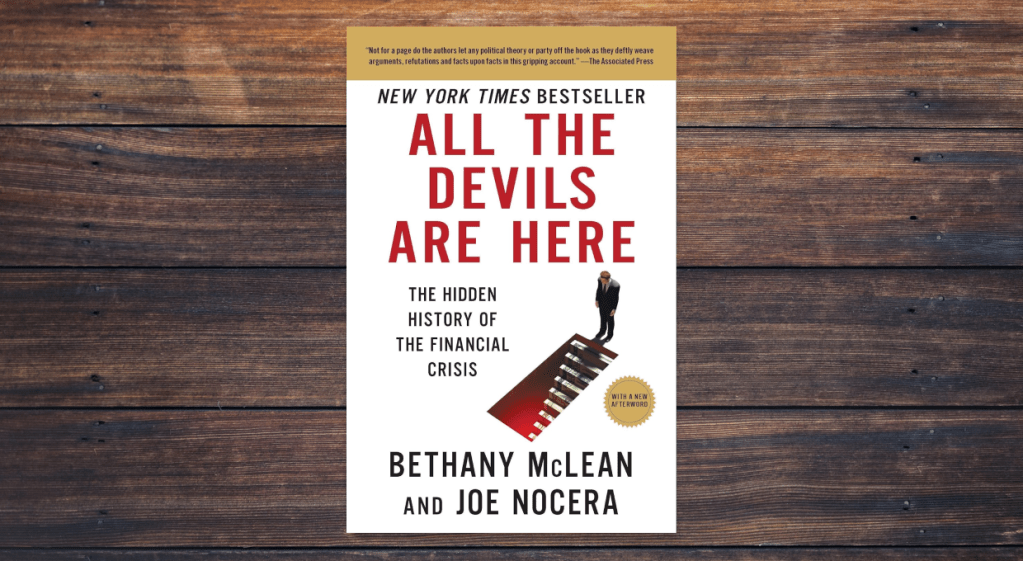
The 2008 financial crisis reshaped the global economy and left lasting scars on millions of households. Understanding how it unfolded helps readers make better financial decisions, recognize risk, and see how incentives drive behavior inside large institutions. All the Devils Are Here by Bethany McLean and Joe Nocera remains one of the most detailed narratives available on how the crisis developed and why so many warning signs were ignored.
Who Are Bethany McLean and Joe Nocera
Bethany McLean is a financial journalist best known for breaking early stories about Enron’s questionable business practices. Her reporting helped expose one of the largest corporate frauds in history.
Joe Nocera is a long-time business columnist and commentator with decades of experience covering Wall Street, corporate governance, and economic policy. Together, they bring a mix of investigative reporting and historical analysis that makes complex financial systems accessible to general readers.
Key Lessons Readers Can Take Away
Incentives drive behavior
The book shows how subprime lenders, investment banks, rating agencies, and government officials all responded to incentives that rewarded short-term profits over long-term stability. When every player in the system is rewarded for taking risks, risk-taking becomes the norm. This is a valuable lesson for individual investors who want to understand how market psychology and misaligned incentives can distort rational decision-making.
Complexity hides danger
Many of the products fueling the housing boom were so complex that even insiders struggled to explain them. The crisis revealed how dangerous it can be when investors buy assets they do not fully understand. For readers focused on learning and financial literacy, this reinforces a core principle: if you cannot explain something simply, it may not belong in your portfolio.
Regulation matters, but so does enforcement
The narrative highlights not just gaps in regulation but also a lack of enforcement of existing rules. While many readers prefer keeping money simple through budgeting, high-yield savings, treasury bills, and low-cost index funds, understanding the regulatory environment helps explain market fluctuations and long-term risks.
Personal responsibility in borrowing
The book also shows how consumer behavior contributed to the crisis. Many households borrowed more than they could afford, assuming home prices would rise forever. For anyone pursuing financial independence, staying grounded in realistic assumptions and avoiding lifestyle creep remains essential.
Criticisms of the Book
Some critics argue that the book devotes more attention to individual personalities than to systemic causes. Others believe it spreads blame so widely that it becomes difficult to identify the most responsible actors. A small group of reviewers feel the book is too negative toward Wall Street and insufficiently critical of government housing policy. Finally, while the narrative is rich, it can feel dense for readers who are new to the subject.
Should You Read It?
Readers who enjoy books on money, financial history, or investigative journalism will likely find it worthwhile. Those who want a deep understanding of the financial crisis, including how mortgage lending, rating agencies, and investment banks all interacted, will gain significant insight. If someone prefers straightforward personal finance guides or is looking only for practical budgeting strategies, this book may feel heavier than necessary.
Final Thoughts
All the Devils Are Here remains one of the most thorough examinations of the events that led to the 2008 financial crisis. It helps readers understand how complex systems fail, why incentives matter, and how markets can be distorted by human psychology. For anyone committed to long-term investing, financial learning, and building a stable financial life, the lessons in this book remain relevant.









 Winchell House
You must be logged in to post a comment.