
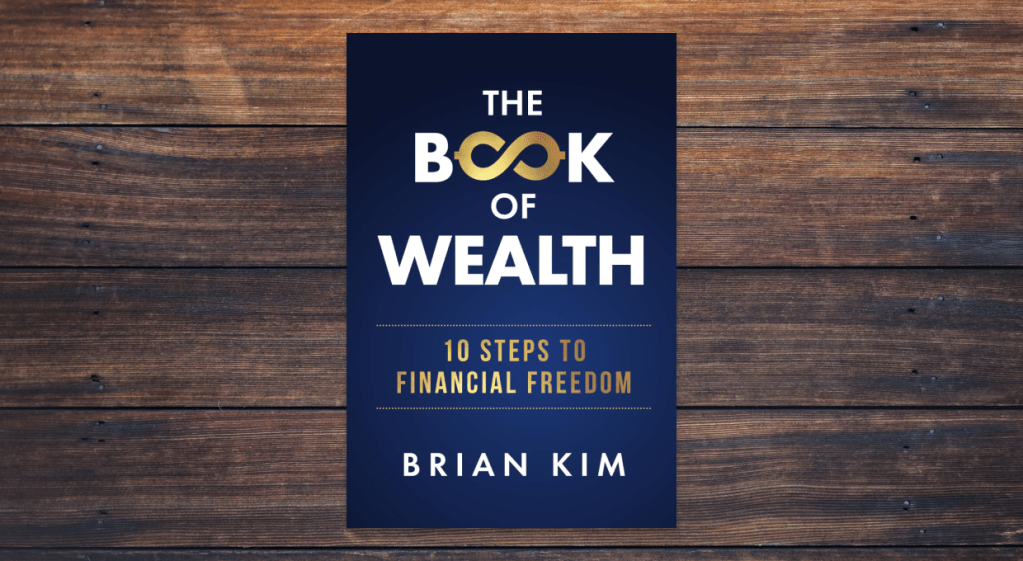
Brian Kim is an American accountant, writer, and financial educator known for his clear, practical guidance on personal finance and wealth building. As a Certified Public Accountant, he brings technical expertise to subjects that can feel intimidating to everyday readers. His book, The Book of Wealth, has attracted attention from people looking to learn more about money, financial planning, and how personal psychology affects financial outcomes.

Kim’s work resonates with readers who want a straightforward path toward financial stability. He blends traditional financial wisdom with modern behavioral insights, offering a framework for making better money decisions without unnecessary complexity.
Early Career and Background
Brian Kim began his career in public accounting after earning his CPA credential. His early professional years exposed him to a wide range of client situations, from individuals navigating budgeting challenges to small business owners trying to understand cash flow and taxes. These experiences shaped his belief that most financial issues stem from a lack of education, not a lack of discipline or opportunity.
Seeing the same mistakes repeatedly encouraged him to begin writing and speaking about money. Kim’s goal has always been to make financial knowledge accessible, especially for people who feel overwhelmed by traditional financial advice.
What Inspired The Book of Wealth
Kim wrote The Book of Wealth to give readers a deeper understanding of how money works, both in a practical sense and in a psychological one. Many personal finance books focus solely on tactics such as saving, investing, or budgeting. Kim takes a broader approach, exploring how habits, emotions, and social pressures influence financial choices.
A major theme in his writing is the idea that wealth is built through consistent, repeatable actions. He highlights the importance of living below your means, tracking your spending with budgeting apps, and building a financial cushion through high-yield savings accounts and short-term treasury bills. He emphasizes long-term investing in broad market indexes like the S&P 500 and encourages readers to avoid lifestyle creep as their income grows.
Professional Expertise as a CPA
Kim’s background as a CPA gives his advice grounding in real financial mechanics. He understands how taxes, cash flow, accounting rules, and investment strategies interact in everyday life. This technical foundation sets him apart from many online financial personalities who focus on motivation without the underlying math.
His accounting work also informs his perspective on risk. Kim often notes that sustainable wealth comes from low-cost, diversified investments rather than speculation. His writing encourages readers to think in terms of decades, not days, and to automate as much of their financial life as possible.
Writing Style and Teaching Philosophy
Kim has a teaching approach focused on clarity, simplicity, and consistency. He avoids jargon when possible and breaks down financial concepts into actionable steps. Readers who prefer direct and practical guidance find his style approachable and trustworthy.
He is particularly interested in helping people recognize how emotions shape financial behavior. Whether it is overspending on convenience, hesitating to invest, or reacting to market fluctuations, Kim encourages awareness and intentionality. His writing reminds readers that financial success is rarely about finding the perfect strategy and more about sticking with proven habits.
The 10 Steps, Summarized
The Book of Wealth: 10 Steps to Financial Freedom is deliberately short, 82 pages, published in January 2025, and its premise is that wealth building is a sequence, not a mystery. The themes readers keep highlighting are familiar on purpose: spend less than you make, pay down debts, increase your income, educate yourself about money, and track every dollar. The book’s contribution is not a new idea; it is the insistence that the unglamorous sequence, executed in order, is the whole game.
That modesty of ambition is also the book’s reception story. It averages 4.6 out of 5 stars on Amazon from hundreds of reader ratings, and the praise nearly always takes the same form: simple, short, gets to the point, shared with teenagers and beginners. When the harshest criticism is that there is nothing new in it, that is a feature, not a bug, for an author trying to reach people the financial industry has intimidated.
For a reader of the advice in this article, the practical move is to treat Kim as a starting point, not a library. Read the 10 steps, apply the ones you have been skipping, and graduate to deeper works once the basics are automatic. The author would agree: the book is 82 pages because anything longer would be procrastination with a cover.
ClearValue Tax: Where to Watch Him Explain It
Kim’s other classroom is his YouTube channel, ClearValue Tax, where he posts about investing, building wealth, and financial updates. The channel extends the book’s philosophy into current events: tax law changes, market moves, and the kind of money questions people actually ask, answered with the same plain-spoken style.
That two-track presence matters. A short book gets the framework into your head once; a running channel keeps it current, which is more than most personal finance books can claim. For readers who want to see whether an author still stands behind his advice when conditions change, a live channel is the test, and Kim is sitting for it in public.
If you start there, watch the videos on the topics you are weakest on first. Financial education compounds the way money does: the earliest lessons, budgeting and debt, pay the highest return, and the channel’s tax and investing updates are dessert, not dinner.
Who the Book Is Not For
A fair warning, since Kim will not give you one: if you are shopping for stock picks, options tactics, or anything that promises to make you rich by next quarter, this is the wrong book. The Book of Wealth is a process book — the unglamorous sequence of earning, saving, and compounding, repeated until it works. Readers who want excitement will bounce off it. Readers who want a system they can still be running in twenty years are exactly who it was written for.
Why Kim’s Work Matters Today
Many Americans search online for books on money, guidance from a financial advisor, or practical budgeting tips. Brian Kim’s work fits squarely within this demand. He understands the modern challenges people face, from rising living costs to information overload. His focus on simple, repeatable systems helps readers build a solid foundation regardless of their income or background.
His message aligns with long-term, evidence-based financial principles: frugality, consistent saving, diversified investing, and financial self-education. These ideas continue to appeal to readers who want to feel confident and in control of their money.
Final Thoughts
Brian Kim is a CPA and author dedicated to improving financial literacy through approachable, psychology-aware guidance. The Book of Wealth reflects his commitment to teaching readers how to build real, lasting wealth through discipline, clarity, and long-term thinking.
Kim’s work encourages people to take ownership of their money, avoid unnecessary complexity, and focus on building a financial life that is stable, sustainable, and grounded in sound habits.






You must be logged in to post a comment.