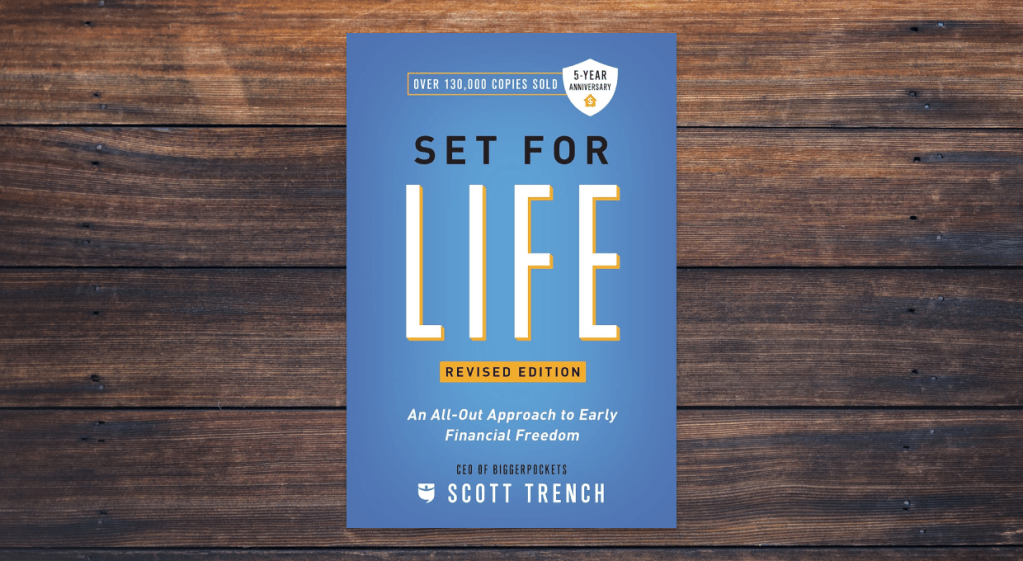
Set for Life: An All-Out Approach to Early Financial Freedom by Scott Trench has become a widely referenced book among people interested in frugal living, budgeting, and long-term wealth building. It aims to give readers a clear, actionable framework for reducing expenses, increasing income, and accelerating the path toward financial independence. The book speaks directly to readers who want to take control of their money and build a strong financial foundation without relying on get-rich-quick ideas.
Who is Scott Trench?
Scott Trench is the CEO of BiggerPockets, a well-known platform focused on personal finance and real estate investing. Before taking on this leadership role, he worked as an operations analyst while aggressively lowering his expenses, boosting his income, and investing his savings. His rapid progress toward financial independence forms the basis of Set for Life. Trench frequently writes and speaks about frugality, house hacking, simple investing, and avoiding lifestyle creep, and he is known for blending financial discipline with practical, real-world tactics.
Lessons from The Book
The book delivers a structured progression for readers moving from financial instability to long-term security. Several themes stand out.
Control housing costs
Trench places major emphasis on housing because it is the largest expense for most Americans. He advocates for house hacking, a strategy where readers reduce or eliminate housing costs by renting out part of their home. For many, this becomes the fastest way to build savings early on.
Develop a high savings rate
A core message in the book is that a high savings rate matters more than investment returns in the beginning. Trench encourages readers to focus on frugal living, cutting recurring expenses, and avoiding lifestyle creep. The idea is to create financial breathing room that can be directed into investments like index funds or short-term treasury bills.
Increase your income
While frugality is important, Trench also argues that building skills and earning more money accelerates financial independence. Readers are pushed to seek promotions, learn valuable skills, or pursue side income to broaden their financial margin.
Invest with discipline
Once a strong savings rate is in place, Trench recommends a straightforward approach to investing. This includes simple index fund investing, real estate for those who are interested, and maintaining liquidity through savings or low-risk instruments. The overall message is to avoid speculation and instead build consistent habits.
Criticisms of the Book
While the book is popular, it does attract several fair criticisms.
Heavy focus on house hacking
Some readers feel the book relies too much on house hacking as the primary strategy for building savings. In high-cost or competitive housing markets, this approach may be difficult or unrealistic.
Assumes readers have flexibility early in life
Much of the content is geared toward people in their twenties or early thirties who can easily relocate, take on roommates, or dramatically alter their lifestyle. Readers with families or established careers may find certain recommendations harder to apply.
Limited coverage of broader financial planning
The book is strong on frugality and income growth but offers less detail on topics like tax planning, retirement accounts, or long-term portfolio construction. Some readers may want a more comprehensive treatment of personal finance.
Should Readers Buy It
Readers who are early in their financial journey and want an energetic, practical guide to cutting expenses, increasing savings, and building momentum toward financial independence will likely find this book useful. It is especially valuable for anyone exploring house hacking or looking for motivation to make big lifestyle changes.
Readers who already have an established investment strategy or who prefer a more detailed, traditional personal finance framework may not gain as much from it. The book is clear and accessible, but it leans heavily on a specific set of tactics.
Final Thoughts
Set for Life offers a focused, actionable roadmap for achieving early financial freedom. Trench delivers clear guidance on reducing spending, raising income, and investing with intention. Readers looking for straightforward strategies combined with an encouraging writing style will appreciate the book, even if not every tactic applies to their situation. It remains a solid addition to the library of anyone who wants to learn more about money, budgeting, and building long-term financial security.









 Winchell House
You must be logged in to post a comment.