
Lillian Zhang has emerged as a clear and influential voice in modern personal finance. As the author of The New Money Rules, she blends practical money management strategies with a strong understanding of behavioral psychology. Her approach resonates with readers looking to build long-term financial stability without relying on complex investing theories or high-risk tactics.
Early Career and Background
Zhang graduated from UC Berkeley’s Haas School of Business in 2022 and works as a product marketing manager at Google. She teaches money basics to hundreds of thousands of followers on social media and has been featured on CNBC Make It, Business Insider, Bloomberg, ABC’s Good Morning America, and Yahoo Finance. Her work exposed her to a wide range of financial habits, both productive and destructive, and it shaped her interest in how psychology affects personal finance choices.
Before becoming an author, she spent years teaching financial literacy workshops, helping people understand concepts like cash flow management, compound interest, and the importance of consistent saving. This background gave her a grounded, data-driven view of what holds people back financially and what actually helps them move forward.
Writing The New Money Rules
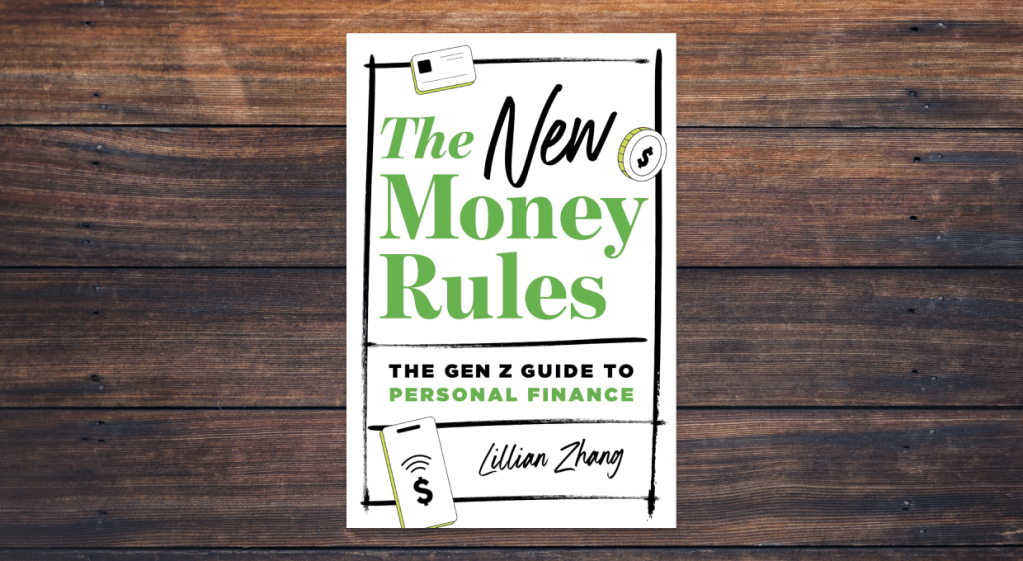
Her breakout book, The New Money Rules, was written to simplify financial decision-making for everyday readers. It focuses on:
- Building a realistic budget using modern budgeting apps
- Understanding how behavior and mindset shape financial outcomes
- Automating savings through high-yield savings accounts
- Creating a basic investing plan centered on low-cost index funds
- Strengthening financial habits that reduce lifestyle creep
- Learning to evaluate financial advice and avoid common pitfalls
Zhang’s writing is direct and intentional. She avoids jargon and emphasizes clarity, which is one reason the book continues to gain traction among readers searching for terms like books on money, financial advisor, personal finance, and budgeting.
A Behavioral View of Money
One of Zhang’s core beliefs is that most financial problems are rooted in behavior rather than math. She argues that people struggle not because they cannot understand money, but because they underestimate how habits, emotions, and cognitive biases influence their actions.
This perspective aligns closely with current research in behavioral economics. Zhang explains how small decisions, repeated over time, create the gap between financial stress and financial independence. She encourages readers to adopt systems that make good habits easier, such as:
- Tracking spending automatically
- Paying themselves first
- Using high-yield savings accounts for emergency funds
- Keeping long-term investments in diversified index funds such as the S&P 500
Her focus on sustainable habits makes her work particularly appealing to readers looking to improve daily money management rather than chase fast returns.
Public Influence and Philosophy
Zhang has become a frequent guest on personal finance podcasts and online money learning platforms. She is often invited to speak about the connection between mindset and wealth building, and her perspective is consistently realistic and practical.
Her philosophy can be summarized by three pillars:
- Understanding your own psychology
Know your tendencies, triggers, and habits so you can build systems that counteract them. - Living below your means
Sustainable wealth comes from a frugal lifestyle and careful handling of lifestyle creep, not from constant income growth. - Investing consistently
Use simple, proven tools like the S&P 500, short-term treasury bills, and high-yield savings accounts to build a solid financial foundation.
Why Her Work Connects With Readers
American readers searching for guidance on budgeting, financial planning, or learning about money often find Zhang’s work accessible and actionable. She avoids sensationalism and focuses on helping people create a life of financial independence built on steady habits.
Her ability to blend personal finance fundamentals with an understanding of human behavior places her among the most practical modern voices in money education. Whether someone is just beginning their journey or looking to refine an existing strategy, her insights offer a clear path toward more confident decision-making.
The Old Rules vs. The New Rules: What the Book Actually Argues
In an interview with UC Berkeley’s Haas Newsroom, Zhang laid out the book’s organizing idea: the old rules of money, the ones passed down from earlier generations, do not fit how Gen Z actually lives. Old rules: stay at one employer for decades, make buying a home your first financial goal, never talk about money. New rules: build skills that travel with you, treat renting as a valid choice while you invest the difference, and talk openly about salaries and spending so bad advice has nowhere to hide. The book is written as a conversation, not a lecture, with interactive prompts that push readers to build their own plan instead of borrowing someone else’s. That structure is the point. She is not handing Gen Z a map of a world that no longer exists. She is teaching them to read the terrain they are actually standing on.
One Habit That Pays You Twice: Pay Yourself First
This habit shows up all through Zhang’s work, and it is the closest thing to a free lunch in personal finance. Set an automatic transfer that moves money into savings the day your paycheck lands, before the apps, the group chats, and the delivery orders get their say. Automatic payments turn willpower into plumbing: once the transfer runs itself, the only decision left is not to undo it. Here is the double payment. First, you save without relying on motivation, which behavioral research keeps showing is the unreliable part. Second, you learn to live on what is left, which is budgeting without a spreadsheet. Zhang’s behavioral angle is that systems beat intentions. A pay-yourself-first transfer is the simplest system there is: one decision, made once, that pays you every payday for as long as you leave it alone.
Final Thoughts
Lillian Zhang’s impact comes from her ability to make financial principles feel achievable. Through The New Money Rules, she shows readers that steady progress, frugal choices, and a commitment to learning are the real drivers of long-term financial security. Her work continues to guide people seeking a thoughtful, disciplined approach to money in a world full of noise and complexity.









 Winchell House
You must be logged in to post a comment.