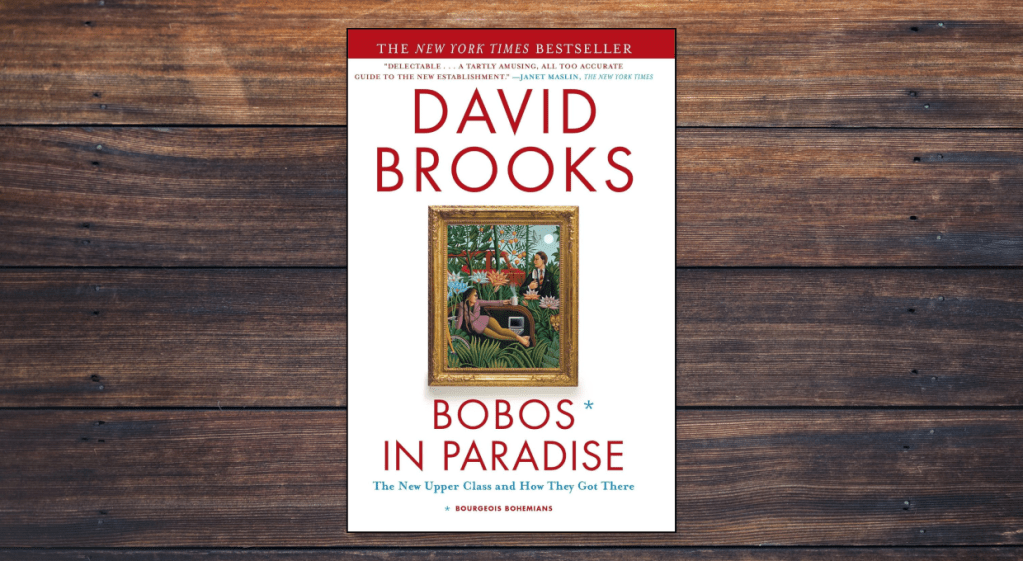
Bobos in Paradise examines how a new American elite emerged at the intersection of traditional bourgeois values and bohemian ideals. David Brooks argues that this hybrid group, the “bourgeois bohemians” or “bobos,” reshaped culture, consumer habits, work, and the way success is defined. The book blends social commentary with humor to describe how people who preach simplicity often embrace highly curated comfort and privilege. It is a cultural study, not a finance manual, yet it offers insights that can influence how readers think about money, identity, and lifestyle choices.
Who is David Brooks?

David Brooks is an American political and cultural commentator best known for his long-running column at The New York Times. His work often focuses on social trends, class dynamics, personal values, and the psychological forces that shape behavior. Before joining the Times, he wrote for The Wall Street Journal and The Weekly Standard. Brooks has authored several books touching on character, morality, and American life, making him a recognizable voice in discussions about culture and society.
Lessons from The Book
Understanding the Culture of Consumption
The book highlights how values drive spending. Bobos favor experiences, authenticity, ethical goods, and meaningful work, but these preferences often translate into premium-priced consumption. The lesson is that personal identity can quietly influence financial decisions. Being aware of this can help readers avoid lifestyle creep and stay grounded in long-term goals.
The Power of Education and Knowledge
Brooks shows how the new upper class relies on education and learning as a core source of status. Readers can take this as motivation to prioritize continuous learning, whether through books on money, personal development, or business. Knowledge compounds over time and is one of the most accessible pathways to economic mobility.
Work With Purpose
The bobo class values meaningful work that aligns with personal beliefs. While not everyone can pursue passion-driven careers immediately, the idea of aligning work with long-term life satisfaction is important. Career decisions have financial consequences, and thinking strategically about meaning and income together can lead to better outcomes.
Frugality Signals vs Actual Frugality
Bobos often celebrate simplicity while spending heavily on products marketed as minimalistic or artisanal. This tension serves as a reminder that frugality is not a branding exercise. Real financial independence comes from spending less than you earn, tracking your budget, and investing consistently in productive assets like low-cost S&P 500 index funds or short-term treasury bills.
Criticisms of the Book
Limited Economic Analysis
The book describes cultural and class shifts, but it provides little hard economic data. Some readers may want more quantitative analysis to support the claims about the new upper class.
Overgeneralization
Brooks uses broad character sketches that do not apply to everyone who fits the demographic. Critics argue that the book relies on stereotypes and can feel reductive.
Focus on Humor Over Depth
The writing is witty and engaging, but the humor sometimes overshadows more serious discussions about inequality or structural economic issues. Readers looking for a deeper exploration of class and wealth may find the analysis light.
Is Bobos in Paradise for You?
Readers who enjoy social commentary, cultural analysis, and storytelling will find the book worthwhile. It is not a personal finance guide, but it offers a valuable lens on how values influence money decisions. Those interested in understanding the psychology of consumption and the evolution of America’s professional class will benefit from reading it. If you prefer dense economics or data-driven financial advice, this book may not meet your expectations.
Final Thoughts
Bobos in Paradise remains a relevant portrait of how culture and class intersect. It helps readers understand the subtle ways identity shapes spending, saving, and lifestyle choices. While it is not a finance book, it provides context that can help people think more clearly about how values guide financial behavior. For anyone curious about modern American culture, it is a thoughtful and often entertaining read.









 Winchell House
You must be logged in to post a comment.