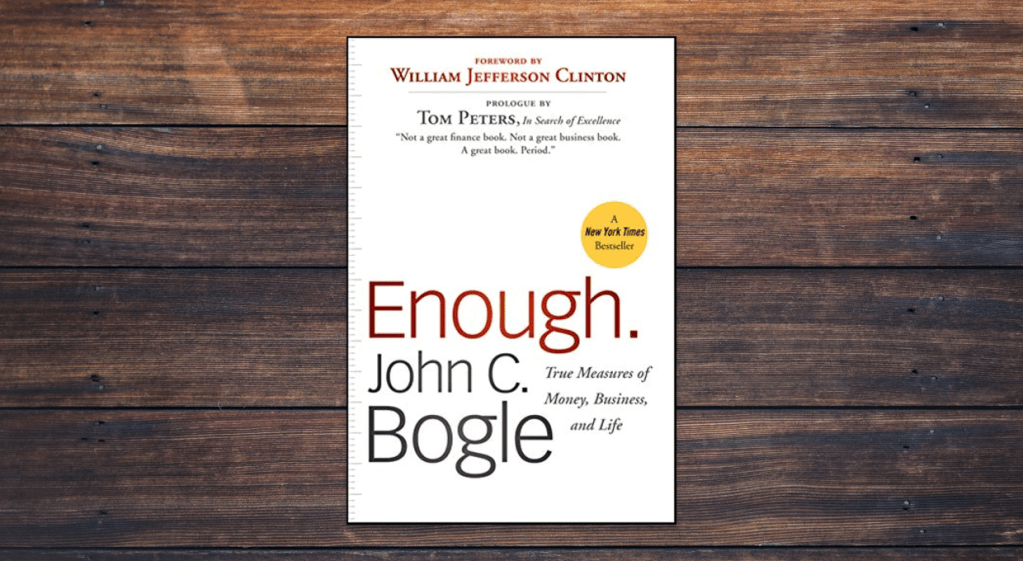
Enough: True Measures of Money, Business, and Life is a reflective and values-driven book by John C. Bogle, the founder of Vanguard and one of the most influential figures in modern investing. Unlike traditional investing manuals focused on tactics and returns, this book steps back and asks deeper questions about what money is for, how businesses should behave, and what constitutes a successful life.
For readers interested in long-term investing, personal finance, and the psychology of money, Enough offers a philosophical counterweight to a financial culture often obsessed with excess.
Who is John C. Bogle?

John C. Bogle was the founder of Vanguard Group and the creator of the first index mutual fund available to individual investors. His work fundamentally changed how Americans invest by making low-cost, diversified investing accessible to millions. Bogle spent decades advocating for simplicity, discipline, and long-term thinking, often criticizing Wall Street practices that prioritized profits over clients.
Beyond his role as an investment pioneer, Bogle was also a vocal critic of excessive executive compensation, short-termism in business, and speculative behavior in financial markets. His reputation for integrity and consistency gives significant weight to the arguments presented in Enough.
Core Lessons From Enough
One of the central themes of the book is that financial success should be measured by sufficiency rather than accumulation. Bogle argues that once basic needs and reasonable comforts are met, the pursuit of more money often delivers diminishing returns in happiness and fulfillment.
Another major lesson is the importance of long-term investing and restraint. Bogle reinforces his long-standing belief that low-cost index funds, patience, and disciplined saving outperform most active strategies over time. This aligns closely with evidence-based investing and the idea that ordinary investors can build wealth without complexity.
The book also explores the moral responsibilities of businesses and financial institutions. Bogle criticizes corporate cultures that reward short-term gains at the expense of long-term stability, employees, and shareholders. He encourages readers to think critically about incentives, executive pay, and the broader impact of financial decisions.
Finally, Enough emphasizes character. Bogle places a strong focus on values such as humility, stewardship, and service. He suggests that money should support a meaningful life, not define it.
Criticisms of the Book
Some readers may find Enough repetitive, particularly if they are already familiar with Bogle’s speeches or earlier writing. Many of the investing principles will be familiar to those who have read other books on index investing or followed Bogle’s philosophy over the years.
Others may feel that the book is more philosophical than practical. Readers looking for step-by-step budgeting advice, portfolio construction details, or tactical investing strategies may find the content too abstract.
There is also a generational tone to the book that may not resonate with all readers. Bogle’s worldview reflects a lifetime shaped by mid-20th-century corporate norms, which some may view as less applicable to today’s gig economy and rapidly changing financial landscape.
Should You Buy Enough?
This book is best suited for readers who already have a basic understanding of personal finance and want to think more deeply about their relationship with money. It is particularly valuable for long-term investors, those pursuing financial independence, and anyone questioning whether constant accumulation leads to a better life.
Readers looking for motivation to live more intentionally, avoid lifestyle creep, and stay grounded in their financial decisions will likely find the book worthwhile. Those seeking highly tactical guidance may want to pair it with more practical books on budgeting or investing.
Final Thoughts
Enough: True Measures of Money, Business, and Life is not about getting rich quickly or beating the market. It is about clarity, restraint, and purpose. John C. Bogle challenges readers to define what is enough for themselves and to align their financial decisions with that definition.
For anyone interested in books on money that go beyond numbers and returns, this book offers a thoughtful and steady perspective. Its message is simple but increasingly rare in modern finance: wealth is a tool, not a scorecard.











You must be logged in to post a comment.