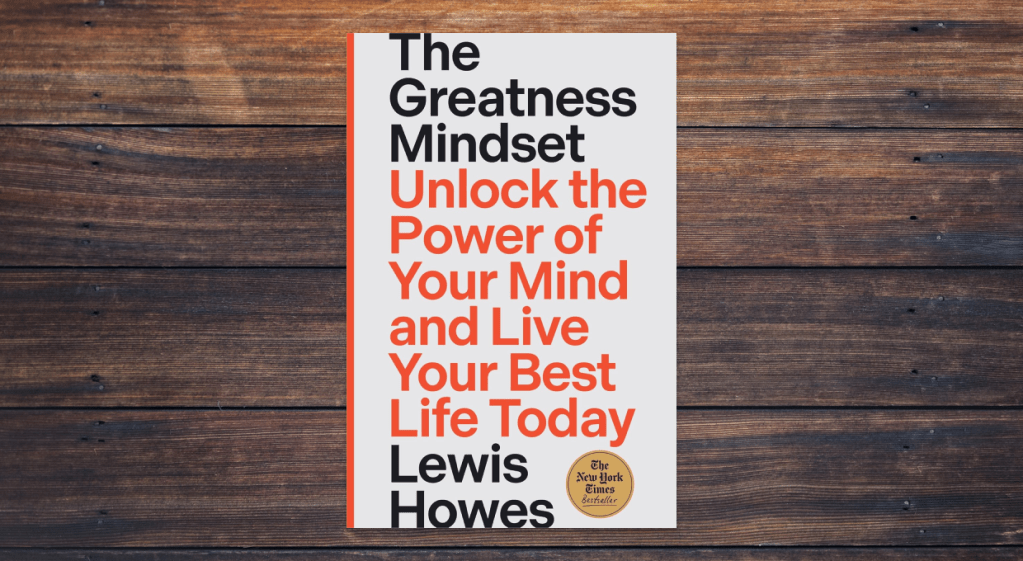
The self-help and personal development section of any bookstore is one of the most crowded and least differentiated spaces in publishing. Books promising to unlock your potential, rewire your thinking, and deliver your best life compete for attention with nearly identical titles and nearly identical promises. The Greatness Mindset: Unlock the Power of Your Mind and Live Your Best Life Today by Lewis Howes sits squarely in that genre. Whether it rises above the noise depends on what you are looking for and how much overlap you can tolerate with the dozens of books that have covered similar territory before it. Here is an honest assessment.
Who Is Lewis Howes?
Lewis Howes was born in 1983 in Delaware, Ohio. He was a two-sport collegiate athlete at Principia College in Illinois, playing football and basketball, and later played professional arena football before an injury ended his athletic career. By his own account, he found himself broke, sleeping on his sister’s couch, and without a clear direction in his late twenties.
He rebuilt his professional life through LinkedIn networking, eventually founding and selling a sports media and conference business before pivoting to the personal development space. His podcast, The School of Greatness, launched in 2013 and has become one of the most downloaded podcasts in the world, accumulating hundreds of millions of downloads and featuring interviews with athletes, entrepreneurs, celebrities, and thought leaders across a wide range of fields.
Howes has authored several books, including The School of Greatness published in 2015 and The Mask of Masculinity published in 2017, which addressed the emotional cost of suppressing vulnerability in men. The Greatness Mindset, published in 2023, represents his most comprehensive attempt to synthesize the lessons from his podcast interviews, his coaching work, and his own personal journey into a single framework for achieving what he calls a meaningful mission.
What the Book Is About
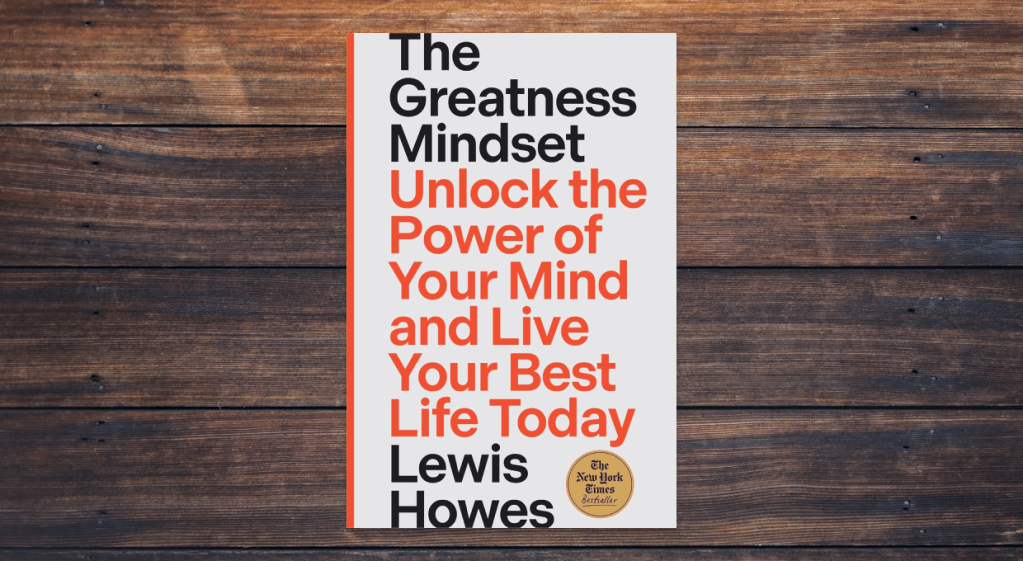
The Greatness Mindset is organized around the premise that most people are held back not by a lack of talent or opportunity but by limiting beliefs, unresolved fears, and an absence of clearly defined purpose. Howes argues that greatness is not reserved for exceptional people but is accessible to anyone willing to do the internal work of identifying and dismantling the psychological barriers that prevent them from pursuing what they actually want.
The book is built around what Howes calls the Greatness Mindset framework, which centers on identifying your meaningful mission, confronting your fears, healing past wounds, and building the habits and relationships that support sustained growth. He draws heavily on interviews conducted through his podcast, weaving in anecdotes and insights from athletes, entrepreneurs, therapists, and researchers to support his framework.
Themes that run throughout the book include the importance of defining success on your own terms rather than through external validation, the role of trauma and unresolved emotional pain in limiting achievement, the value of mentorship and community, and the relationship between identity and performance. Howes is candid about his own struggles, including experiences of childhood sexual abuse that he disclosed publicly, and that willingness to be personally vulnerable gives the book an emotional credibility that purely tactical self-help books often lack.
Lessons Readers Can Take Away
The most useful lesson in The Greatness Mindset is the distinction between a fear-based life and a mission-based life. Howes argues that most people make their most consequential decisions, career choices, relationship choices, financial choices, from a position of avoiding fear rather than pursuing purpose. The person who stays in a job they dislike because leaving feels risky, the person who avoids investing because the market feels scary, the person who never starts the business they have been thinking about for years because failure feels unacceptable, are all examples of fear-based decision-making dressed up as prudence.
The antidote Howes proposes is identifying a meaningful mission, a purpose larger than personal comfort or security, and using that mission as the primary frame for decision-making. This is not a novel idea, but Howes makes it concrete with exercises and reflection prompts that push readers toward actually articulating what they want rather than staying at the level of vague aspiration.
For personal finance readers, this framework has direct relevance. Financial independence is not a purely mathematical achievement. It requires a psychological shift toward long-term thinking, delayed gratification, and a willingness to tolerate discomfort in the present for the sake of security in the future. People who struggle with saving and investing consistently often struggle not because they lack knowledge but because their relationship with money is driven by fear, scarcity thinking, or an absence of a compelling reason to prioritize the future over the present. Howes addresses the psychological layer of that problem in ways that strictly financial books typically do not.
A second valuable lesson concerns the cost of unaddressed trauma and emotional wounds on performance and decision-making. Howes argues, drawing on interviews with therapists and researchers, that unresolved pain does not stay contained. It leaks into professional performance, relationships, financial behavior, and self-image in ways that are often invisible to the person experiencing them. The willingness to do the internal work of identifying and processing those wounds is, in his framework, not a detour from the path to achievement but a prerequisite for it.
A third lesson is about the role of community and mentorship in individual success. Howes is emphatic that greatness is not a solo project, and the book pushes back against the self-made mythology that dominates American success culture. Finding mentors, building relationships with people who are further along the path you want to travel, and being willing to ask for help are presented not as signs of weakness but as practical strategies that the most successful people consistently employ.
Criticisms of the Book
The Greatness Mindset is a warmly written and genuinely earnest book, but it has real weaknesses that are worth naming.
The most significant is that the framework it offers is not particularly original. The core ideas, identifying limiting beliefs, defining your purpose, confronting fear, building habits, cultivating community, have all appeared in earlier books, in many cases with more rigor and more specificity. Readers who have spent time with Mindset by Carol Dweck, Man’s Search for Meaning by Viktor Frankl, Atomic Habits by James Clear, or The Power of Now by Eckhart Tolle will find familiar territory throughout The Greatness Mindset without encountering much that significantly extends or deepens those earlier works.
A second criticism is that the book relies heavily on anecdote and inspiration at the expense of evidence. Many of the claims Howes makes about psychology, performance, and human potential are presented through stories and interview excerpts rather than through a critical engagement with the research literature. Where research is cited, it is often in a selective and illustrative way rather than as part of a rigorous examination of what the evidence actually shows. Readers accustomed to books like Thinking, Fast and Slow by Daniel Kahneman, which grounds its arguments in decades of carefully examined research, will find the evidentiary standard here considerably looser.
A third criticism is length and pacing. The book is longer than its ideas require, and several chapters cover ground that earlier chapters have already addressed with more energy and freshness. A tighter editorial hand would have produced a more focused and ultimately more useful book.
A fourth criticism is that the financial and career advice woven throughout the book tends toward the inspirational rather than the practical. Telling readers to pursue their meaningful mission is motivating in the moment but provides limited tactical guidance for the actual decisions that building a financially stable and purposeful life requires.
Should You Buy This Book?
It depends on where you are in your reading journey.
If you are new to personal development and self-help literature and have not yet read the foundational books in the genre, The Greatness Mindset is a reasonable entry point. It is accessible, emotionally honest, and practically oriented in its use of exercises and reflection prompts. It may provide the initial motivation and framework to start taking your inner life and your long-term goals more seriously.
If you have already read widely in the personal development space, this book is unlikely to offer significant new ground. You would be better served by going deeper into the research-based literature, exploring behavioral economics through Kahneman, or engaging with the philosophical traditions that underpin much of what the self-help genre borrows from, including Stoicism through Meditations by Marcus Aurelius or Letters from a Stoic by Seneca.
For readers specifically interested in the intersection of mindset and money, pairing this book with The Psychology of Money by Morgan Housel gives you a more rigorous examination of how emotions, identity, and cognitive biases shape financial behavior. Housel’s book covers adjacent territory with greater precision and more durable insight.
At its price point, The Greatness Mindset is not a significant financial commitment, and for the right reader at the right moment, it can be genuinely motivating. Just approach it as a starting point rather than a destination.
Final Thoughts
Lewis Howes has built something real with The School of Greatness. His podcast has introduced millions of people to ideas about purpose, performance, and personal growth that have genuinely changed how they approach their lives and their work. The Greatness Mindset reflects the best of what that platform has produced over a decade of conversations.
The book’s limitations are the limitations of the genre it inhabits. Self-help books trade in inspiration and frameworks, and the best of them do so in ways that change how readers think and behave long after the book is closed. The Greatness Mindset achieves that for some readers and falls short for others, depending on how much of the territory is new to them.
What the book gets right, and what is worth taking seriously regardless of your familiarity with personal development literature, is its insistence that financial success, professional achievement, and a meaningful life are not primarily technical problems. They are psychological ones. The person who has read every personal finance book available but cannot bring themselves to save consistently, invest patiently, or make the career move they know they should make is not suffering from a lack of information. They are suffering from something the numbers cannot fix.
That is the conversation The Greatness Mindset is trying to have. It does not always have it with the depth or precision the subject deserves, but it is asking the right questions. In a genre full of books that do not even manage that, it is worth something.











You must be logged in to post a comment.