Book Summary
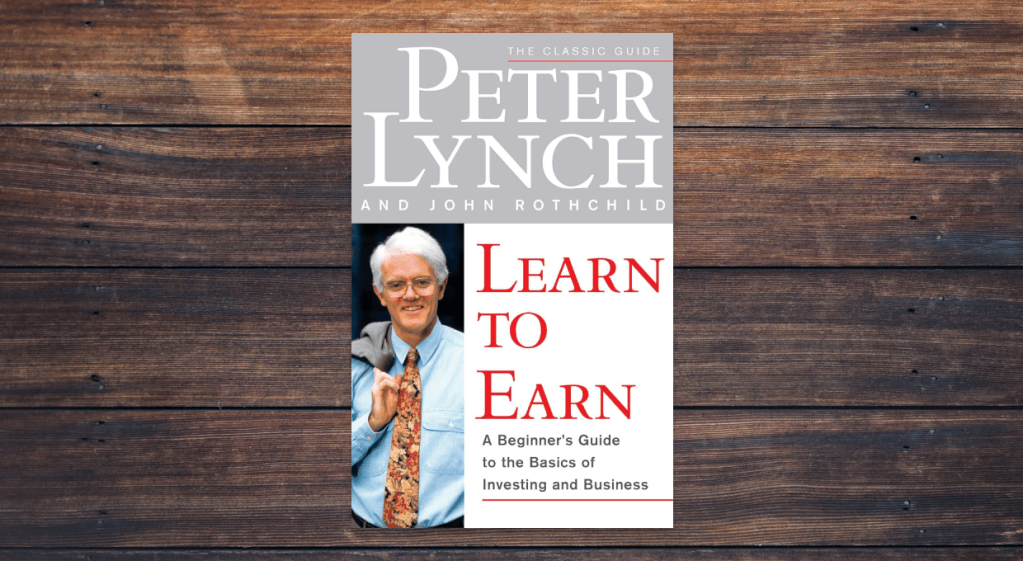
Learn to Earn is Peter Lynch’s 1995 beginner’s guide to capitalism, business, and investing — the one he wrote for young people who had never bought a stock in their lives. Working with co-author John Rothchild, Lynch starts at the very beginning: a short, lively history of how capitalism and public companies came to be, then a plain-English tour of how businesses actually make money, what stocks and bonds and mutual funds are, and how the stock market works as a mechanism. The final stretch is the investing part: why stocks have been the best long-term wealth-building machine ever invented, why starting early matters so much, and how an ordinary person can research a company well enough to invest in it with confidence. If One Up On Wall Street taught you to invest in what you know and Beating the Street showed you a professional doing it, Learn to Earn is the on-ramp for everyone who hasn’t started yet.
Who is Peter Lynch?
Peter Lynch is the legendary manager of Fidelity’s Magellan Fund, which he ran from 1977 to 1990, compounding at roughly 29% a year and growing the fund from $18 million to $14 billion — one of the great records in investing history. After retiring at 46, he became famous to the public through his bestselling books One Up On Wall Street and Beating the Street, and through his long-running support of financial literacy — he has spent decades arguing that schools should teach kids how money and markets work. Learn to Earn is that mission in book form: Lynch’s attempt to hand the next generation the owner’s manual he wishes someone had given him.
Lessons From Learn to Earn
Capitalism is the engine, and you’re invited. Lynch opens with history for a reason: he wants the reader to understand that the stock market isn’t a casino — it’s a way to own a piece of real businesses that sell real things. That framing, simple as it sounds, is the whole point of Learn to Earn. Once you see stocks as ownership rather than lottery tickets, everything else follows.
Stocks beat everything else over time. Lynch walks through the long-run numbers: stocks have outperformed bonds, and bonds have outperformed cash, over every long stretch of market history. The lesson isn’t that stocks go up every year — they don’t — but that time in the market, not timing the market, is what builds wealth.
Start early; compounding does the heavy lifting. The book’s most memorable math is the simplest: money invested young grows for decades, and the earlier you start, the less you need to put in. Lynch is blunt that this is the one advantage young investors have over everyone else, and that wasting it is the most expensive mistake they can make.
Do your homework before you buy. Even in a beginner’s book, Lynch can’t help himself: don’t buy a stock you can’t explain to a ten-year-old, understand how the company makes money, and know what could go wrong. The Learn to Earn research checklist is the One Up On Wall Street method distilled for first-timers: look at the products, read the annual report, and never invest in something you don’t understand.
Volatility is the price of admission. Lynch prepares the new investor for the inevitable: stocks fall, sometimes hard, and panicking out at the bottom is how beginners turn temporary declines into permanent losses. The market’s long-run returns belong to the people who can sit still through the scary parts.
Criticisms of the Book
The honest criticism of Learn to Earn is that it’s genuinely elementary — and that’s by design, but experienced investors will find nothing new here. The examples are also frozen in the mid-1990s, so some of the companies and market references feel like period pieces three decades on (the principles hold up; the anecdotes don’t always). A few critics have also noted that the book’s optimism carries the flavor of the great 1990s bull market in which it was written — the long-run numbers are real, but a beginner reading it during a bear market might find the tone a little sunnier than their brokerage statement. None of this is a flaw for the intended reader; it’s just worth knowing what the book is and isn’t.
Who is This Book For?
Learn to Earn is for the true beginner — teenagers, college students, or any adult who has never owned a stock and wants to understand what investing actually is before putting a dollar in. It’s also the book to hand to a young person in your life: it’s short, readable, and assumes zero prior knowledge. If you’ve already read One Up On Wall Street or Beating the Street, you can skip it — this is the prequel, not the sequel. But if someone you know keeps saying “I don’t get the stock market,” this is the single best first book to give them.
Final Thoughts
Peter Lynch wrote two classics for investors; Learn to Earn is the one he wrote for everyone else. It won’t make you a stock picker — it will make you someone who understands what a stock is, why businesses exist, and why starting early matters more than picking perfectly. Thirty years on, that mission is as unfulfilled as ever, which is exactly why the book still deserves a reader. For the beginner, there’s no better front door into Lynch’s world — and into investing itself.











You must be logged in to post a comment.