
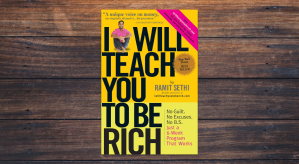
Ramit Sethi is a prominent figure in the world of personal finance, widely recognized for his approachable yet effective strategies to help individuals build wealth. Born and raised in California, Sethi graduated from Stanford University with degrees in technology and psychology. During his time at Stanford, he started to delve deeply into personal finance, focusing on the psychological aspects of money and how it influences decision-making. His work led to the creation of his blog – I Will Teach You To Be Rich – which eventually became a bestselling book.
Today, Sethi is not only an author but also a speaker and entrepreneur. He runs a thriving business that includes financial courses and coaching programs. His goal is to demystify financial planning and empower people to take control of their money while living a life they enjoy.
Key Takeaways From His Book
Ramit Sethi’s book I Will Teach You To Be Rich has become a cornerstone in personal finance literature. Here are some of its most impactful lessons:
Automate Your Finances
Sethi emphasizes the importance of automation. He suggests setting up systems where your paycheck automatically distributes money into savings, investments, and essential expenses. This strategy ensures consistency and removes the burden of making frequent financial decisions.
Focus on the Big Wins
Instead of obsessing over minor expenses, such as skipping your daily coffee, Sethi advocates for prioritizing significant financial moves. These include negotiating your salary, reducing credit card debt, and optimizing recurring expenses like rent and utilities.
Use Credit Cards Wisely
Sethi encourages readers to take advantage of credit card rewards and benefits while avoiding debt. Paying your balance in full each month ensures you reap the perks without incurring high-interest charges. He also recommends using credit cards strategically to build a strong credit score.
Invest Early and Consistently
One of Sethi’s core principles is the power of investing in low-cost index funds, such as those tracking the S&P 500. He underscores the value of starting early, even with small amounts, to take full advantage of compound growth.
Define Your Rich Life
A key theme in the book is the concept of a “Rich Life,” which Sethi defines as spending extravagantly on the things you love while cutting costs mercilessly on things you don’t. This personalized approach to financial planning makes the process more fulfilling and sustainable.
Avoid Procrastination
Sethi is a strong advocate for taking action. Whether it’s opening your first investment account or setting up a budget, the sooner you start, the more you benefit. He provides clear, actionable steps to make getting started easier for readers.
The Conscious Spending Plan: Budgeting Without the Spreadsheet
Sethi’s best-known practical tool is the Conscious Spending Plan, a one-page alternative to traditional budgeting. Instead of tracking every purchase, you divide your take-home pay into four buckets and automate the flows between them.
The buckets are fixed costs at 50 to 60 percent of take-home pay (rent, utilities, car, debt payments), investments at 10 percent (a 401(k), IRA, or taxable account), savings at 5 to 10 percent (emergency fund and short-term goals), and guilt-free spending at 20 to 35 percent for whatever you love. Sethi treats these as guardrails, not a prison: the point is to know your numbers once, then stop obsessing.
A quick example makes it concrete. On $6,000 a month of take-home pay, the plan means roughly $3,000 to $3,600 for fixed costs, $600 invested, $300 to $600 saved, and $1,200 to $2,100 you can spend with zero guilt. If your fixed costs land at 80 or 90 percent, the plan tells you exactly what is broken: the housing or the car, not the coffee. Fix the big wins first, which is the same lesson the book teaches.
Ramit on Netflix: How to Get Rich
In 2023 Sethi brought his system to television with How to Get Rich, an eight-episode Netflix docuseries that premiered on April 18. The show follows him across the country as he sits down with real people and couples, opens their bank statements on camera, and applies the same ideas from the book: conscious spending, automation, and designing a Rich Life instead of clipping coupons.
The show is worth watching because it demonstrates something the book can only describe: most money problems are behavior problems. Two households with the same income can have wildly different outcomes depending on whether their money runs on autopilot.
Sethi has also written about money inside relationships. Winchell House reviewed his book Money for Couples, which applies the Rich Life framework to partners who need to get on the same page.
Why Should You Listen to Ramit Sethi?
Ramit Sethi’s advice stands out because it blends practical financial strategies with insights into human behavior. His background in psychology equips him to address the emotional and psychological barriers many people face when managing money. Unlike traditional financial advisors who may focus solely on numbers, Sethi’s methods are relatable and tailored to everyday challenges.
Additionally, his success is backed by a track record of helping millions of people. The popularity of his book and courses demonstrates that his strategies resonate with a wide audience. By following Sethi’s advice, you’re not just adopting another financial plan—you’re embracing a philosophy that prioritizes your personal values and goals.
Ramit Sethi has proven that financial independence doesn’t require complex tools or massive wealth to start. With a clear, actionable system, anyone can begin their journey to living a Rich Life.






 Winchell House
You must be logged in to post a comment.