
For those beginning their financial journey, sticking to time-tested strategies—such as living a frugal lifestyle, budgeting carefully, and investing in diversified assets like the S&P 500—can pave the way to financial independence.
We believe that retail investors are better off steering clear of high-risk, volatile stocks.
In this article, we explore why Tesla may not be the best option for the everyday investor, focusing on concerns over its fundamentals and leadership issues.
Understanding Fundamentals in Investing
Fundamentals are the building blocks that determine a company’s true financial health. They include metrics such as revenue growth, profitability, cash flow, and debt levels. Investors use these indicators to gauge whether a stock is priced fairly or if it’s overvalued. For retail investors understanding these basics is crucial before diving into the stock market.
Concerning Fundamentals
High Valuation Metrics
One of the most common concerns raised by critics is Tesla’s sky-high valuation. Despite posting impressive revenue growth, the company’s price-to-earnings ratio far exceeds those of many traditional automakers. This means investors might be paying a premium for anticipated future growth that isn’t guaranteed. For someone seeking long-term, stable returns, such a lofty multiple can be a red flag.
Profitability and Cash Flow Issues
While Tesla has achieved profitability in recent quarters, its financial statements reveal volatility in cash flow and operating margins. High levels of capital expenditure and inconsistent free cash flow can create uncertainty. Investors who are trying to build a nest egg may find this unpredictability challenging to stomach, especially when compared to more stable, dividend-paying companies.
Dependence on Subsidies and Credits
Another concern is the company’s reliance on regulatory credits and government subsidies. Although these credits have boosted Tesla’s bottom line in the past, they are not a sustainable source of revenue. Over time, as subsidies change or phase out, this dependence may expose the company to financial instability. For retail investors focused on sound, long-term growth, this uncertainty might make Tesla less attractive.

Where’s the CEO?
A unique point of contention for many retail investors is the leadership at Tesla. Critics argue that the CEO’s divided attention—stemming from his involvement in multiple ventures and a highly publicized presence on social media—can lead to less-focused corporate governance. While the CEO remains very visible, some investors feel that his constant external engagements distract from the day-to-day oversight needed to manage a company with such complex operations. For those who prefer a stable and predictable leadership team, this perceived absence can be a major deterrent.
A Diversified Approach to Financial Independence
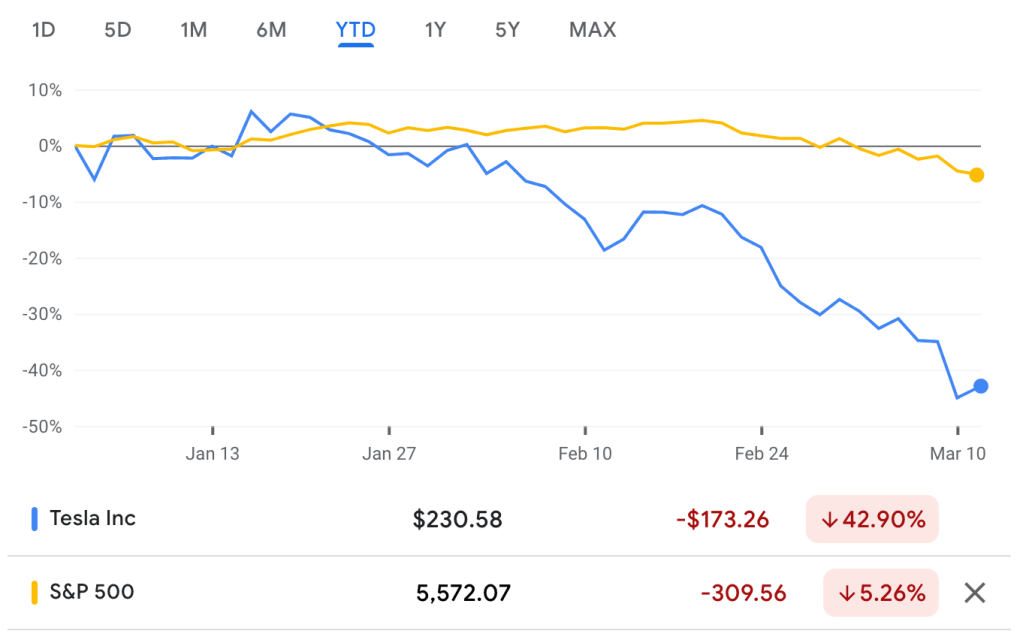
We advocate for a well-rounded personal finance strategy that minimizes risk. Instead of chasing high-volatility stocks, consider building your portfolio with a diversified mix:
- Invest in the S&P 500: With a historical return of around 10% per year, this broad-market index is a proven path to long-term wealth.
- High-Yield Savings and Treasury Bills: Options like a HYSA and short-term treasury bills provide safe places to store your emergency fund.
- Owning Your Home: Homeownership can be a stable long-term investment compared to renting.
- Professional Guidance: Consult a financial advisor who can help tailor a strategy to your specific needs—especially if you’re working hard to stick to a strict budget and avoid burdensome credit card debt.
By focusing on these principles, you’re more likely to achieve financial independence without the unnecessary risk of chasing high-profile, high-risk stocks.
Conclusion
While Tesla has captured headlines and investor interest, its high valuation, erratic cash flow, and reliance on uncertain revenue streams raise valid concerns for retail investors. Combined with worries over an unfocused leadership style, these factors suggest that a more conservative, diversified investment approach may better serve those striving for long-term financial stability.
Remember: building wealth is a marathon, not a sprint, and staying disciplined with your financial plan is key to success.



 Winchell House
You must be logged in to post a comment.