Investment philosophy is crucial for any organization. An investment philosophy should be well-thought-out and intentional, and it should address fundamental questions such as whether to target average or above-average returns. The video argues that achieving superior returns requires a knowledge advantage, which can be gained by studying micro factors like individual companies and industries, rather than macro factors like forecasts.
Who Howard Marks Is
Marks co-founded Oaktree Capital Management and spent decades writing memos to clients that became required reading on Wall Street, later collected in The Most Important Thing. His authority on risk comes from living through several credit cycles at Oaktree, a firm built on distressed debt, where misjudging downside is fatal. When he talks about risk, he is not theorizing. He is describing the thing his firm gets paid to avoid.
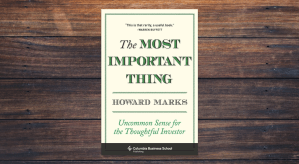
Here are the key points discussed in the video:
- Investment philosophy is essential. It should be a foundation for all investment decisions and activities of an organization.
- Investors should decide upfront whether to pursue average or above-average returns. Targeting above-average returns requires taking on more risk.
- Macro forecasting is unreliable and should not be a part of the investment strategy.
- The real risk lies in bad outcomes, not just the variability of returns.
- Investors should carefully assess and manage risk throughout the investment process.
- There is a trade-off between risk and return. Superior returns can only be achieved by taking on more risk.
Risk Is Not Volatility
The video’s central idea deserves emphasis because it contradicts how most people use the word risk. Marks argues that risk is not prices bouncing around. Risk is the probability of permanent loss. A stock that falls 20 percent and recovers was volatile, not risky. A stock that falls 20 percent because the business is impaired was risky all along. This reframes every market dip: the question is never “how much did it move” but “is the underlying value damaged.” Investors who internalize that distinction stop panic-selling volatility and start respecting actual downside, which is the entire game.









 Winchell House
You must be logged in to post a comment.