
Nassim Nicholas Taleb is a Lebanese-American scholar, statistician, and former options trader. He spent two decades as a derivatives trader in New York and London before turning to writing, and his books on uncertainty and randomness have become classics well outside finance.
The Incerto, in One Line Each
Taleb’s work is a multivolume essay called the Incerto, four books on uncertainty:
Fooled by Randomness (2001): how luck disguises itself as skill, in markets and in life.
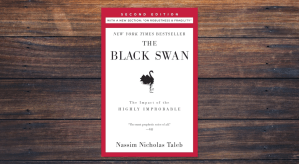
The Black Swan (2007): rare, high-impact events drive history, and we systematically underestimate them.
Antifragile (2013): some things gain from disorder, and you should arrange your life to be one of them.
Skin in the Game (2018): never trust advice from someone who does not share the downside.
The Black Swan: Understanding Rare Events
Taleb’s concept of the Black Swan refers to rare, unpredictable events that have a profound impact on our lives and finances. These events are characterized by three key attributes:
- Rarity: Black Swans are events that lie outside the realm of regular expectations.
- Impact: They have a significant impact, often with severe consequences.
- Retrospective predictability: After the fact, we often believe that we should have seen it coming.
Examples of Black Swans include the 2008 financial crisis, the COVID-19 pandemic, and the rise of the internet.
Antifragility: Building Resilience in the Face of Uncertainty
Taleb’s concept of antifragility is central to his philosophy. Antifragility refers to the ability to not only withstand shocks and stresses but to actually benefit from them. In other words, antifragile systems are those that grow stronger and more resilient in the face of uncertainty.
What the Video Covers
The talk above is from Google’s Talks at Google series, where Taleb discusses Skin in the Game. His core argument: advice is worthless unless the person giving it bears some of the risk of being wrong. A forecaster who predicts a recession and loses nothing if it never comes has no skin in the game. A fund manager invested in her own fund does. The practical rule he offers is blunt: do not ask people what they think. Ask them what they have in their portfolio.
Applying Taleb’s Principles to Your Finances
So, how can you apply Taleb’s principles to build antifragile finances? Here are some key takeaways:
- Diversification: Spread your investments across different asset classes to minimize exposure to any one particular market or sector.
- Cash reserves: Maintain an emergency fund to cover 3-6 months of living expenses, ensuring you’re prepared for unexpected events.
- Debt reduction: Minimize debt to reduce your vulnerability to financial shocks.
- Invest in yourself: Develop valuable skills and knowledge to increase your earning potential and adaptability.
- Barbell strategy: Allocate your investments to both low-risk, stable assets (e.g., bonds) and high-risk, high-reward assets (e.g., stocks), minimizing exposure to the middle ground.
Nassim Nicholas Taleb’s work offers valuable insights into the nature of uncertainty and risk. By applying his principles of antifragility, you can build a more resilient financial foundation, better equipped to withstand life’s unexpected twists and turns.
Remember, it’s not about predicting the unpredictable; it’s about preparing for the unexpected.
The deepest of Taleb’s lessons is also the simplest. Stop trying to predict the unpredictable and start asking who gets hurt when they are wrong. Then make sure it is never you, and that the people advising you cannot be wrong for free. The Winchell House review of The Black Swan is in the archives for readers who want the full argument.









 Winchell House
You must be logged in to post a comment.