
Daniel Kahneman was an Israeli-American economist and psychologist who was awarded the Nobel Memorial Prize in Economic Sciences in 2002 for his work on behavioral economics. Along with his colleague Amos Tversky, Kahneman challenged the traditional assumptions of economics, which posited that humans make rational decisions based on complete information. Instead, they demonstrated that our decision-making is influenced by cognitive biases, emotions, and mental heuristics.
Why Tversky is the name on the paper
Kahneman’s Nobel citation names one man, but the work that earned it had two authors. He met Amos Tversky at the Hebrew University in the late 1960s, and the two began a collaboration that lasted until Tversky’s death in 1996, twenty-eight years of arguing about judgment and decision-making that produced prospect theory in 1979 and helped found behavioral economics. When the Nobel came in 2002, Tversky had been dead for six years, and since the prize is never awarded posthumously, he could not share it. Kahneman never pretended otherwise. He spent the rest of his life making clear that the ideas were joint property.
That matters because behavioral economics is usually taught as a one-man story, and Kahneman hated that version. The collaboration was the method: two minds with opposite temperaments, one intuitive and one logical, testing each other until the idea survived both of them. For an investor, the useful takeaway is not about Kahneman’s prizes. It is that his best work came from a structure, a standing argument with someone smart enough to tell him he was wrong. Most investment mistakes survive because nobody is assigned the job of disagreeing. The Kahneman-Tversky partnership was that job, full time, for decades.
Key Concepts: Understanding Kahneman’s Insights
Kahneman’s work has far-reaching implications for personal finance. Here are some key concepts that can help you make better financial decisions:
Loss Aversion
Kahneman and Tversky’s prospect theory revealed that we tend to fear losses more than we value gains. This loss aversion can lead to risk aversion and poor investment decisions. For example, if you’re holding onto a losing stock, you may be reluctant to sell it due to the fear of realizing a loss. Recognizing this bias can help you make more rational decisions about your investments.
Framing Effects
The way information is presented (framed) can significantly influence our decisions. For instance, a product that is described as “90% fat-free” may be more appealing than one that is labeled “10% fat.” Be aware of how framing effects can impact your financial choices, such as when evaluating investment returns or credit card offers.
Anchoring Bias
We tend to rely too heavily on the first piece of information we receive, even if it’s irrelevant or unreliable. This anchoring bias can lead to poor financial decisions, such as overpaying for a product or service. When making financial decisions, try to consider multiple sources of information and avoid relying on a single anchor.
The Endowment Effect
Kahneman’s research showed that we tend to overvalue things we already own, simply because we own them. This endowment effect can lead to poor financial decisions, such as holding onto a stock that’s no longer performing well or overpaying for a home. Recognize that the value of an asset is not inherently tied to your ownership of it.
Applying Kahneman’s Insights to Your Financial Life
So, how can you apply these concepts to improve your financial decision-making? Here are some takeaways:
- Be aware of your biases: Recognize that you’re not immune to cognitive biases and try to take a step back when making financial decisions.
- Seek diverse perspectives: Expose yourself to different viewpoints and sources of information to mitigate the effects of framing and anchoring biases.
- Use dollar-cost averaging: This investment strategy can help you avoid making emotional decisions based on market fluctuations.
- Practice mental accounting: Separate your money into different mental accounts to avoid the endowment effect and make more rational decisions about your finances.
Daniel Kahneman’s work has revolutionized our understanding of human decision-making, and his insights have significant implications for personal finance. By recognizing the cognitive biases and heuristics that influence our financial decisions, you can make more informed choices and improve your overall financial well-being. Remember, being aware of your biases is the first step towards making better financial decisions.
Daniel Kahneman Quotes
A reliable way to make people believe in falsehoods is frequent repetition, because familiarity is not easily distinguished from truth. Authoritarian institutions and marketers have always known this fact. – Thinking, Fast and Slow
Money does not buy you happiness, but lack of money certainly buys you misery. – Well-Being: Foundations of Hedonic Psychology
The questions he left open
Kahneman spent his last years being honest about what he did not know, which is the rarest move in economics. He wrote that he had changed his mind on several of his own findings, including the famous priming effects that launched a replication crisis in psychology, and he welcomed the challenge rather than fighting it. He was also candid that behavioral economics describes the biases without giving you a reliable way to remove them. Knowing you are loss-averse does not make you stop being loss-averse. The research tells you where the traps are. It does not hand you the map out.
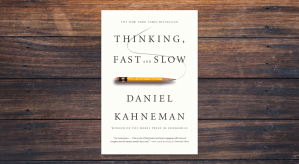
That is the right frame for everything on this site that cites him. Kahneman’s work is a diagnostic tool, not a trading system. The reason Thinking, Fast and Slow belongs on a personal finance shelf is not that it tells you what to buy. It is that it explains why you keep buying the wrong things, why you sell winners too early and hold losers too long, and why the person standing between you and good returns is usually you. The questions he left open, how much of this can actually be fixed, are the ones worth more attention than the prizes.









 Winchell House
You must be logged in to post a comment.