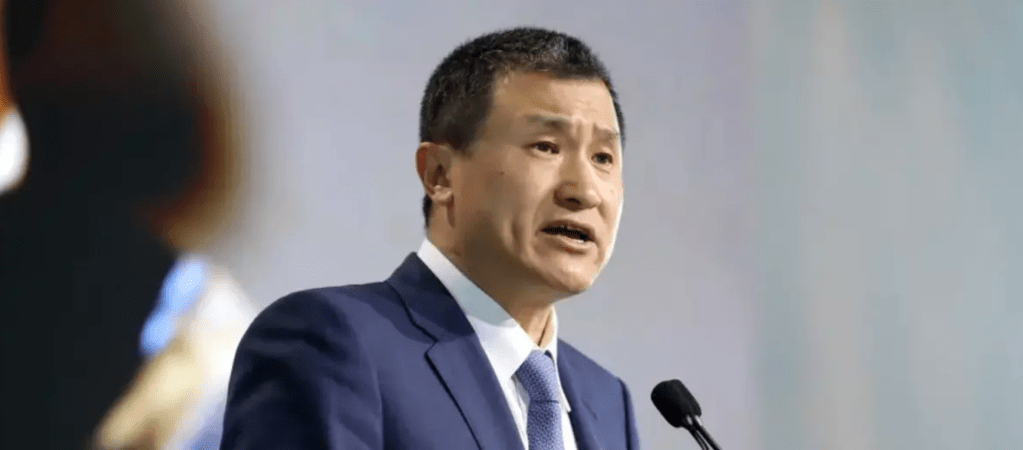
Born in 1966 in Tangshan, China, Li Lu was a student leader during the 1989 Tiananmen Square protests. After fleeing China, he made his way to the United States, where he earned three degrees from Columbia University: a BA, a JD, and an MBA. In 1997 he founded Himalaya Capital, the value-investing firm he still runs today. Li Lu’s investment approach is deeply rooted in the principles of value investing, which he has refined over the years through his experiences and research.
Investment Philosophy
Li Lu’s investment philosophy is centered around the following key principles:
Margin of Safety
Li Lu emphasizes the importance of having a margin of safety in investments. This means buying companies at a significant discount to their intrinsic value, providing a buffer against potential losses. By focusing on undervalued companies with strong fundamentals, Li Lu minimizes risk and maximizes potential returns.
Long-Term Focus
Li Lu adopts a long-term perspective when evaluating investments. He looks for companies with sustainable competitive advantages, strong management teams, and a proven track record of success. By taking a patient approach, Li Lu allows his investments to compound over time, generating substantial returns.

Business Quality
Li Lu prioritizes business quality over other factors such as growth rates or industry trends. He seeks companies with:
- Strong competitive advantages
- High returns on equity
- Low debt
- Talented management teams
By focusing on high-quality businesses, Li Lu reduces the risk of permanent capital loss and increases the potential for long-term success.
Mr. Market
Li Lu often references the concept of “Mr. Market,” coined by Benjamin Graham. Mr. Market represents the emotional and irrational nature of the stock market, which can create opportunities for value investors. Li Lu takes advantage of these opportunities by buying companies at depressed prices and selling them when they reach their intrinsic value.
Dive into value investing by reading The Intelligent Investor by Benjamin Graham
The BYD investment that made his reputation.
Li Lu’s most famous investment began in 2002, when Himalaya Capital bought shares of BYD, then a little-known Chinese battery manufacturer. A year later BYD bought a failing state-owned automaker, a move most analysts saw as a distraction. Li Lu saw it differently: he had studied founder Wang Chuanfu and concluded the man could rebuild complex manufacturing around skilled, low-cost labor. He added to his position. Li Lu then introduced BYD to Charlie Munger. Munger was so impressed that he brought the idea to Warren Buffett, describing Wang as a combination of Thomas Edison and Jack Welch. In September 2008, in the middle of the global financial crisis, Berkshire Hathaway invested $232 million for roughly 10 percent of BYD. Berkshire held the stake for 17 years. It began trimming in 2022 and exited fully in 2025, after the position had grown to roughly 30 times the original investment. The episode is Li Lu’s philosophy in action: a margin of safety on an unknown company, a bet on business quality and management, and the patience to hold for nearly two decades.
Investment Approach
Li Lu’s investment philosophy offers valuable lessons for individual investors:
- Be patient: Investing is a long-term game. Avoid getting caught up in short-term market fluctuations and focus on the underlying fundamentals of the companies you invest in.
- Focus on business quality: Prioritize companies with strong competitive advantages, talented management teams, and a proven track record of success.
- Maintain a margin of safety: Buy companies at a discount to their intrinsic value to minimize risk and maximize potential returns.
- Stay informed but avoid emotional decisions: Stay up-to-date with market news, but avoid making investment decisions based on emotions. Instead, focus on the underlying fundamentals of the companies you invest in.
Li Lu’s investment philosophy serves as a powerful reminder of the importance of value investing, patience, and business quality. By incorporating these principles into your investment approach, you can increase your chances of success and build long-term wealth. As Li Lu himself once said, “The key to successful investing is not to try to time the market or to try to pick the winners, but to focus on the process of investing and to stick to it over the long term.”







 Winchell House
You must be logged in to post a comment.