
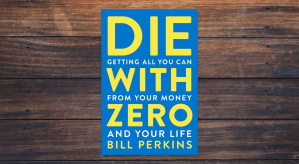
Bill Perkins is a successful hedge fund manager, entrepreneur, and author best known for his personal finance book, Die with Zero: Getting All You Can from Your Money and Your Life. His approach to financial independence challenges the traditional mindset of saving endlessly for retirement and instead encourages people to optimize their spending throughout their lives.
Bill Perkins’ Background and Career
Born in 1969, Bill Perkins built his wealth through energy trading and hedge fund management. He began his career working for legendary oil trader John Arnold before founding his own firm, Skylar Capital Management. Over the years, Perkins accumulated significant wealth and developed a reputation as a high-stakes poker player and a risk-taker in both finance and life.
Despite his financial success, Perkins realized that many people—including those who accumulate substantial wealth—often fail to truly enjoy their money. This insight inspired him to write Die with Zero and share his philosophy on living a more fulfilling life through intentional spending.
The Philosophy of Die with Zero
Die with Zero is centered on the idea that people should aim to maximize their life experiences rather than accumulate excessive savings that they may never use. Perkins argues that traditional financial advice focuses too much on wealth accumulation without considering the best time to enjoy money.
Some key principles from the book include:
- Maximizing Life Experiences: Perkins encourages readers to allocate their money toward experiences rather than unnecessary long-term saving. He believes spending money on meaningful activities creates lasting memories and fulfillment.
- The Declining Value of Money: The book emphasizes that money has different values at different stages of life. A 30-year-old will likely derive more joy and utility from spending money on travel or hobbies than an 80-year-old.
- The Importance of Health and Energy: Perkins highlights that physical health plays a crucial role in how people enjoy their wealth. He suggests making the most of money when people have the health and energy to do so.
- Giving While Living: Instead of leaving large inheritances, Perkins advocates for gifting money to loved ones while still alive to see the impact.
How Die with Zero Fits Into Financial Independence
For those on the path to financial independence, Die with Zero provides a different perspective. Traditional financial planning often prioritizes saving and investing in assets like the S&P 500 for long-term growth. While Perkins acknowledges the importance of financial security, he argues that delaying spending indefinitely leads to missed opportunities.
We believe in frugality, investing in the S&P 500, and homeownership as essential financial strategies. However, Perkins’ insights serve as a reminder to strike a balance between saving for the future and enjoying life today. A solid financial plan should include budgeting, minimizing credit card debt, and strategically using a high-yield savings account or short-term treasury bills to ensure both security and enjoyment.
Memory Dividends: Why When You Spend Matters
The most original idea in Die with Zero is the memory dividend: experiences keep paying you long after the money is gone. A trip you take at 30 generates stories, friendships, and perspective you draw on for decades. The same trip at 80, if your health even allows it, pays a fraction of that dividend.
Perkins argues this makes timing the most underrated variable in personal finance. Traditional advice optimizes how much you have. He optimizes when you convert money into life: front-load experiences into the years when your health and energy multiply their value, instead of saving every dollar for a future self who may not be able to spend it.
The math is deliberately simple. Money has its highest utility when you are young and healthy enough to use it boldly. Every year you delay an experience, its expected dividend shrinks. That is not an argument against saving. It is an argument against saving everything for last.
Should You Follow Die with Zero?
While Perkins’ philosophy may not align with every personal finance strategy, it offers valuable insights for those seeking a more intentional approach to money. If you are working toward financial independence, consider integrating aspects of Die with Zero into your plan:
- Set Financial Milestones: Achieve financial security before spending aggressively on experiences.
- Optimize Your Spending: Use budgeting tools to track spending and ensure money is used on meaningful activities.
- Balance Saving and Enjoyment: Invest wisely, but don’t delay experiences until retirement.
Ultimately, Die with Zero encourages people to rethink their relationship with money and prioritize living a rich, fulfilling life—not just accumulating wealth for its own sake.
The Poker Table as a Classroom
Perkins did not only learn about risk in markets. He is a fixture in high-stakes poker, regularly playing televised cash games and tournaments against the world’s best players, and he treats the poker table as a laboratory for the same ideas in his book.
Poker teaches exactly what Die with Zero preaches: expected value thinking, comfort with uncertainty, and the discipline to make the right decision even when the last ten went wrong. A good poker player folds most hands, bets big when the odds favor them, and never risks the whole bankroll on one outcome.
That is also a decent description of his financial philosophy. Size your bets, know your edge, accept variance, and remember that the chips are only useful if you eventually spend them on something that matters.









 Winchell House
You must be logged in to post a comment.