
Alex Morris is a respected voice in the world of long-term investing, known for his deep research and transparent thinking. He is the author of The Science of Hitting, a newsletter that shares business analysis, stock research, and insights into value investing. His work is heavily influenced by the principles of Warren Buffett, Charlie Munger, and the broader school of quality-focused, fundamentals-driven investing.
Morris has built a loyal audience by breaking down complicated financial topics in a clear, thoughtful way. He helps individual investors understand what makes a great business and how to evaluate companies for long-term ownership. His writing appeals to people who are looking to learn about money, build wealth, and think more critically about investing.
Background and Career
Alex Morris started his career as an equity analyst and spent time writing for The Motley Fool, where he sharpened his ability to explain business models and financial results to everyday investors. After years of experience studying public companies, he launched his own research platform under the name The Science of Hitting.
The name is a nod to Ted Williams’ famous baseball book, which uses disciplined mechanics and strategic thinking to improve performance. Morris applies the same mindset to investing: focus, patience, and thoughtful decision-making.
Today, he publishes regularly on Substack, offering both free and paid content. Subscribers get access to detailed writeups on companies, insights on his portfolio holdings, and commentary on long-term investing strategies.
Investing Philosophy
Morris practices a form of concentrated, fundamentals-based investing. He focuses on owning a small number of high-quality businesses with durable competitive advantages and strong returns on capital. He believes in holding onto great companies for the long run, rather than chasing quick wins or short-term stock price movements.
Key principles in his investment style include:
- Buy businesses, not stocks
- Focus on long-term earnings power
- Avoid overpaying, even for great companies
- Stay within a well-understood circle of competence
- Tune out the noise of market headlines
His writing frequently draws from company earnings reports, industry data, and management commentary to explain how businesses operate and where they might be headed. It’s a great resource for investors who want to think independently and make informed decisions based on facts, not emotion.
What We Can Learn from Morris
If you’re looking to improve your financial knowledge, following Morris is a practical and rewarding step. His newsletter provides a real-time case study in disciplined investing. He shows how to evaluate a company, build conviction in an investment thesis, and manage a portfolio without panic or hype.
Here are a few lessons his work can teach you:
- The value of patience and long-term thinking
- How to evaluate business models and pricing power
- Why understanding cash flow is more important than market forecasts
- How to stay rational in the face of volatility
- The difference between speculating and investing
Whether you’re investing through a financial advisor or managing your own S&P 500 nest egg, Morris offers a lens into how professional investors think and act. His work is particularly valuable if you’re already tracking your spending with a budgeting app, saving in a high-yield account, or holding cash in short-term treasury bills and looking to go deeper into stock research.
Who Should Follow The Science of Hitting?
Morris’s newsletter is best suited for people who want to learn about money through the lens of business ownership. It’s ideal for:
- Investors with a long-term horizon
- Readers of books on money and investing
- Budget-conscious savers looking to grow their wealth
- DIY investors who want a second opinion on companies
- Professionals who admire Warren Buffett’s approach
You don’t need to be an expert in accounting or finance to benefit from his work. If you’re curious, patient, and willing to read, you’ll find plenty of value.
The Book: Buffett and Munger Unscripted
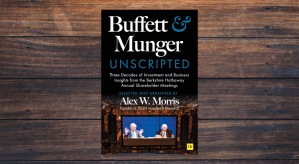
In 2018, Berkshire Hathaway released the archives of its annual shareholder meetings going back to 1994. Morris watched hundreds of hours of that video, covering 31 years of meetings and more than 1,700 shareholder questions, and organized the best material by theme: intelligent capital allocation, how to judge and compensate management, the nature of markets, and the power of long time horizons.
The result was Buffett and Munger Unscripted, published January 21, 2025 by Harriman House. At 480 pages, it is a dense but organized tour through three decades of Buffett and Munger answering unscripted questions from owners. Amazon named it one of the best books of 2025. Morris donates 50 percent of his net proceeds to GLIDE, the San Francisco charity Buffett supported for years through his famous lunch auctions.
A Worked Example: The Math Behind “Buy Businesses, Not Stocks”
Morris’s core claim is that owning a piece of a great business beats owning a piece of paper. Here is the math. A business that earns 15 percent on its capital and reinvests turns $10,000 into about $163,665 in 20 years (1.15 to the 20th power is about 16.37). A savings account at 2 percent turns the same $10,000 into about $14,859. The $148,000 gap is the entire argument: when you own a compounder, time does the heavy lifting.
The catch Morris stresses is price. Pay 30 times earnings for that compounder and you spend years of growth just earning back your entry multiple. Pay 15 times earnings and the math starts working for you on day one. Buying businesses instead of stocks does not mean ignoring valuation. It means valuation is the only part of the equation you fully control.
Final Thoughts
Alex Morris has carved out a thoughtful, principled approach to investing that helps others become better owners of businesses. Through The Science of Hitting, he educates readers on how to think about money, risk, and opportunity in a way that aligns with long-term success.
In a financial world filled with noise, his calm and rational voice stands out. If you’re serious about learning how money works and how wealth is built over time, he’s someone worth following.









 Winchell House
You must be logged in to post a comment.