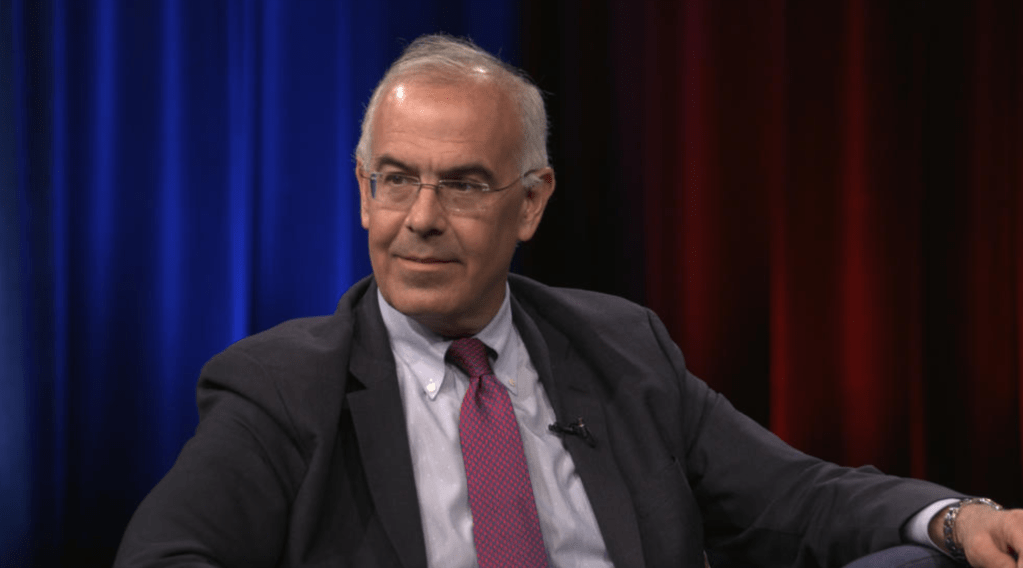
David Brooks is one of the most recognizable public intellectuals in the United States, known for his thoughtful writing on character, community, purpose, and the forces that shape modern life.
Many American readers first encountered him through his long-running New York Times column, where he analyzes culture, politics, and the personal decisions that influence how people build a meaningful life.
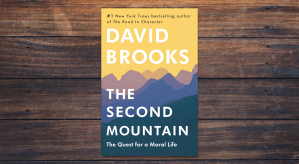
His book The Second Mountain has become especially influential among readers who want to understand fulfillment beyond traditional success metrics.
Early Life and Education
Brooks was born in Toronto and raised in New York City. He attended the University of Chicago, where he studied history and immersed himself in the school’s commitment to rigorous thinking. That academic environment shaped his writing style: analytical, reflective, and focused on big questions about human behavior.
After college, he began his journalism career at small publications before earning a position with The Wall Street Journal, eventually becoming its op-ed editor. His early work established him as a careful observer of how culture and economics intersect.
Career as a Journalist and Author
Brooks joined The New York Times as an opinion columnist in 2003. His columns reach millions of readers, many of whom follow his work to gain perspective on leadership, psychology, values, and the trends reshaping American life.
In addition to his journalism career, Brooks has written several books that explore habit formation, ethics, and human motivation. His best-known titles include:
- Bobos in Paradise, a cultural analysis of how educated professionals reshaped American consumer life
- The Social Animal, a book that blends storytelling and behavioral science to explain decision-making
- The Road to Character, which argues that humility and moral depth matter more than achievement
- The Second Mountain, a book about moving beyond personal success to live with commitment and purpose
These books regularly appear on must-read lists for people interested in self-improvement, personal finance, psychology, and leadership.
What The Second Mountain Is About
The Second Mountain centers on a simple idea. Many people spend their early years climbing the “first mountain,” pursuing goals like career success, wealth, and social status. Brooks argues that these goals often fail to deliver lasting satisfaction. The “second mountain” represents the shift toward commitments that offer deeper fulfillment: relationships, service, community involvement, and moral purpose.
Readers who enjoy books on money, personal development, or behavioral psychology often find this framework useful. It offers a way to understand why financial success alone does not eliminate stress or create contentment. The book encourages individuals to evaluate their values and build a life that is not only financially stable but also meaningful.
Why His Work Matters for Personal Finance Readers
Brooks does not write traditional personal finance books, yet his ideas influence how people approach money, goals, and long-term planning.
His work helps readers:
- Develop a deeper understanding of their motivations
- Recognize how lifestyle creep can undermine well-being
- Make financial decisions aligned with long-term purpose
- Evaluate whether spending reflects their real priorities
- Build habits that support both emotional and financial health
People searching online for budgeting guidance, learning resources, books on money, or advice from a financial advisor often find that Brooks’s writing complements these topics. His work encourages readers to understand why they want financial independence and what kind of life they hope to build once they achieve it.
Influence on American Thought
Brooks is widely respected for translating complex ideas into accessible writing. He frequently lectures at universities, speaks to business leaders, and participates in public discussions on community, character, and the future of American society. His audience includes readers who want thoughtful, long-term perspectives instead of quick fixes.
His work resonates with individuals pursuing financial independence because he emphasizes clarity, purpose, and personal responsibility. Those who are building savings, investing in the S&P 500, working with a financial advisor, or learning to budget often find that his ideas help them reflect on what they are ultimately working toward.
His Newest Book: How to Know a Person (2023)
Brooks published How to Know a Person: The Art of Seeing Others Deeply and Being Deeply Seen in October 2023 (Random House). It is a practical guide to the skill he argues sits at the center of healthy families, companies, and communities: the ability to truly see another person, to make them feel valued, heard, and understood.
The book draws on psychology and neuroscience, along with lessons from theater, history, and education, to show how better attention and better questions build deeper connection. It is the natural sequel to The Second Mountain: where that book asked what commitments make a life meaningful, this one asks how to show up well for the people those commitments involve. The book drew wide coverage, including a CBS Sunday Morning interview, as a sign of how far his focus has moved from political commentary toward human connection.
The Attention Lesson for Your Money Life
Read The Second Mountain and How to Know a Person together and a single theme emerges: attention is the scarce resource. The first book argues that a meaningful life comes from directing your energy toward commitments bigger than yourself; the second argues that the quality of your attention determines the quality of your relationships.
Money is an attention ledger. Pull up a year of bank statements and you can see exactly what you paid attention to, and it is rarely what you would have said mattered most. Brooks would call that a first-mountain budget: optimized for status and comfort, starved of the commitments that actually satisfy.
The practical move is a yearly attention audit. List where the dollars went, then ask whether each big category reflects a commitment you would defend out loud. You do not need his books to run the numbers, but his framework explains why the numbers feel wrong when they do: spending that ignores your real commitments is just expensive distraction.
Final Thoughts
David Brooks has built a career examining how people search for meaning in a busy and often distracted world. Through The Second Mountain and his broader body of work, he challenges readers to think beyond financial benchmarks and consider the commitments that create a fulfilling life.
His writing continues to influence people who want to build strong habits, make intentional financial choices, and develop a deeper understanding of the values that guide their everyday decisions.









 Winchell House
You must be logged in to post a comment.