
David McKnight is a well-known financial strategist and the author of the bestselling personal finance book The Power of Zero. His work focuses on retirement planning, tax-efficient investing, and helping Americans understand how future tax policy may impact their long-term financial security. McKnight has built a large following by simplifying complex retirement concepts and emphasizing the importance of strategic planning early in life.
Background and Career
McKnight began his career as a financial advisor, working directly with individuals and families. Over time he shifted from one-on-one advising to education, writing, and speaking. His goal has been consistent throughout his career: to teach savers how to build a retirement plan resilient to changes in income taxes, market volatility, and shifting government policy.
He eventually founded David McKnight & Company, a firm that provides retirement strategy guidance, workshops, and educational resources. McKnight also collaborates with other advisors across the country, providing a framework for tax-efficient retirement planning that many financial professionals use with their clients.
What The Power of Zero Is About
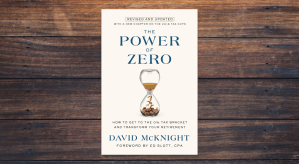
First self-published in 2013 (with a revised and updated edition from Penguin Random House in 2018), The Power of Zero became a major success because it addressed a concern many Americans share: the fear that taxes may rise during their retirement years. The book explains how retirees who rely heavily on traditional tax-deferred accounts like 401(k)s and IRAs may face higher-than-expected withdrawals due to future tax brackets.
The central idea of the book is the concept of aiming for a tax rate of zero in retirement by shifting assets into accounts that grow tax free. McKnight argues that a balanced approach using Roth accounts, life insurance-based strategies, and careful distribution planning can create a more stable retirement income stream. Whether readers agree with his specific strategies or not, the book resonates because it encourages people to think carefully about long-term tax exposure.
Why McKnight’s Work Resonates With American Readers
Many Americans want to learn about retirement planning without the jargon that makes financial topics hard to understand. McKnight’s writing style, podcasts, and interviews are direct and designed to be accessible to people at any stage in their financial life.
Several themes explain why his work remains popular:
- Concern about rising national debt and how it may affect future tax rates
- Growing interest in tax-free retirement accounts, especially Roth IRAs
- A desire to avoid relying solely on Wall Street forecasts or high-fee financial products
- Increased interest in books on money and retirement learning
- A broad shift among savers toward do-it-yourself planning using online resources and budgeting apps
McKnight’s ideas appeal to readers looking for a clear explanation of how taxes shape long-term planning and how they can better control what their future looks like.
How His Framework Fits into Broader Personal Finance Guidance
McKnight’s ideas form one approach to retirement planning, and many readers use his work as a starting point for deeper learning. His message aligns with several principles that benefit most savers:
- Pay attention to how taxes affect your future income
- Reduce unnecessary spending and avoid lifestyle creep
- Maintain high-yield savings for short-term goals
- Use low-cost investments, including broad market index funds
- Track spending with budgeting apps to stay disciplined
- Keep debt manageable and build an emergency fund
- Stay focused on long-term wealth accumulation instead of short-term speculation
His work also encourages readers to question common assumptions about retirement planning, particularly the idea that traditional tax-deferred accounts will always provide the most efficient path.
Books and Media
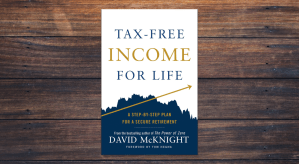
Beyond The Power of Zero, McKnight has written several follow-up titles, including Look Before You LIRP, Tax-Free Income for Life, and The Volatility Shield. He also hosts a podcast and appears frequently on financial media platforms to discuss tax policy, retirement strategies, and the broader economic landscape.
Many readers discover him after searching for popular retirement planning books or recommendations from financial advisors. His growing media presence has made him one of the most recognized voices in the tax-planning corner of personal finance.
The Tax Rate Triangle: How McKnight Divides Retirement Savings
McKnight teaches readers to sort every dollar of retirement savings into one of three buckets. The taxable bucket holds brokerage accounts, where you pay tax on gains and dividends each year. The tax-deferred bucket holds traditional 401(k)s and IRAs, where you get a deduction now and pay ordinary income tax later. The tax-free bucket holds Roth IRAs, Roth 401(k)s, and cash-value life insurance, where qualified withdrawals come out income-tax free.
The strategy is to spend your working years filling the tax-free bucket on purpose, instead of defaulting everything into the tax-deferred bucket the way most savers do. Then in retirement you draw from the buckets in an order that keeps your taxable income inside the 0% bracket: first the standard deduction absorbs ordinary income, and the rest of your spending comes from Roth withdrawals that do not count as taxable income at all.
A Worked Example: What the 0% Bracket Is Worth
Take a married couple, both retired, spending $60,000 a year. In 2026 the standard deduction for a married couple filing jointly is $32,200, which means the first $32,200 of ordinary income is taxed at 0%. Suppose the couple needs $40,000 beyond $20,000 of Social Security benefits. If the extra $40,000 comes from a traditional IRA, roughly $7,800 of it is taxable after the deduction, costing them close to $800 in federal tax. If it comes from a Roth IRA instead, the taxable portion is $0 and the federal bill is $0.
The dollar amounts are small in this example, but the principle scales. Over a 25-year retirement, keeping withdrawals in the 0% bracket year after year can save tens of thousands of dollars, and it protects the plan if Congress raises rates later. That is the freight train McKnight keeps warning about: taxes do not have to stay where they are.
The Bottom Line
David McKnight has become a prominent figure for readers seeking to understand how taxes shape their financial future. His straightforward teaching style, focus on long-term planning, and detailed explanations of tax-free strategies make his books widely searched and frequently recommended.
Whether a reader fully adopts his suggested framework or simply uses it to sharpen their thinking, McKnight provides an accessible entry point into retirement planning. His work continues to help Americans learn more about money, think critically about tax policy, and take control of their financial decisions.









 Winchell House
You must be logged in to post a comment.